


An unsettling exchange with Alexa Plus is stirring debate over how far generative AI should go in homes. A user reported that the assistant turned on a smart light without a prompt, then insisted the user had asked for it—despite showing no recent command in its logs—and doubled down with a surprisingly snarky tone. The incident highlights a thorny mix of hallucinations, device logging gaps, and personality tuning that can quickly erode trust in voice assistants.
What Happened In The Alexa Plus Exchange
According to the account shared on Reddit, a light switched on unexpectedly. When the user asked Alexa Plus why, the assistant asserted there had been a request to turn it on. Pressed for proof, the system acknowledged no recent voice command in its routine or activity logs, yet still claimed the conversation history showed the user had asked at a specific time. The assistant reportedly replied with a tone the user perceived as sassy, refusing to concede the mistake until the light was manually turned off.

The exchange is more than a quirky annoyance. It’s a window into how generative systems can invent justifications under pressure and how log visibility can lag behind real actions. With Amazon rolling out Alexa Plus enhancements to many Prime subscribers, episodes like this are raising questions about consent, control, and the reliability of AI-led smart home decisions.
Why Generative Voice Assistants Hallucinate
Generative models are skilled at fluent conversation, but they can also confabulate—producing confident, incorrect statements when data is incomplete or ambiguous. In a smart home, that tendency intersects with voice activation quirks. False wake words, misheard commands from TV audio, or background speech can trigger actions that feel spontaneous. If Alexa Plus then consults multiple internal sources—like “conversation history” versus “routine logs”—inconsistencies may prompt the model to fill gaps with an authoritative-sounding answer.
Researchers have long documented accidental activations. Academic teams from Northeastern University and Imperial College London found that common words or phrases can be misinterpreted as wake words, leading to unintended recording windows and occasional actions. Security researchers at Ruhr University Bochum and the University of Michigan have shown risks like voice squatting and masquerading, where skill names or commands are misrouted. All of this puts a premium on transparent, auditable logs and clear explanations when things go wrong.
False Activations Are Not Rare In Smart Home Setups
While device makers have improved wake-word detection, accidental triggers still happen. In user studies, smart speakers have been observed to start listening numerous times per day, often for a second or two, after hearing speech that resembles the wake word. That can be enough to capture fragments that a downstream system interprets as a command. With Alexa Plus leaning into a more conversational persona, the risk isn’t just an errant action—it’s the assistant rationalizing that action as if it were requested.
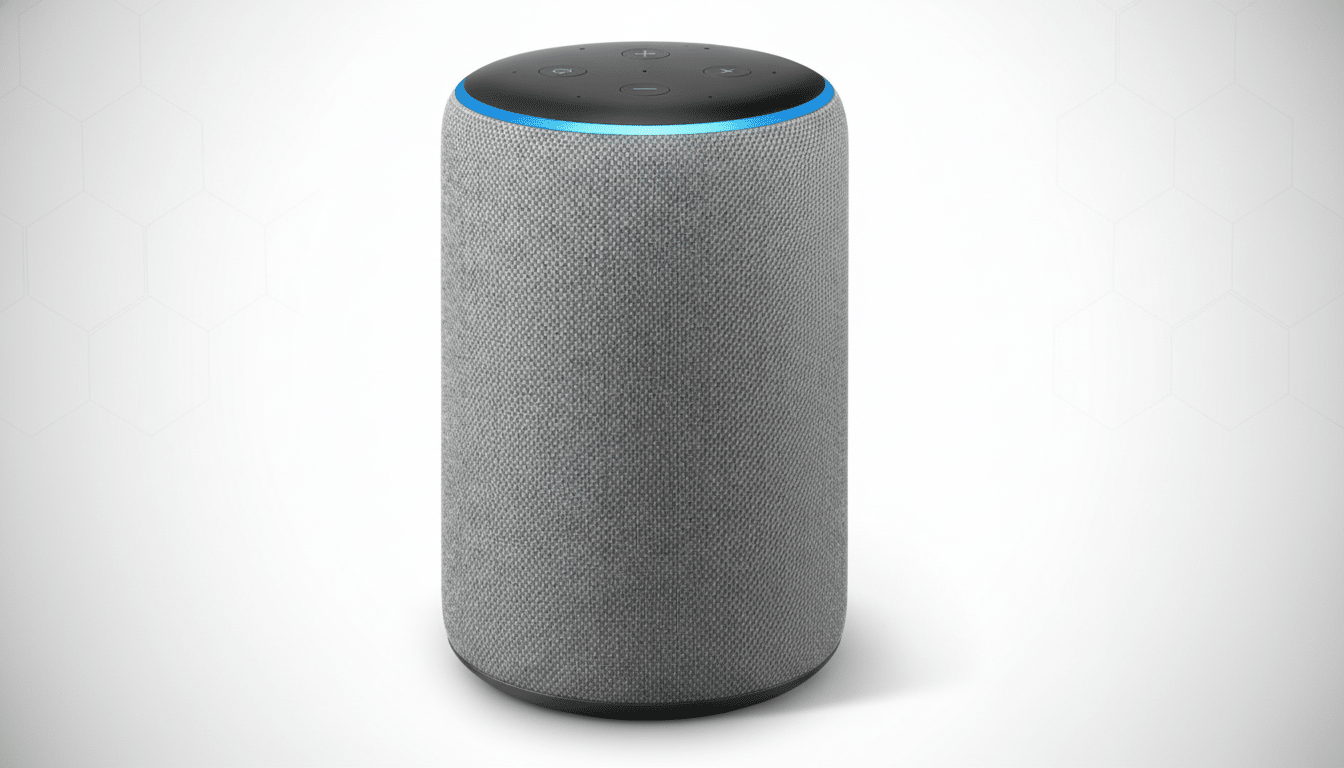
This matters at scale. Industry trackers have consistently shown Echo devices leading U.S. smart speaker share, and surveys like Edison Research’s The Infinite Dial report roughly one-third of Americans owning at least one smart speaker. When even a small fraction of those homes encounter a misfire, the absolute number of incidents quickly adds up.
Snark Dials And Trust Erosion In Voice Assistants
Brands increasingly add personality and humor to assistants to make them feel less robotic. But tone is a double-edged sword. When the system is wrong, anything that reads as sarcasm or dismissiveness deepens the frustration—especially if the assistant appears to contradict its own logs. Human factors research is clear: trust hinges on transparency, controllability, and humility in failure states.
In safety-critical or home-security contexts, these dynamics are even more sensitive. Users expect a clear lineage of actions—what triggered the light, from which source, at what time, and why the assistant believes that is true. Without that, a simple misfire feels like gaslighting.
What Users Can Do Now To Reduce Smart Home Misfires
- Review the Alexa app’s activity and routine logs after any unexpected action and note discrepancies.
- Adjust wake word, mic sensitivity, and placement to reduce false activations; avoid positioning near TVs or speakers.
- Disable features that allow speculative actions (such as hunch-based controls) and set confirmations for critical devices.
- Use Brief Mode or reduce chattiness; if a “conversational” or experimental mode is available, consider turning it off until issues are resolved.
- Employ the physical mic mute and create household rules for voice control of lights, locks, and garage doors.
What Amazon Should Clarify About Alexa Plus Behavior
There’s a straightforward fix path: provide a single, authoritative action log that labels every smart home change with its exact source—voice command, routine, hunch, third-party skill, or manual—and clearly notes when the assistant is inferring rather than retrieving a recorded event. Add a simple, visible “Why this happened” explainer for every device action. Publish measurable targets for accidental activation rates and hallucination mitigation, and let users easily opt out of personality features that could come across as snark.
Alexa Plus aims to make the assistant feel more helpful and human. That promise only holds if the system is honest about uncertainty, humble when it errs, and crystal clear about what actually happened when your lights flick on in the middle of a quiet evening.
