


Walk the show floor of CES and you sense a dramatic shift in car tech: the most important “horsepower” for today’s cars increasingly comes from silicon, not steel.
Automakers and chipmakers are treating cars as rolling AI computers, with autonomy, copilots, and safety intelligence tending to matter more than sheet metal. The take-home? AI is no longer a sidecar; it’s the main ride.
- Autonomy takes center stage with focus on thinking and readiness
- Physical AI is now the car’s brain in modern vehicles
- Voice assistants grow up with context and real dialogue
- Safety tech leads the way with AI in crash prevention
- New metal still arrives alongside steady software advances
- What this means for drivers as cars become software-first
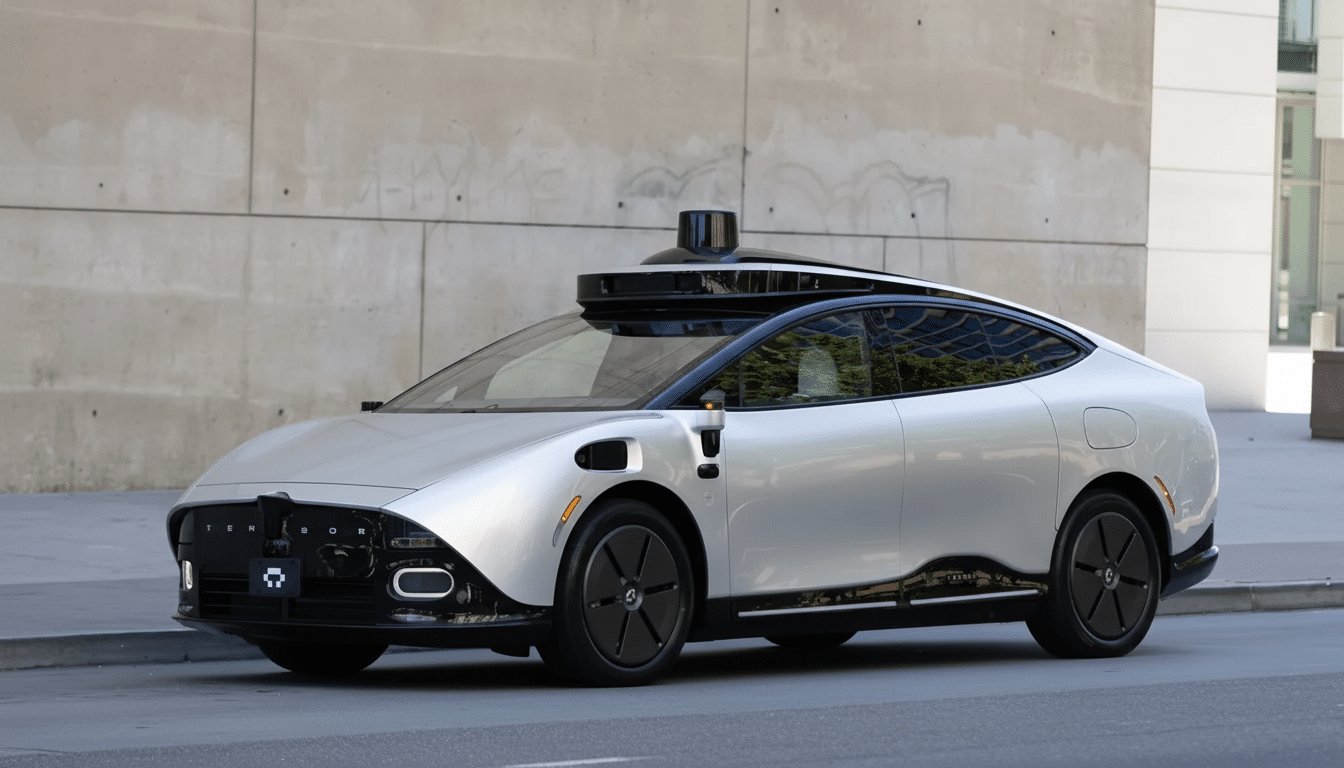
Autonomy takes center stage with focus on thinking and readiness
Two general themes prevailed when it came to talking about self-driving: thinking and preparedness. Less flashy to some people, but the stack that makes autonomy reliable—sensor fusion, predictive models, and on-vehicle compute able to handle edge cases—was also in focus.
Tensor Auto epitomized that transformation with its Robocar, a sumptuous electric capsule for heavy automation. It treats the car as a social robot: it talks, navigates with context-aware routing, learns schedules by heart, and chases SAE Level 4 in closed areas. It’s a production-intent concept vehicle, and it gives us some early insights into how autonomy is making the jump from hype reels to real-world capabilities.
Sony Honda Mobility’s AFEELA 1 emphasized a similar point from another perspective. The production sedan leans as much on computational smarts and in-cabin intelligence as traditional bragging rights, beginning at $89,900. The SUV-style prototype broadens the lineup, but the bigger story is in the interior-as-platform approach—collecting cameras, sensors, and GPUs to be key differentiators.
Physical AI is now the car’s brain in modern vehicles
Chipmakers framed the car as a robotics conundrum. Nvidia showcased “physical AI,” in which perception-and-action loops are run in real time on high-powered domain controllers. Autonomous driving research draws from Nvidia’s Alpamayo reasoning model: less rules-based code and more learned models of everything from inferred intentions to negotiating merges to dealing with novel cases.
The compute budgets are staggering. Leading the fight back against this onslaught are dozens of sensors and several high-performance processors among them, all juggling vision alongside mapping, driver monitoring, and cabin AI for any of today’s headline EVs. Because that horsepower counts: redundant perception and decision systems are what allow the automation features to work when things get sloppy.
Voice assistants grow up with context and real dialogue
If autonomy is the brainstem, then the assistant is the face. BMW previewed an Alexa-based assistant launching with its first Neue Klasse model, the iX3. This assistant is less about “set temperature to 72” and more about human dialogue, helpful suggestions, and context-aware transportation, providing current events, awareness of charging levels, and your calendar.
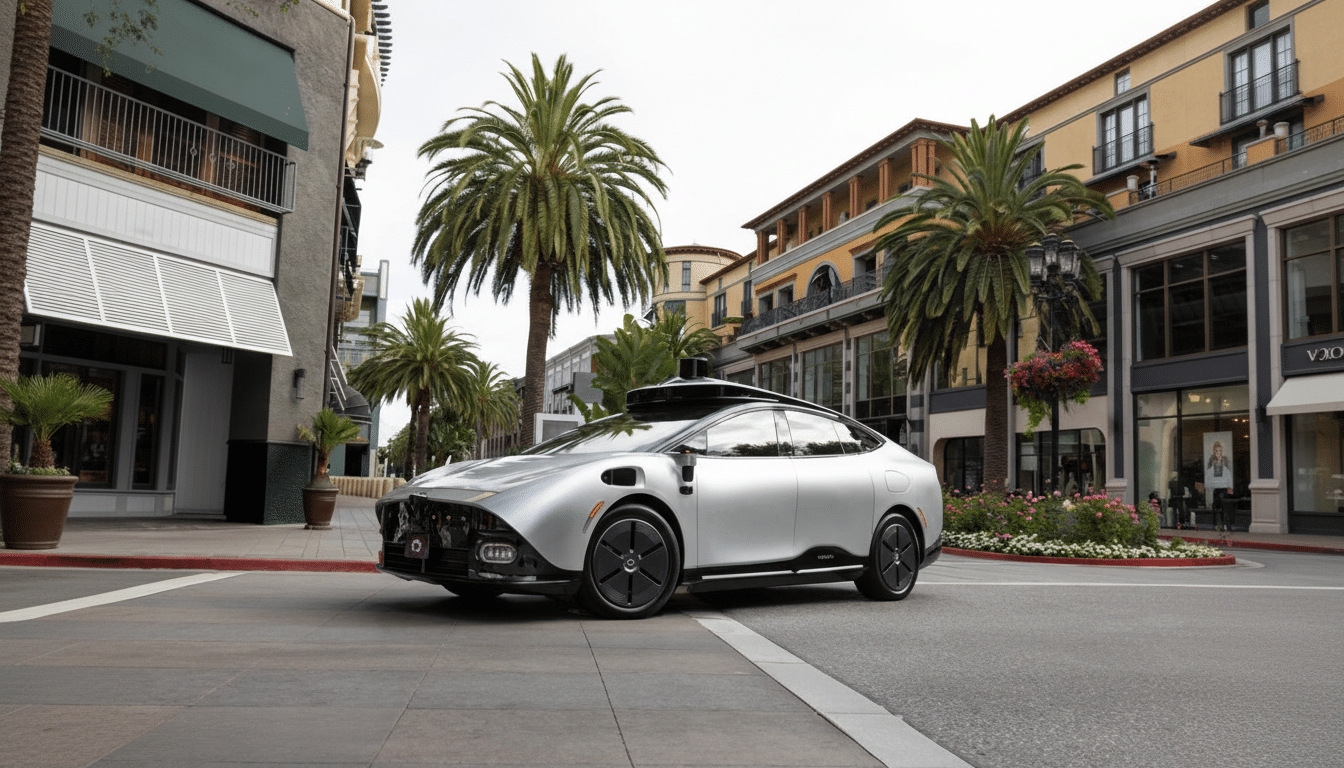
Ford is introducing an artificial intelligence assistant that starts on the smartphone and will eventually be consistent in the vehicle for continuity. Sony’s AFEELA 1 harbors a Microsoft Azure OpenAI-based chatbot for continuous speech interaction. Nvidia takes the same approach on board, but Tensor Auto goes one step further with an agent that combines cabin signals, vehicle sensors, and media preferences to create a profile using long-term memory for personalization over time.
This is important because the interface has become a purchase driver. Industry surveys from companies such as McKinsey and J.D. Power have found that shoppers will trade brands for superior software and connectivity. And when assistants behave intuitively—understanding intent, managing multi-part requests—owners actually use the tech, as opposed to resorting to their phones.
Safety tech leads the way with AI in crash prevention
AI is not merely a matter of convenience; it’s now as much about avoiding accidents. According to the Insurance Institute for Highway Safety, automatic emergency braking reduces rear-end crashes by about half, and forward collision warning alone provides significant reductions. Euro NCAP’s new protocols also favor junction AEB, vulnerable road user detection, and driver monitoring—capabilities that rely on strong perception and inference.
Regulators are watching. Organizations like NHTSA have indicated a greater focus on driver monitoring and human factors within partial automation. Anticipate driver monitoring rules becoming standardized and human-machine interface standards becoming clearer, accelerating the absorption of safeguards while reducing overclaiming.
New metal still arrives alongside steady software advances
Not all of the announcements were a lab on wheels for AI. Xiaomi updated its SU7 electric sedan with a safety-first tune-up and productivity gains, proving that it’s still steady improvements that keep buyers coming back. Volvo made the EX60 a strong real-world range car, and its combination of features included the brand’s signature safety suite. They’re practical cars that will hit the road soon, built on the same AI foundations without screaming them from on high.
What this means for drivers as cars become software-first
The car is becoming software on wheels, for better and worse. Over-the-air updates will expand functionality, though pricing models and data governance will dictate trust. Owners will demand transparency in what’s processed locally versus offloaded to the cloud, how preferences are maintained, and how auto features are tested.
The upside is tangible. It’s assistants that can actually lessen the load, ADAS that prevents fender benders, and autonomy that tackles the dull and the draining where AI makes financial sense. CES showed that the race isn’t about bolting AI onto cars. It’s building cars around AI, where safety and usability are the scoreboard.
The takeaway is simple this year: design the intelligence first, then wrap a car around it. All else risks being left in the rearview mirror.
