


Educational institutions now manage increasing volumes of assessments across multiple subjects, cohorts, and delivery formats. When testing processes rely heavily on manual preparation, scheduling, grading, and reporting, administrative workloads can quickly become overwhelming. Modern digital assessment platforms address this challenge by automating key workflows that support exam creation, delivery, and analysis. By reducing repetitive administrative tasks, these systems allow educators to focus more on teaching and student outcomes rather than operational logistics.
Automated Test Creation and Question Banks
One of the most effective time-saving features of modern assessment platforms is structured question bank management. Instead of creating exams from the beginning each time, educators can organise questions within searchable repositories aligned with specific learning outcomes or subject areas.
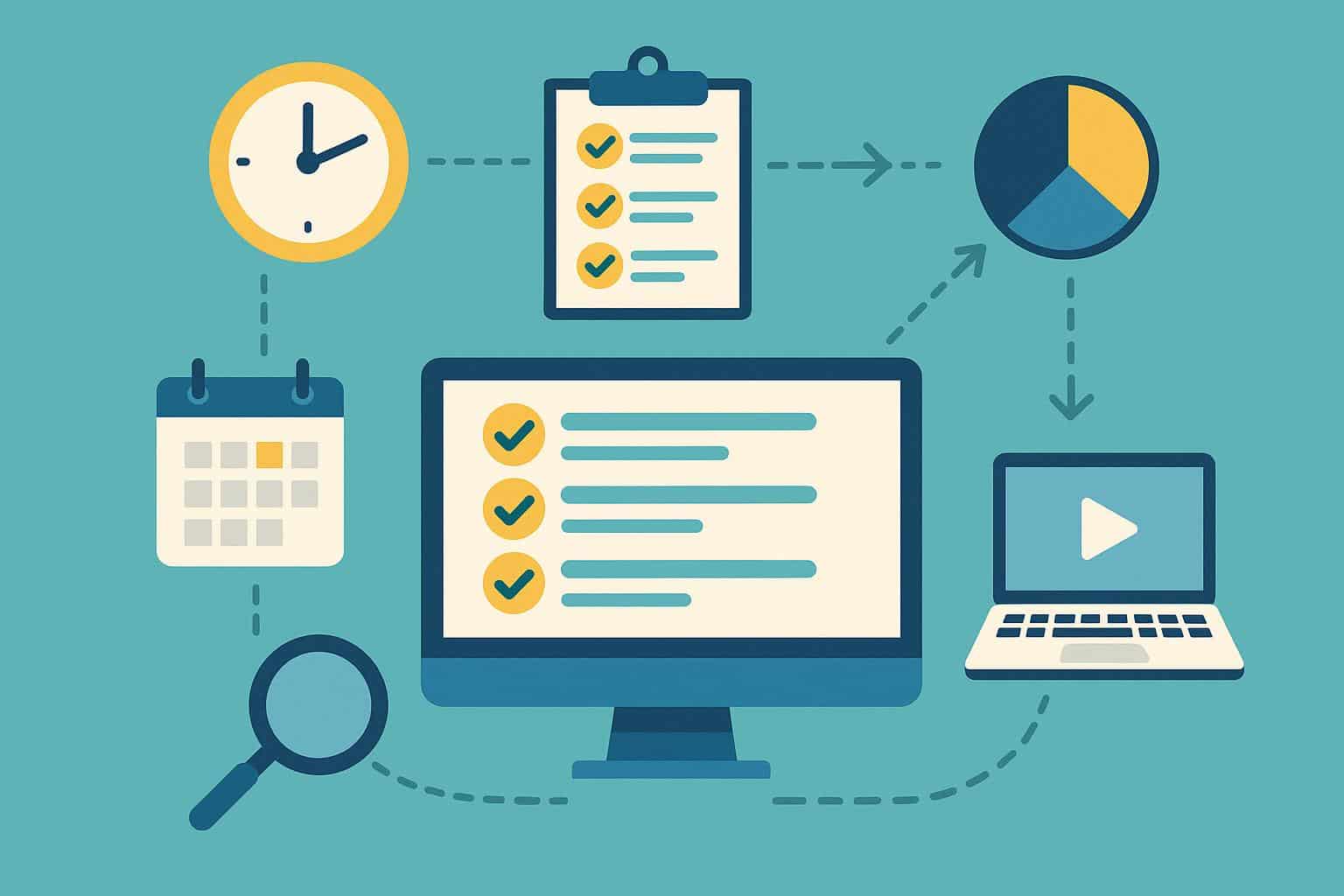
This structure allows instructors to generate assessments quickly by selecting questions from existing libraries. Systems designed for digital exam delivery, support organised item management that enables educators to assemble exams efficiently while maintaining consistency across assessments.
Another advantage is automated formatting. Questions, answer fields, and scoring parameters are structured directly within the platform, reducing the formatting errors that often appear when exams are created through traditional document-based workflows.
Intelligent Scheduling and Candidate Management
Managing exam schedules for large candidate groups can become a complex administrative task. Assessment platforms simplify this process through integrated scheduling tools that allow administrators to assign tests, define exam windows, and control candidate access within a single system.
Once configured, the platform automatically manages candidate enrolment and exam access. This reduces the need for manual coordination between departments, instructors, and candidates, particularly when assessments are delivered across multiple courses or locations.
Automated reminders and system notifications also help ensure candidates are aware of upcoming assessments. These alerts reduce missed sessions and remove the need for staff to manually communicate schedule changes or exam instructions.
Real-Time Analytics and Performance Reporting
Another key efficiency benefit of assessment platforms is automated performance analytics. Instead of compiling results manually, educators can access real-time dashboards that summarise assessment outcomes and cohort performance.
These insights help instructors quickly identify patterns in student performance, including questions that proved challenging or topics where further instruction may be required. The ability to view this information immediately after an assessment reduces the time normally spent analysing spreadsheets or manually preparing reports.
Automated reporting also supports institutional review processes. Assessment data can be exported in structured formats that align with academic reporting requirements, helping institutions monitor programme effectiveness and meet compliance standards more efficiently.
Automated Marking and Instant Scoring
Manual grading is one of the most time-consuming aspects of assessment administration, particularly when courses involve large student cohorts. Automated marking reduces this burden by instantly evaluating objective responses using predefined scoring rules embedded within the system.
Research on automated marking in assessments notes that automated marking enables calculation of follow-through marks when incorrect answers are used in subsequent parts, allowing multi-step questions to be evaluated systematically while maintaining clear grading rules.
Because marking criteria are standardised within the system, every response is evaluated using the same scoring logic. This consistency helps institutions manage large-scale assessments more efficiently while allowing educators to focus their attention on responses that require deeper academic judgment.
Secure Delivery and Academic Integrity Tools
Maintaining the integrity of assessments often requires extensive supervision and verification procedures. Modern assessment platforms streamline this process by incorporating built-in security controls within the testing environment.
Features that support identity verification, controlled exam environments, and monitoring tools help ensure assessments are conducted fairly. These mechanisms automatically detect unusual activity during testing sessions and flag potential concerns for review.
Integrating these controls directly into the assessment platform simplifies administration while maintaining confidence in exam results. Institutions no longer need to coordinate multiple systems to deliver secure assessments across distributed learning environments.
Improving Efficiency in Modern Assessment Management
As education systems expand and digital learning becomes more common, institutions must manage assessments with greater efficiency. Platforms that automate exam creation, scheduling, grading, analytics, and secure delivery help reduce administrative pressure while improving consistency across testing processes. By streamlining these workflows, assessment platforms allow educators to prioritise teaching quality and student progress while maintaining reliable evaluation systems.
