


In a room filled with hype and flashy prototypes, noisy gadgets that blare megacompanies’ ability to spend loads of marketing dollars, a small Labrador retriever puppy named Jennie stood out — and unexpectedly calmed my nerves. Tombot’s robotic companion for people with dementia costs $1,500; what it served up on the floor of CES was testimony to something universal, which is credible comfort whenever I found myself longing for my real dog back home.
What sets Jennie apart as a robotic companion at CES
When on display, Jennie acts and appears more like a puppy than a stuffed toy. Under its plush exterior are nine servo motors that control head turns, ear twitches, eyebrow raises and a tail wag that looks instinctive rather than mechanical. It has a capacitive touch system that senses when and how you’re petting; a microphone array that listens for cues; an accelerometer and gyroscope to track posture; a light sensor to dissuade nighttime barking; and temperature sensors that monitor room conditions.

Tombot says the battery functions for a full day before recharging overnight. You can give the robot a name that it will respond to, and you can personalize behavior settings through the companion app for your smartphone. The catch is that the connectivity is local only — Bluetooth or peer-to-peer Wi-Fi — which means you have to be in the same room to pair or manage it. The company emphasized a privacy-first design not dependent on the cloud — a major break from many consumer robots.
Designed for caring, not circus tricks or flashy gimmicks
Jennie is purpose-engineered for senior care, in particular for those with dementia. It’s sized and weighted to sit on a lap, table or chair (but never the floor) so there won’t be any tripping. It is designed to be calming: a routine that is predictable, gentle responses, and no sudden movements. Tombot spent nine years perfecting the realism and safety after consulting with clinicians and caregivers, and it shows in the details. It’s not about novelty; it’s about emotional regulation and company.
This approach is consistent with findings in the field of eldercare robotics. Paro, the therapeutic seal, has been deployed in nursing homes around the world, and peer-reviewed studies have found that interactions with Paro are associated with decreases in agitation and stress among people who suffer from dementia. The Alzheimer’s Association estimates that millions of people in the United States are living with Alzheimer’s disease or other forms of dementia, and the U.S. Surgeon General has said chronic loneliness is also associated with a 26 percent higher risk of premature death. AARP has also identified social isolation as an expensive public health concern. Tombot is betting that the robotic facsimile of lifelike, personal, low-maintenance companionship can fill a gap.
A CES moment of calm that shows Jennie’s soothing design
Skeptically, I came to it assuming that there must be some clever gimmick. Conversely, the exchange felt disarmingly familiar. Sitting in a hotel room, all I had to do was whisper her name and Jennie cocked her head with that classic doggy curiosity; a few scratches behind the ears unleashed a slow tail wag plus an excited little bark on cue for a “treat.” The feel of that vibration mattered — the motors are silent, and the movement is smooth enough that my brain would cease to track the mechanics, honing in on the exchange.
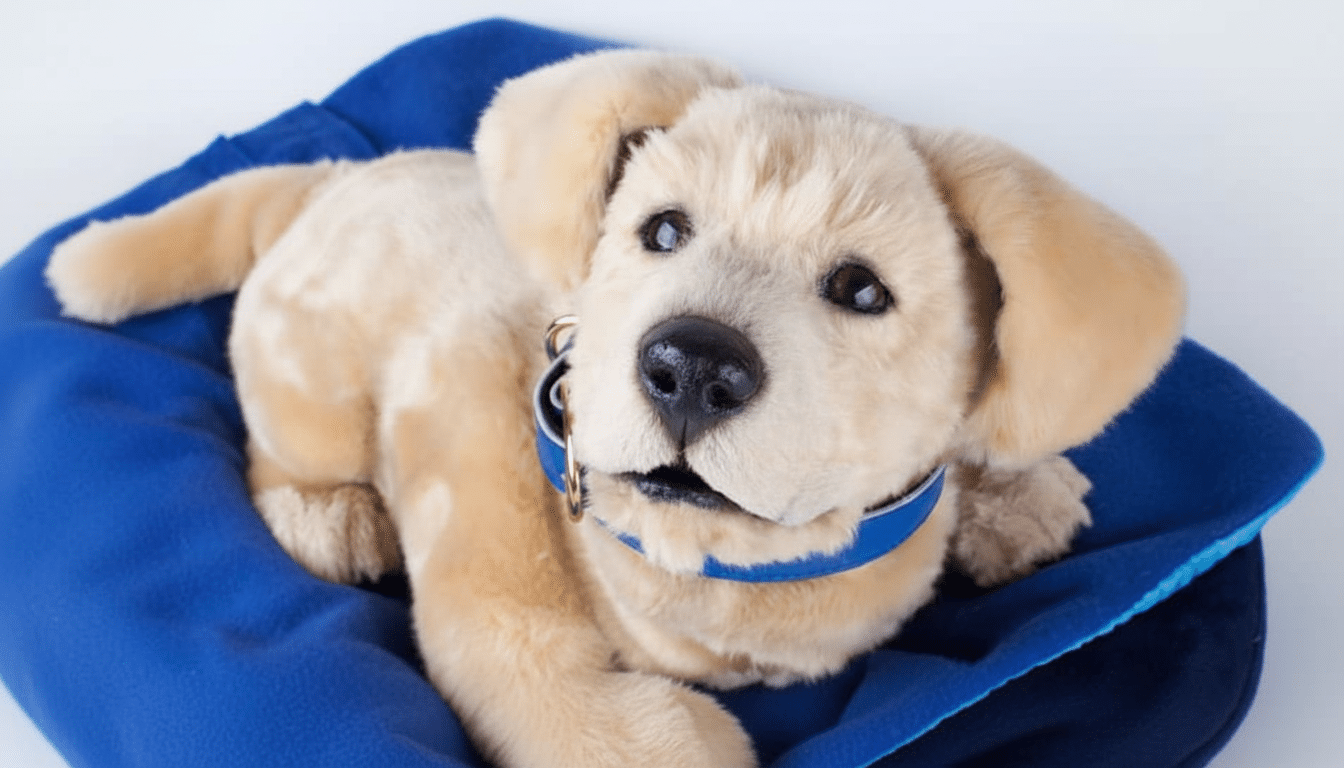
As a reporter who does a fair share of traveling, I also know the perils of anthropomorphizing machines. But sitting with Jennie felt like air traffic control in action and then some; it sliced through the ambient stress and sensorial assault of the show floor. It’s not a replacement for my dog or for professional care, but it provided a real emotional reprieve — the very use case that Tombot is aiming for with families and facilities plagued by dementia and isolation.
Context and the competitive field for robotic pet companions
Jennie falls squarely in the middle of that range, at $1,500. That isn’t precisely bargain territory, but consider that Sony’s Aibo, a cloud-connected robot dog with free-roaming movement and plenty of personality, has sold for roughly twice the price. At the other end, minimalist comfort devices like the Qoobo “tail pillow” are much cheaper but offer little interactivity. Paro, a therapy seal, can cost many thousands of dollars and is typically bought by institutions. Jennie’s pitch: near-lifelike affect, clinical intent and rigid data privacy, at a price with less overhead than that of an entirely mobile robot.
Now it’s a question of durability, cleanability and long-term support. Care environments are hard on equipment; fur has to be sanitary; motors should survive daily use and parts need to be serviceable. Tombot says it developed Jennie for all-day interaction, with easy overnight charging, the correct operational model if you’re in assisted living or simply receive in-home care.
What comes next for Jennie and Tombot’s dementia-care focus
Tombot hopes to bring Jennie to market after almost a decade of R&D. The company’s road map instead prizes stability and privacy over flashy autonomy features — a stance that could jibe with doctors and families who don’t want another internet-connected camera in the living room. If Jennie can indeed offer reliably comforting, low-maintenance uptime, it could be a quietly transformative instrument of dementia care — and a stress-reducing presence for anyone who needs a tail to wag at the end of the day.
