


YouTube Music is rolling out a new AI Playlist tool that builds playlists from a simple vibe prompt, letting Premium users describe what they want to hear with text or voice on Android and iOS. The feature sits inside the Library tab under New and is designed to turn loose ideas like “sunny indie for a park picnic” or “moody late-night piano” into playable, editable track lists.
How YouTube Music’s new AI playlists feature works
Once you tap AI Playlist, you enter a prompt—mood, activity, genre blend, decade, even location or weather—and the system assembles a starter set of songs. Voice input is supported, which matters for on-the-go use when typing isn’t convenient. You can save the results as a standard playlist, rename it, and add or remove tracks like any manual list.
- How YouTube Music’s new AI playlists feature works
- Why YouTube Music’s AI playlists matter for discovery
- How It Differs From Ask Music And Rivals
- Early reactions and the current limitations to expect
- Sample AI playlist prompts you can try right now
- What to watch next as YouTube Music refines AI playlists
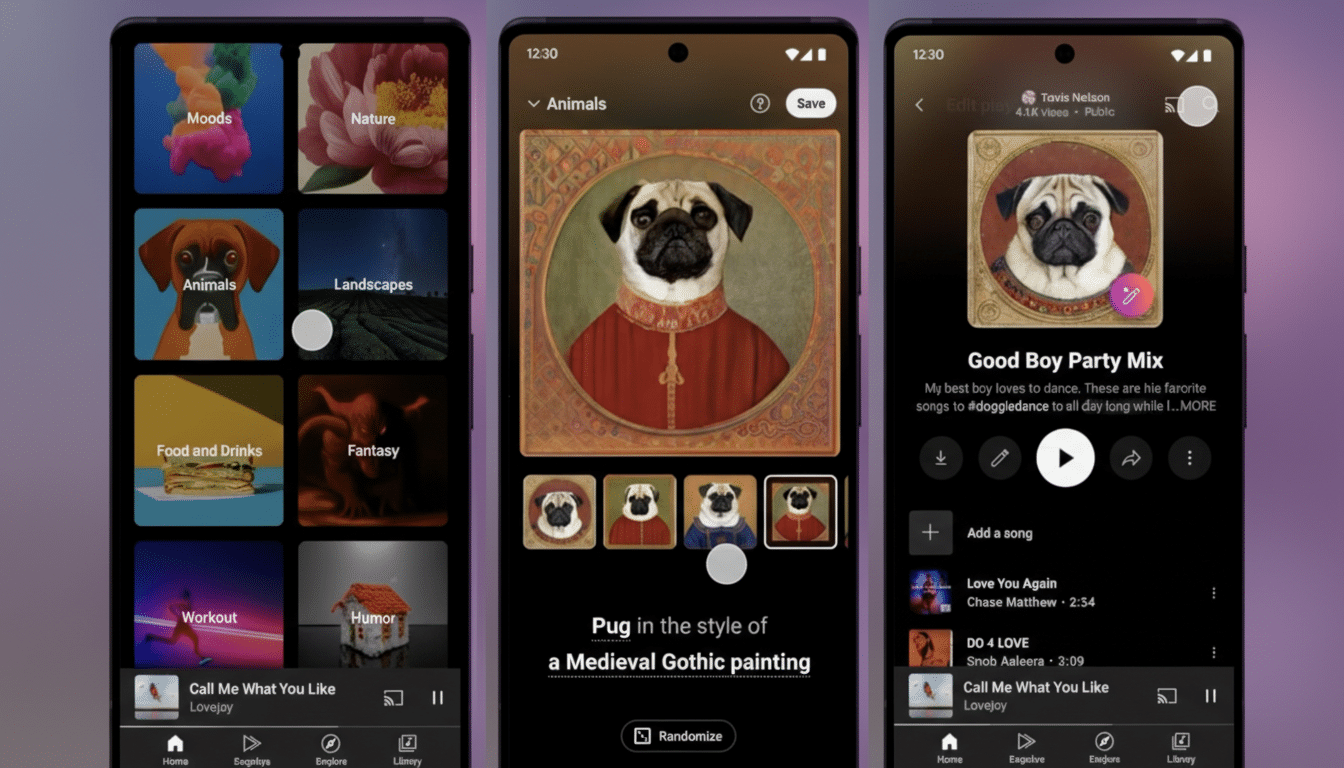
Google hasn’t detailed the model under the hood, but the interface carries familiar Gemini branding. Expect it to lean on your listening history, broader platform trends, and metadata such as genre, tempo, and era to balance relevance with discovery. In practice, layered prompts tend to yield better results: “90s R&B slow jams with modern remixes,” “high-BPM techno for a 30-minute run,” or “acoustic covers for a rainy commute.”
Why YouTube Music’s AI playlists matter for discovery
YouTube recently disclosed that YouTube Music and Premium surpassed 100 million subscribers globally, underscoring how central music has become to its subscription bundle. At the same time, Spotify reports more than 600 million monthly users, and Apple Music continues to expand curated programming. In a market this competitive, reducing the time between “I know the vibe” and “I’m listening to the vibe” is a meaningful edge.
Playlists are now a core discovery surface across services, and industry groups such as IFPI note they rank among the leading ways fans encounter new artists. A prompt-based generator tackles two long-standing pain points: the creative friction of naming and sequencing tracks from scratch, and the generic feel of one-size-fits-all “mood” mixes. If tuned well, AI prompts can deliver specificity—“French house for rooftop sunsets at 110–120 BPM”—without hours of digging.
How It Differs From Ask Music And Rivals
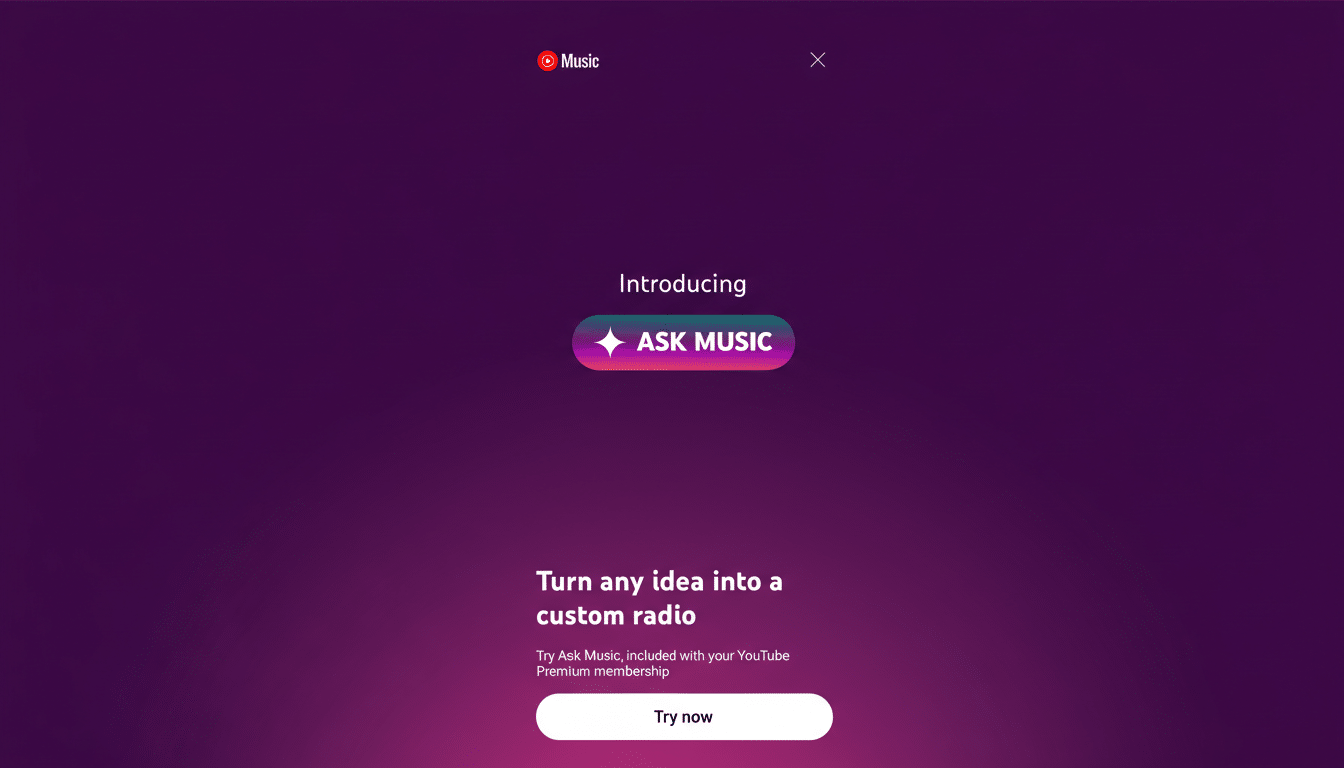
YouTube Music has supported natural-language requests via its Ask Music capability inside search, which behaves more like a dynamic radio. AI Playlist shifts that experience into the playlist creation flow, producing a concrete, savable list rather than an ephemeral station. It’s a small UI change with big behavioral implications: playlists are shareable artifacts; radio sessions are not.
The move also lines up with where competitors are heading. Spotify’s Prompted Playlists launched recently with a similar “describe it, we’ll build it” approach, while its AI DJ focuses on narration and sequencing. Apple Music leans heavily on editorial and algorithmic blends but hasn’t introduced open-ended prompt playlists. YouTube’s differentiator could be catalog breadth that includes official tracks, remixes, live performances, and user uploads, giving prompts a wider palette to paint from.
Early reactions and the current limitations to expect
Initial comments on social platforms show the split familiar to most AI rollouts: some welcome the convenience; others express fatigue about yet another AI label. The real test will be control and transparency—can users steer away from overplayed hits, set durations, filter explicit content, or prioritize deep cuts? Licensing rules and regional availability may also affect how eclectic the results get, particularly for remixes and live sets.
As with any generative recommendation system, prompt quality matters. Vague inputs produce generic lists; layered constraints tend to coax smarter results. There will be misses—wrong subgenres, tempo mismatches, or artists you’ve already skipped—but iterative prompting and quick edits can close the gap.
Sample AI playlist prompts you can try right now
- “Sunset synthwave for a coastal drive at 100–115 BPM”
- “Underground UK jazz meets hip-hop cypher instrumentals”
- “Nostalgic 2000s pop punk without top 10 hits”
- “Focus-friendly Afrobeat instrumentals for a 45-minute study session”
- “Global club edits for a house party with smooth transitions”
What to watch next as YouTube Music refines AI playlists
Look for refinements like energy and mood sliders, playlist length targets, prompt history, and options to weight personal favorites versus exploration. Given YouTube’s broader AI push—spanning chat, translation, and maps—deeper cross-surface context could arrive, such as commute-aware sets or gym-ready durations that auto-refresh.
For now, AI Playlist gives YouTube Music subscribers a fast way to turn a feeling into a soundtrack. If Google pairs it with thoughtful controls and the service’s uniquely wide catalog, vibe-first listening could become the platform’s most compelling on-ramp to discovery.
