


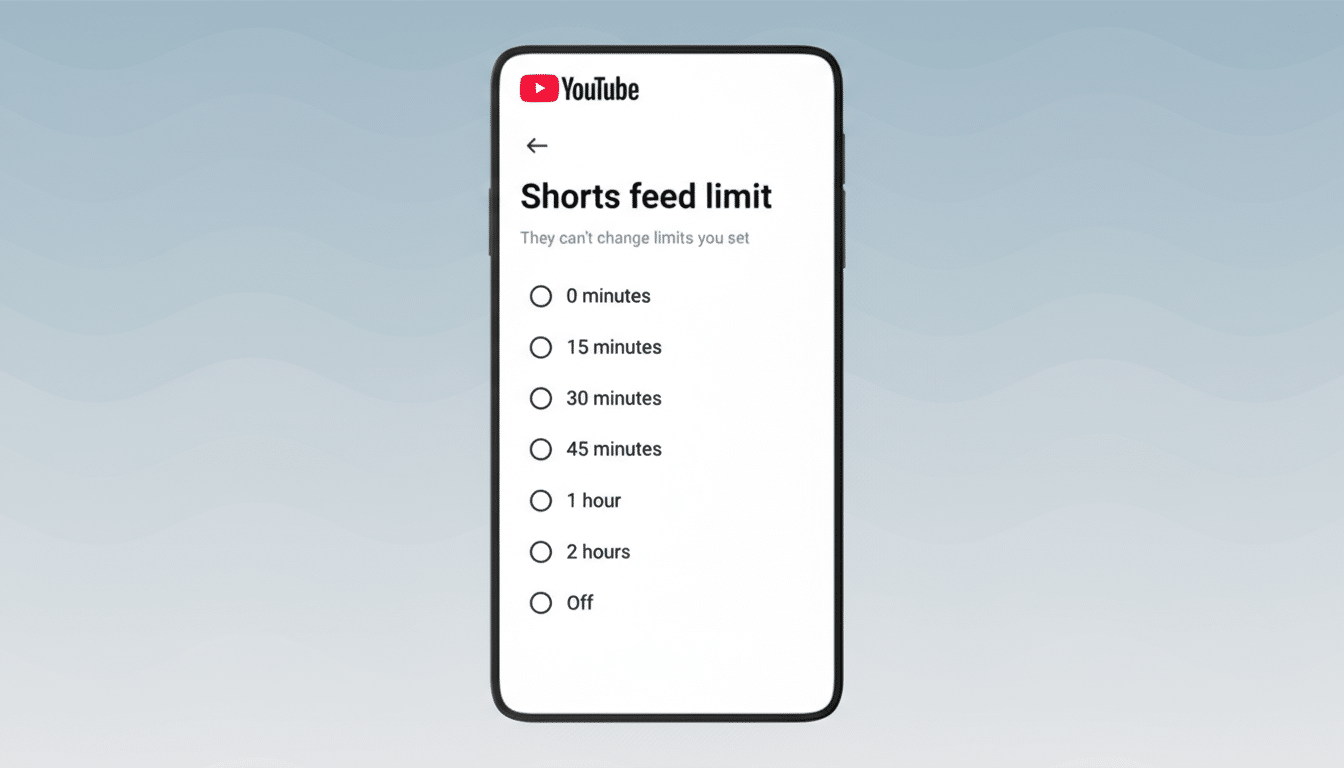
YouTube is rolling out a new control that lets parents curb how much Shorts their teens can watch, including the option to cut access entirely. The update targets supervised accounts on the main YouTube app and adds a Shorts-specific time limit parents can set per day, with a zero-minute setting planned that effectively disables the feed.
What Changes For Parents And Teens With New Limits
The new tool is simple by design: parents of supervised teens will be able to assign a daily cap on Shorts viewing. Once a child hits that allotment, the Shorts feed is locked for the rest of the day. YouTube says a zero-minute option is coming, allowing families who prefer long-form videos or music to remove the Shorts tab from the experience altogether.

This update lives alongside existing Digital Wellbeing features — such as take-a-break nudges and bedtime reminders — which parents can already manage for their children’s accounts. It’s also separate from the YouTube Kids app, which does not include a Shorts tab. In addition, YouTube is introducing a refreshed onboarding flow for kid and teen accounts so parents can more clearly select content settings at setup.
Why This Move Matters For Families And Regulators
Short-form feeds are engineered for rapid, endless scroll — engaging but easy to overdo. YouTube has leaned heavily into Shorts over the past two years, reporting more than 2 billion logged-in monthly users consuming the format. For families, that scale translates into a practical question: how to keep quick-hit entertainment from overwhelming homework, sleep, or other activities.
Research underscores the stakes. According to the Pew Research Center, 95% of U.S. teens use YouTube, and 19% say they are on it “almost constantly.” Health and child-safety groups have urged platforms to provide granular controls that fit real routines rather than one-size-fits-all limits. Regulators are also tightening the screws: the European Union’s Digital Services Act and the UK’s Online Safety Act both push services to reduce risks for minors, while COPPA in the U.S. restricts data collection for children under 13. A Shorts-specific timer is a concrete response to this shifting landscape.
How To Put The Controls To Work In Your Family
Families using supervised YouTube accounts — typically set up through Google’s Family Link — will find the Shorts limit in the parent dashboard once the feature arrives. A practical approach is to start with a modest daily cap, like 15 or 20 minutes, and pair it with bedtime reminders to protect sleep. For school days, the forthcoming zero-minute setting can keep focus on longer-form explainers, lectures, or music without the lure of a scrolling feed.
These settings work best alongside device-level tools. On Android, Family Link can pause devices, set app time limits, and filter content across Google services. On iOS, Screen Time can restrict app categories and set downtime windows. Combining platform and device controls gives parents both the precision of a Shorts-specific cap and the broader guardrails needed for the rest of the phone.
What It Means For Creators And The Platform
YouTube is also circulating guidance for creators who speak to teen audiences, encouraging “deep dive” topics and content that sparks curiosity. That aligns with the direction of the new controls: if families dial back short-form snacking, creators who produce substantive, interest-led videos could see steadier engagement from younger viewers during permitted time windows.
In the near term, the impact on overall Shorts watch time may be limited, since the feature applies to supervised accounts and many teens still use standard profiles. But as families adopt supervision and as policy pressure mounts, expect more granular, format-specific limits to become table stakes across social video. TikTok’s default daily limit for minors and Instagram’s parental supervision tools are already moving in this direction; YouTube’s Shorts timer adds a missing piece within its ecosystem.
Bottom line: by giving parents a dial — not just an on/off switch — for short-form video, YouTube is acknowledging how families actually manage media. It’s a practical step that blends product design with child-safety expectations, and it may subtly reshape how teens split time between quick clips and deeper viewing.
