


Xreal’s newest AR smart glasses are the kind of step-change that makes longtime mixed reality watchers do a double take. In a hands-on demo, the R1 glasses delivered a crisp, bright virtual screen with gaming-grade smoothness and a field of view wide enough to feel cinematic without drifting into VR territory. Paired with a gamer-friendly dock, real-time 2D-to-3D upconversion, and hand tracking, this is the most convincing case yet that lightweight AR eyewear can be both a productivity tool and an entertainment powerhouse.
A Display Built For Gamers And Road Warriors
The R1’s headline spec is its display system: 1080p per eye on micro-OLED panels pushing up to 240Hz. That refresh rate isn’t a vanity number—it reduces perceived blur and judder when tracking fast motion, which makes text feel stable and action games look fluid. In side-by-side comparisons with typical 90–120Hz smart glasses, the difference in motion clarity is immediately visible, especially when scrolling spreadsheets or panning across a 3D scene.
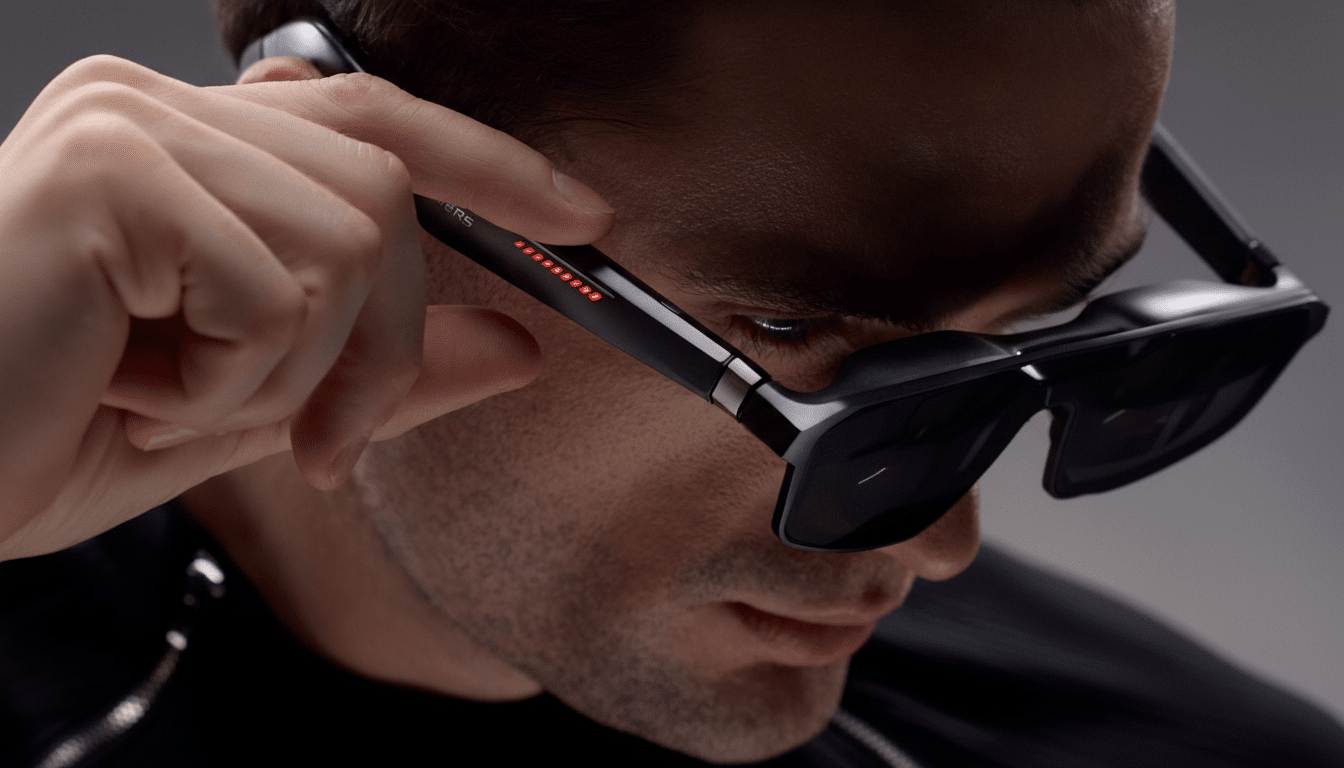
Field of view lands at 57 degrees, a sweet spot that reads larger than most portable “personal display” glasses while staying light and wearable. Fine UI elements remained legible at normal working distance, and color reproduction held up well against bright ambient lighting. It’s the first time in a slim AR frame that the image genuinely approached the fidelity of a mid-sized desktop monitor.
Design That Speaks To The PC And Console Crowd
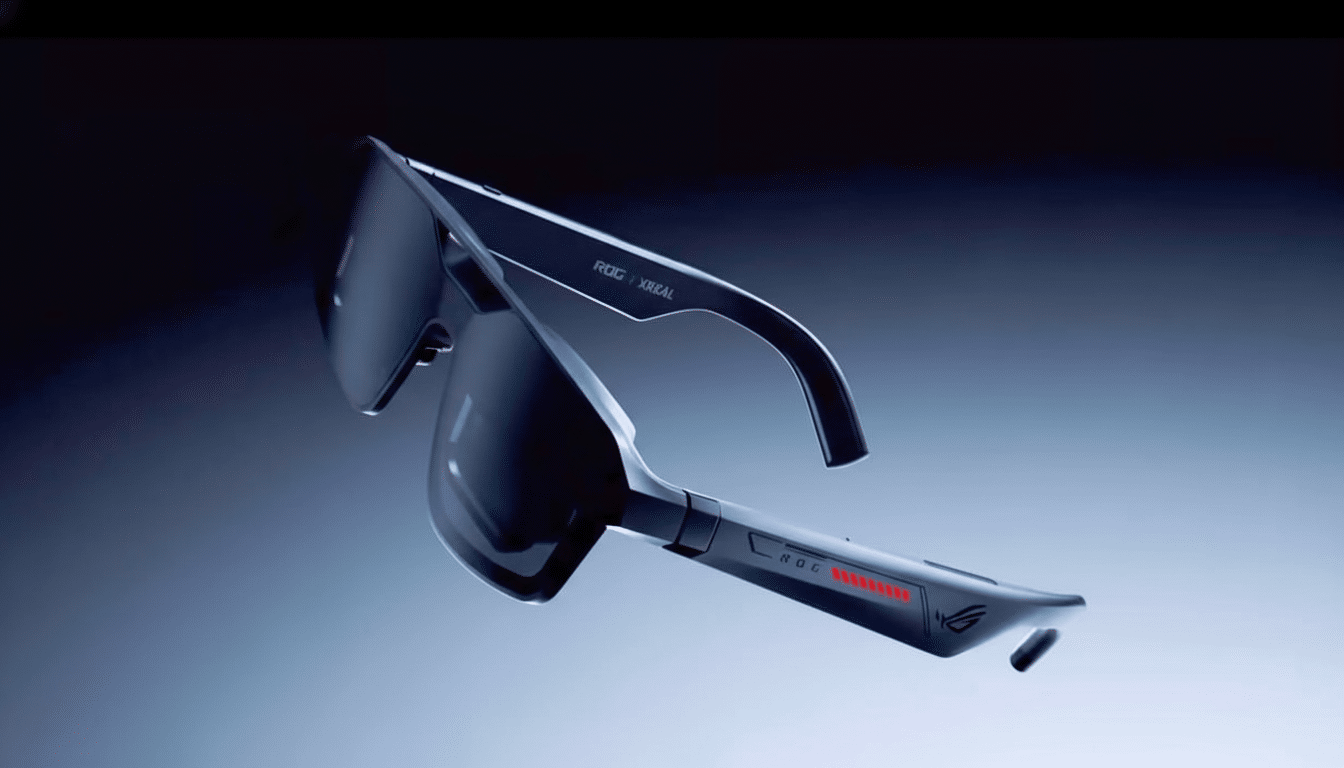
The industrial design leans into performance gear rather than minimalist eyewear. The R1 carries a bold, angular look with RGB accents that clearly telegraph its audience. A matching Control Dock simplifies life for multi-device setups: plug in a PC and a console, then switch sources without re-cabling. For living rooms and dorms where a big TV isn’t feasible—or for late-night sessions where privacy matters—this is a pragmatic alternative to a full headset.
Weight distribution is balanced enough for extended sessions, though you’ll still want a short break every hour or so. Passive light shields help boost immersion in bright spaces, but the glasses remain transparent enough to keep situational awareness—key for travel, shared offices, or quick context switches.
Hand Tracking Shows Promise With A Learning Curve
The R1 supports in-air gestures, turning pinches and drags into clicks and scrolls. Tracking is responsive, but newcomers should expect a short acclimation period: the on-screen cursor can feel offset from fingertip position until your brain adapts. A quick calibration flow mitigates this, and after several minutes the motions begin to feel natural. The upside is compelling—no desk, no mouse, just a floating screen you can control from an airplane seat or couch.
As the broader industry has shown with other spatial devices, gestures shine for lightweight navigation and media control, while precision tasks are still best with a trackpad or game controller. Expect software updates to refine targeting and reduce fatigue; it’s common for early gesture systems to improve rapidly once real-world usage data rolls in.
Real-Time 2D To 3D Conversion With Xreal’s X1 Chip
Xreal’s Real3D feature taps the in-house X1 spatial computing chip to convert ordinary HDMI sources—phones, consoles, or laptops—into stereoscopic depth on the fly. Feed it a movie or an open-world game through Xreal’s video hub, and the system infers depth layers without manual authoring. That’s a big deal: conventional 2D-to-3D conversion is usually labor-intensive and offline, reserved for major film releases.
In practice, results vary by content. Interior scenes with strong geometric cues convert cleanly, making windows and furniture read as distinct layers. Fast-paced games also benefit; the added parallax sells speed and space. Nature footage exposes the limits—distant hills can look like stacked cutouts, a well-known artifact in real-time conversion. Still, the overall effect is engaging, and the ability to toggle depth on a standard feed is the kind of convenience that drives actual daily use.
How It Fits In A Maturing Augmented Reality Market
Lightweight AR glasses occupy a different lane than fully enclosed headsets. You trade total immersion for comfort, social acceptability, and easy portability. Analysts at IDC and CCS Insight have flagged steady multi-year growth in spatial devices as components like micro-OLED displays and compact sensors improve, and the R1 underscores why: you get monitor-class clarity without a monitor.
The 240Hz panels also speak to a larger trend. Display Supply Chain Consultants has tracked rising investment in microdisplay manufacturing, and the benefits are starting to show up in consumer form factors. High refresh rates, better contrast, and lower power draw are converging to make all-day AR more practical than it was even two product cycles ago.
Early Verdict: Strong AR Glasses With Gamer Appeal
The R1 is the most convincing execution yet of “monitor in your bag.” The display is sharp and smooth enough for serious work, the gamer-first design pairs neatly with PCs and consoles, and Real3D adds a playful twist that’s surprisingly effective with the right content. Gesture control is promising with minor rough edges, and the 57-degree field of view hits a practical sweet spot for a device you can actually wear for hours.
If you’ve written off smart glasses as novelty add-ons, this generation merits a fresh look. With credible image quality, a slick docking experience, and a silicon pipeline built for real-time spatial tasks, Xreal’s latest hardware shows just how quickly AR eyewear is growing up.
