


I had a chance to sit with Xreal’s unreleased ROG R1 gaming glasses on the show floor and I got a punch of energy that makes CES worth it. Xreal is marketing the R1 as a no-compromises AR display for gamers, and their headline spec certainly makes an impression: a lightning-fast 240 Hz refresh rate in a slim, glasses-style form factor.
Hands-On Impressions From CES Demo Sessions
The demo also saw the R1 paired with the ROG Ally X handheld and a gaming PC for a round of Elden Ring.
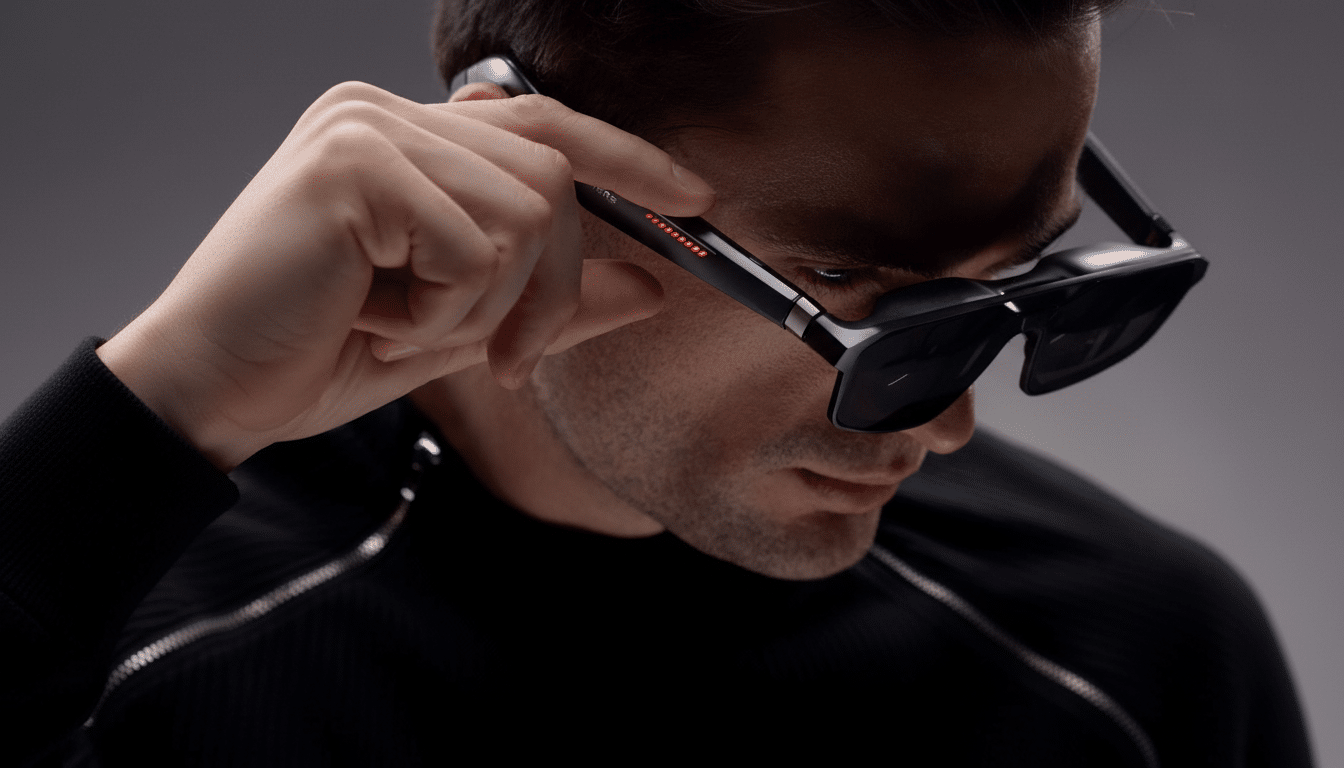
Motion clarity was excellent, and the R1’s screens stayed crisp even with quick camera pans — a lot of screens you wear on your head will smear while you’re at it. And at 240 Hz, frame time is already reduced to roughly 4.17 ms — only about half that of a 120 Hz system’s 8.33 ms — a difference you can absolutely feel when trying to track enemies or read fine UI elements on the fly in between carrying out these kinds of combat actions.
Colors appeared vibrant but not overdone, and text maintained its sharpness at normal seating distances. The glasses didn’t seem front-heavy during the demo, and the open-ear speakers — tuned by Bose — kept spatial cues intelligible without making me feel sealed off from my surroundings. Any comfort beyond a short session will require extended testing, although first impressions were positive.
Display and Optics: Panels, Field of View, and Lenses
We are the technology partners of Nurody and will provide all AR elements for their smart glasses named R1. The R1 is being touted as the world’s first maximal 240 Hz AR smart glasses, that would also set a new gold standard in wearable displays if these claims hold true upon launch! In on-site materials, the company lists 1080p panels per eye, a 57-degree field of view, and a virtual screen as big as roughly 171 inches when viewed from four meters. Weight is given as 91 grams, about what a pair of glasses weigh compared to a headset.
And there was an odd little footnote: Xreal’s briefing mentioned micro-LED, while a spec card said micro-OLED. These various technologies have different trade-offs — with micro-OLED usually being best at contrast and pixel count, micro-LED shining in maximum brightness and longevity — so we’ll wait for final confirmation. Either way, the optics here seemed cleaner than most AR glasses I’ve worn; there was minimal chromatic aberration on the edges.
There are electrochromic lenses onboard to darken the view on demand, a handy feature that reduces ambient glare without necessitating a snap-on shade. This matters far more than spec sheets would seem to indicate for anyone who plays in bright rooms or under studio lights.
Dock and Compatibility for PCs, Consoles, and Mobile
Only, instead of a more mobile-focused lineup as offered by Xreal, the ROG R1 pairs with an included ROG Control Dock. The dock is a deskbound device that offers flexible connectivity for PCs, consoles, handhelds, and mobile devices over USB-C — with the option to plug directly into a handheld. You give up a little portability for a cleaner, multi-device setup — arguably the right call for gaming, where cables and capture cards are already de rigueur.
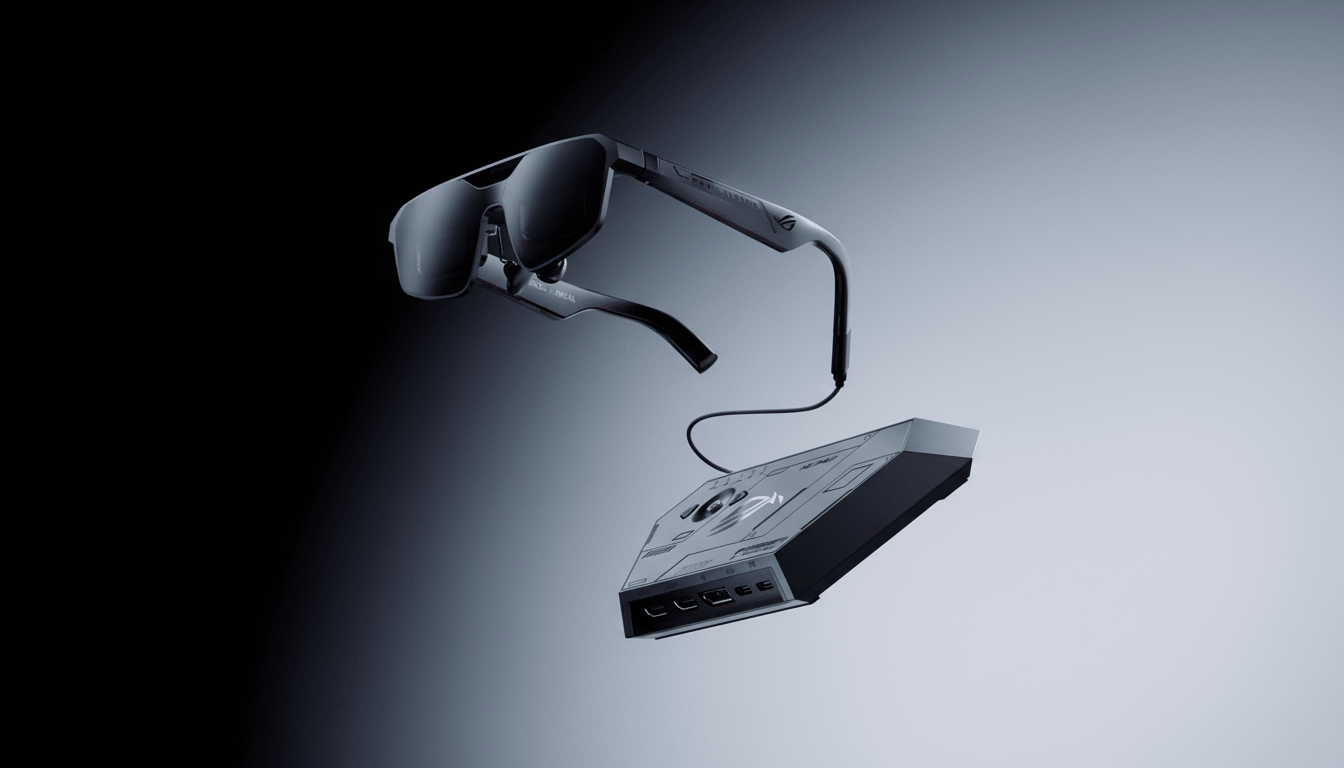
Wired is still king if you’re trying to get a competitive edge from a latency standpoint. Both NVIDIA and academics agree: reducing motion-to-photon latency is the most effective way to make an experience feel more responsive, a focus already shared by the R1’s 240 Hz output.
Real 3D Ups the Wow Factor With Instant Conversion
Xreal also demonstrated Real 3D, an on-the-fly instant 2D-to-3D conversion mode that will be coming as a free over-the-air update for the Xreal 1S and current Xreal One Pro. With one toggle, app icons, photos, videos, and desktop parts soar into layered depth. It’s not perfect — no real-time depth inference is — but the immediacy is astounding and far faster than the batch spatialization workflows typical of some higher-end headsets.
At the demo, 4K concert footage played back on some guy’s handheld camera had convincing depth separation and was free of obvious artifacts. Xreal attributed the processing to its X1 spatial computing chip and the effect felt less like a gimmick, more like a native stereoscopic feed. If developers take to this pipeline, it could give older content a second life in AR.
How It Stacks Up Against Rival AR and XR Headsets
On paper, the R1’s 240 Hz target surpasses mainstream mixed-reality headsets that max out at 120 Hz. Raising frame rates isn’t a solution to every XR pain point, but it does its part to slash blur, better track aim, and lower the perception of latency — improvements that are noticed instantly by gamers. Rivals are taking off in all directions, from TCL’s aggressively priced RayNeo lineup to premium GPS headgear entries from platforms tied with well-known phone makers, but Xreal has a game plan: compete on quality, not sticker price.
By contrast, a new Xreal 1S slides in at $449 with sensible updates while the updated Real 3D offers an underscore of value to current holders — a perverse way to keep an ecosystem sticky.
Market purveyors such as IDC have identified continuing double-digit growth for AR/VR, now that gaming and productivity uses are becoming established. If Xreal delivers on the R1 near to what was demonstrated, it will have a unique slot: a featherweight, desk-friendly display that is designed for high-FPS play.
Final judgments will have to be reserved for long-term testing, pricing, and whether that 240 Hz number holds up in a complete gameplay pipeline versus tech demos. But after testing out the R1, I came away convinced: this is one of those seldom instances where a pair of smart glasses that seem to have been designed decisively for players instead of just a spec sheet.
