


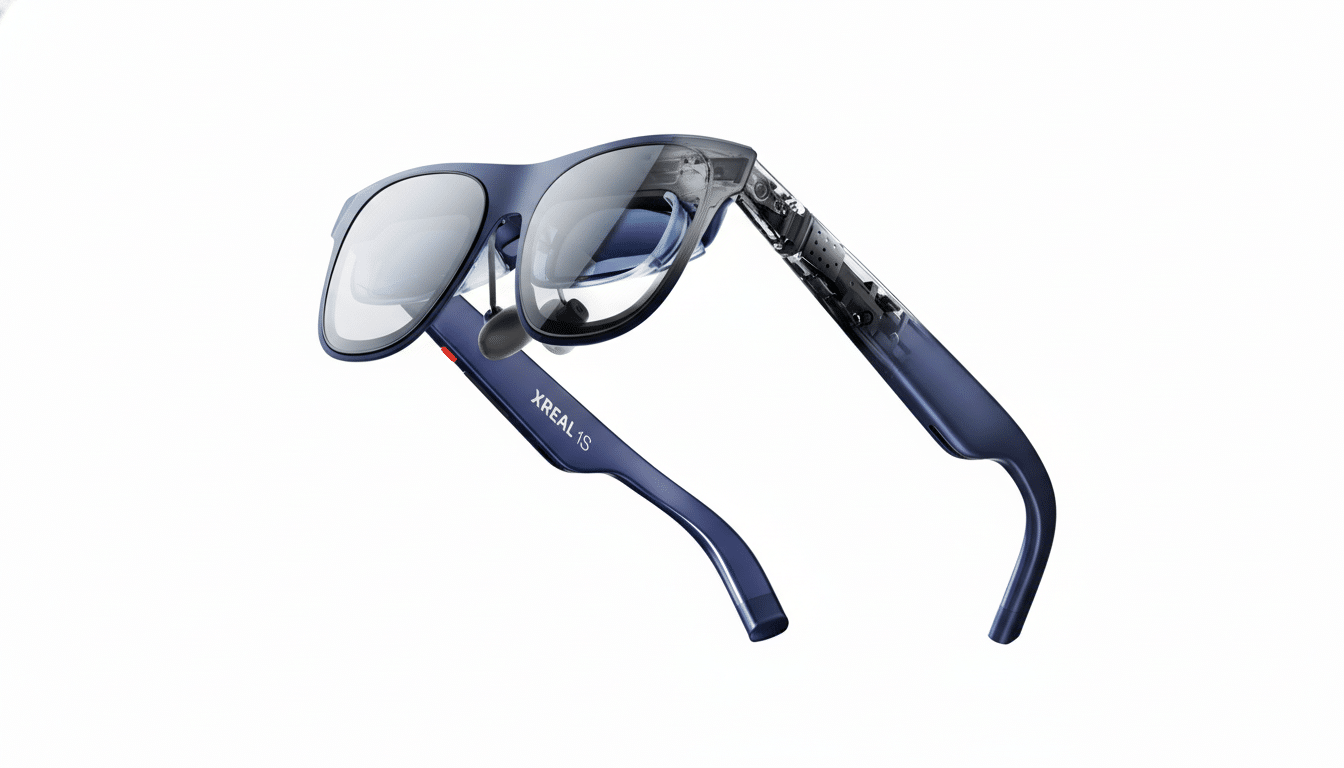
As a stillborn VR pioneer in China, they’ve rolled out the first of many planned products from a recently spun-off division: the all-new XReal 1S. Let’s dive into it with some details about the glasses!
The 1S may be a cheaper version of XReal’s impressive lightweight AR glasses, but that doesn’t mean that you wouldn’t have expectations changing when talking about visual quality.
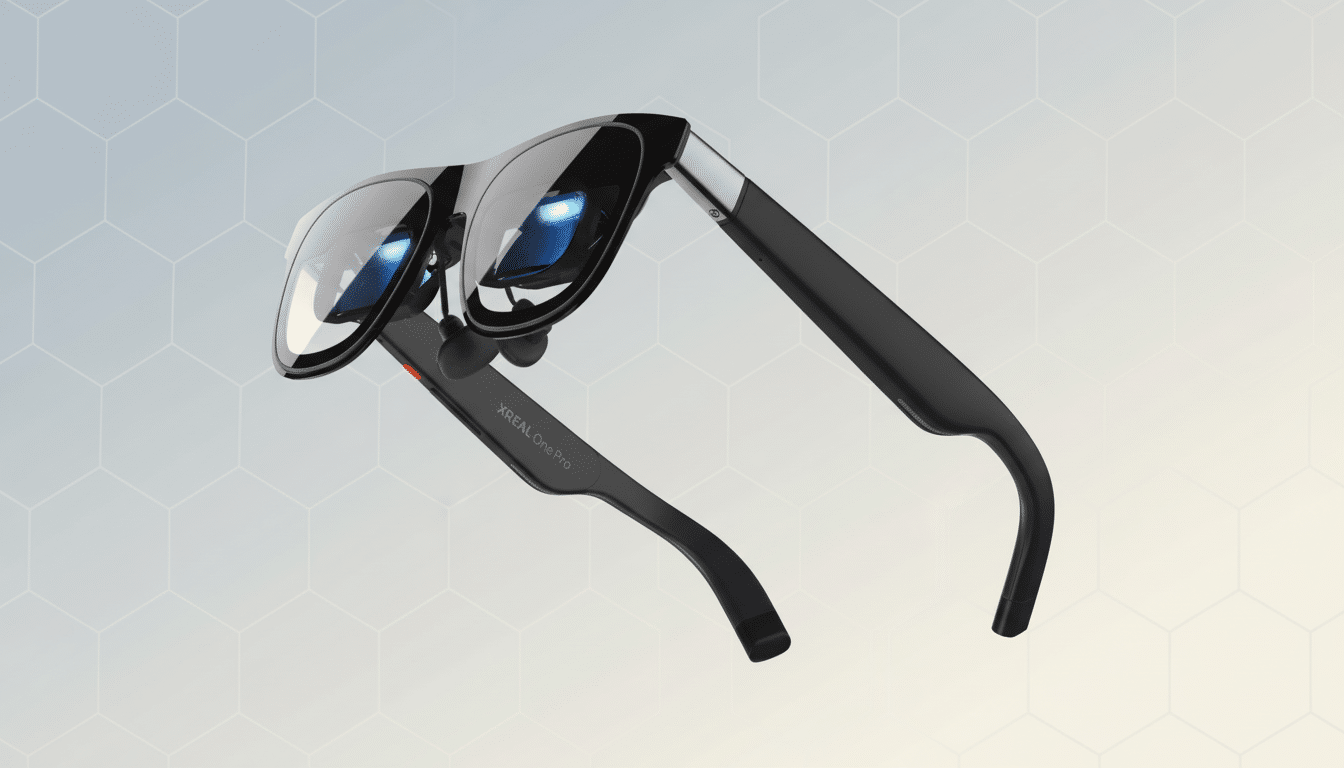
The 1S comes in at $449, $50 cheaper than both the XReal One and the One Pro, which should make it the most affordable high-spec device to date.
What’s new in XReal 1S: key upgrades and improvements
The headline upgrade is the advancement to a 500-inch “spatial screen” projection, up from 147 inches on the One, providing users with a larger virtual canvas for gaming, movies, and multitasking.
Field of view rises to 52 degrees (from 50 on the One), and resolution jumps to 1200p per eye, topping the 1080p panel in both the One and One Pro.
Brightness maxes at a listed 700 nits of perceived brightness, which is the same as the One Pro but an improvement over the One’s 600. In AR glasses, though, that bump is meaningful: luminance headroom makes it easier to keep the contrast up when you’re in a bright room, and color saturation remains high when dimming filters are turned on.
Beyond panel specs, the 1S retains the company’s native 3DoF spatial anchoring to keep virtual screens locked in place as you move your head, plus electrochromic dimming on hand to cut glare and boost perceived contrast. It connects via USB-C, is powered by XReal’s own X1 chip, and comes in a cobalt blue casing with angular curves — a hint that this iteration isn’t just a rebrand of its predecessor.
3D space playback and stability for video and games
One interesting feature is 3D space conversion for 2D materials. XReal claims the 1S can upscale flat videos and games into 3D, a feature squarely targeted at portable entertainment and cloud gaming. Though it’s unclear what the company’s pipeline looks like, such conversions generally guess depth from motion and edges, then hammer out stereoscopic views per eye — an approach that can be quite effective when latency and cross-talk are controlled for.
Essential, too, is the 3DoF anchoring that XReal’s offerings have become known for. It locks a virtual window in space, minimizing motion discomfort and enabling extended productivity or entertainment sessions. It’s a different philosophy from the full 6DoF mixed reality headsets — rather, the 1S is about getting you a screen replacement on your face rather than room-scale interactions.
Pricing strategy and market context for XReal 1S
For $449, the 1S is being pitched as undercutting the One by 10 percent and the One Pro, bringing high-brightness microdisplays and spatial anchoring just under a key psychological barrier: $500. Analysts at research firms like IDC and Counterpoint Research have stressed that hitting mainstream price bands is as crucial a step for AR glasses adoption as the spec bumps we’ve seen, most notably in the travel, commute, and gaming markets, where they offer access to a snazzy “personal screen” without the need for bulky headsets.
The trade-up is clear: more resolution, field of view (FOV), and perceived brightness than the One — for dollars less. Compared to the One Pro, the 1S sacrifices some of that FOV but retains the brightness ceiling and now beats out on resolution — something that should definitely impress people who value text clarity for coding, spreadsheets, or using remote desktop.
Display and comfort trade-offs in everyday use
That 52-degree FOV won’t exactly enclose your vision like a proper mixed reality headset, but it’s a practical sweet spot between long-wear comfort and edge-to-edge clarity. The leap to 1200p can potentially shave off aliasing on UI elements and make tiny text more legible where productivity users often hit the limits of 1080p micro-OLEDs.
Electrochromic dimming remains a smart feature to have. It functions like built-in sunglasses for the optics, maintaining contrast in brightly lit environments and enhancing perceived sharpness in both 2D and 3D modes. The cobalt blue type treatment is a small but welcome nod to consumer style in a category that tends toward matte black and developer-grade aesthetics.
Compatibility and real-world use cases for XReal 1S
The USB-C plug-in design offers broad compatibility with DP Alt Mode–supported phones, laptops, and even handheld gaming PCs, shown with an add-on joystick (joystick and Tentacle stand not included) alongside a light, tethered form factor.
For lots of users, the 1S is going to function as a more private portable monitor, essentially: a whopping screen on an airliner; a second display at a coffee shop or during an in-service training session; or even how you might get console-grade visuals for cloud gaming sessions without actually packing along your TV.
For creators and those who do a lot of research-heavy work, the higher resolution opens up more comfortable multitasking. Combined with spatial anchoring, you can hold a fixed virtual desktop where you want it — useful for accommodating specific activities and working on the move.
What’s still missing from the XReal 1S experience
The 1S is still a screen-forward wearable, not a full mixed reality computer.
There’s no tracking of the room through 6DoF measurements, no onboard compute for standalone apps, and you are tethered to a host device both for power and processing. That’s by design — XReal is hoping to be great at the “personal big screen” use case — but it’s something buyers will want to know when comparing it to high-end headsets or camera-equipped smartglasses.
Still, within its lane, the value proposition is stronger than ever: a brighter, crisper, and slightly wider view at an even lower price. Those combinations matter more than spec sheet extremes for a category defined by practical portability.
The XReal 1S is available to purchase now from the company’s store and major stockists.
