


X has stepped up its dispute with Brussels by axing the European Commission’s ad account days after the platform was fined a record sum under the EU’s Digital Services Act. The move, shared by X head of product Nikita Bier (who joined the company this year from Secret), follows the company’s charge that the Commission abused an internal ad tool to overinflate visibility for its announcement of the penalty.
What sparked the clash between X and the European Commission
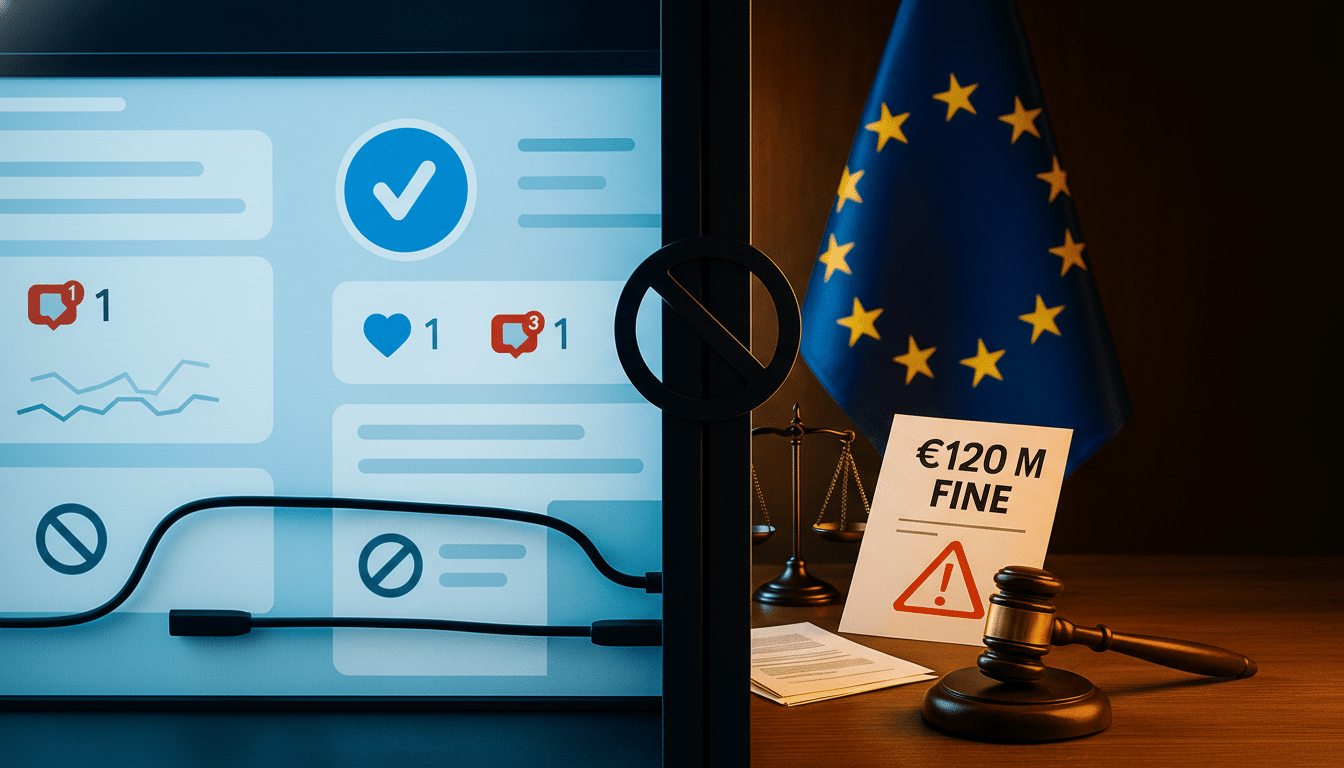
The European Commission fined X over alleged violations related to Musk-era product changes, with the company blamed for three key sins: the “deceptive design” of a paid-for blue checkmark; inadequate transparency in the platform’s ad repository; and researchers not being given access to public data. The fine marks the first time that the DSA, which is the EU’s comprehensive rule book for very large online platforms, has been wielded against tech companies and allows for fines of up to 6 percent of a company’s global annual revenue for serious offenses.
For regulators, the blue checkmark — originally a signal of identity verification — has turned into a paid feature that could be interpreted as endorsement or authenticity, which could deceive consumers. Critics have long contended that the change contributed to muddying signals during fast-moving news cycles. The Commission’s move solidifies those concerns into enforcement.
X claims a bug in Ad Composer inflated video visibility
The Commission, Bier maintained, “logged into a dormant ad account” and posted via X’s Ad Composer using the video-feed format meant exclusively for paid placements. Harking back to the “TrueView in-stream ads,” that format allows a video unit to click through directly to an external page — good for performance marketing, but not designed for organic distribution. X says the post received such outsized exposure because the platform’s ranking system favors native video.
X has since shut down the Commission’s ad account and claims that the loophole has been fixed. The company also said the account had not run ads since 2021, suggesting that the practical effect of the ban on how day-to-day communications occur remains an open question. The ban applies to paid placements and specialized ad formats; the Commission’s institutional account may continue to post organically.
Why the DSA matters in X’s dispute with regulators
The DSA mandates broad platform audits of systemic risks, strengthens ad transparency and grants vetted researchers meaningful access to data. Those obligations transcend the standard rules for removing content, pushing companies to show how design decisions and algorithms influence civic discourse and consumer protection. And next to X, a range of platforms from Meta and TikTok to Google are also coming under the DSA’s microscope in investigations into disinformation, minors’ safety and recommender systems.
The data-access clause is particularly delicate for X. Free access to those tools was curtailed by the platform after it overhauled researcher programs, causing academics and civil society organizations to gripe that public-interest study had become more expensive and less reliable. The Commission’s argument that X did not provide sufficient access does the work of transforming those discussions into law and enforcement.
Advertising transparency and the blue check debate
Transparency in ads is at the heart of the DSA. Regulators would like to see clear disclosures about who paid for an ad, who was targeted and how many people saw it — all information that helps watchdogs audit influence operations and consumer manipulation. X’s collection is inadequate, the EU says. X maintains its product direction prioritizes user control and free expression, and it often points to updates designed to combat the spread of spam and manipulation.
The paid checkmark is still the most ubiquitous flashpoint. High-stakes impersonations like a counterfeit pharmaceutical brand account that briefly moved markets underscored how seemingly small interface tweaks could have outsized real-world effects when paid verification was introduced, among other features. Now EU regulators are placing those risks in the context of a larger “deceptive design” problem that they want to find ways to mitigate.
Impact of the ad ban and what’s next for X and the EU
As a practical matter, the ad account termination closes down the ability of the Commission to run campaigns or boost public-service messages on X, but among many EU institutions in Brussels there are alternatives including LinkedIn, YouTube and emerging federated platforms. The broader business implications land at a delicate moment for X, which has been working to steady its ad business and tout video and creator monetization as growth drivers.
Legally, X can challenge the DSA’s decision in the courts of the EU, a process that, for reasons only a judicial clerk could love, typically includes interim relief and interminable appellate proceedings. But enforcement doesn’t stop across the industry: The Commission is continuing parallel probes of other large platforms, and more fines or remedies could come if companies fail to comply.
Bottom line: a record penalty, a product design disagreement and a retaliatory ad ban have helped turn what was an already high-profile regulatory case into a power struggle. Now that the technical loophole has been closed and the ad account shuttered, the next chapter is all about compliance roadmaps, courtroom arguments and if any one platform — X included — can successfully fulfill the DSA’s call for transparency without compromising product ambitions.
