


World App, the identity platform by Tools for Humanity, installs World Chat, which end-to-end records and encrypts your conversations alongside human-verified identities. It’s a surprising wrinkle in an increasingly crowded messaging market: Chats from users who have verified their identities with a World ID appear in blue, indicating that the person on the other end has passed the app’s proof-of-personhood verification.
Identity-Verified Chat Meets End-to-End Encryption
World Chat is a blending of two concepts which are rarely compatible: strong encryption and a built-in identity layer. The company says messages are end-to-end encrypted, and the traffic Signal comes from its World ID system, which is built on either biometric verification (like its Orb devices) or NFC-compatible government credentials in some regions.

On the device, verified users appear in blue bubbles; unverified users display in gray. An upcoming feature will provide proof that the user’s profile photo is consistent with a biometric portrait linked to their World ID, in a bid to decrease impersonation and AI-generated profile scams.
This approach stands in contrast to services like Signal, which specifically steer clear of halfway measures toward a centralized identity in favor of anonymity. And it leapfrogs phone number-based systems like WhatsApp to simply use the internet as the backbone for everything people want to do, in a way that is very privacy-protective, even with digital payments. But there’s one thing it doesn’t have: using a phone number as an identifier — which means you can message someone without having to know which specific app they are using. It also surpasses phone number-based systems like WhatsApp by attaching identity to a cryptographic proof of humanness, rather than a SIM card.
Payments and Mini Apps show a super app strategy
World Chat has tight integration with World App’s wallet. Its users can send person-to-person cryptocurrency, hold pegged stablecoins for local currencies and launch cross-border transfers that settle on public blockchains like Ethereum. The service demonstrated a cross-currency remittance from Mexican pesos to US dollars transmitted over stablecoins, and then onto a Visa-backed World Card for spending.
It also has Mini Apps in chats, including financial tools, games and prediction markets from platforms such as Kalshi and Polymarket. It’s a playbook familiar to anyone who knows WeChat’s ecosystem — and World App is nowhere near that scale, not to mention such consolidation of services in one app is looked into more closely in Western markets than it is in China.
Adoption and availability across regions and users
Tools for Humanity indicates over 37.7 million total sign-ups and approximately 17.6 million verified World IDs. World App emerges as the most-used self-custody crypto wallet by monthly active users, a rare accomplishment for a product still developing core features, according to Sensor Tower.
Verification remains the gating factor. With some 1,097 Orbs active globally, just 29 are in the US — an outsized chunk of those (roughly 18) being located in Florida. That dearth renders biometric enrollment infeasible for many. NFC-based verification makes a difference — compatible passports include those from the US, UK, Japan, South Korea and Singapore, among others — but reliability fluctuates, and the company’s support guidance admits to occasional read failures when scanning ID chips on phones.
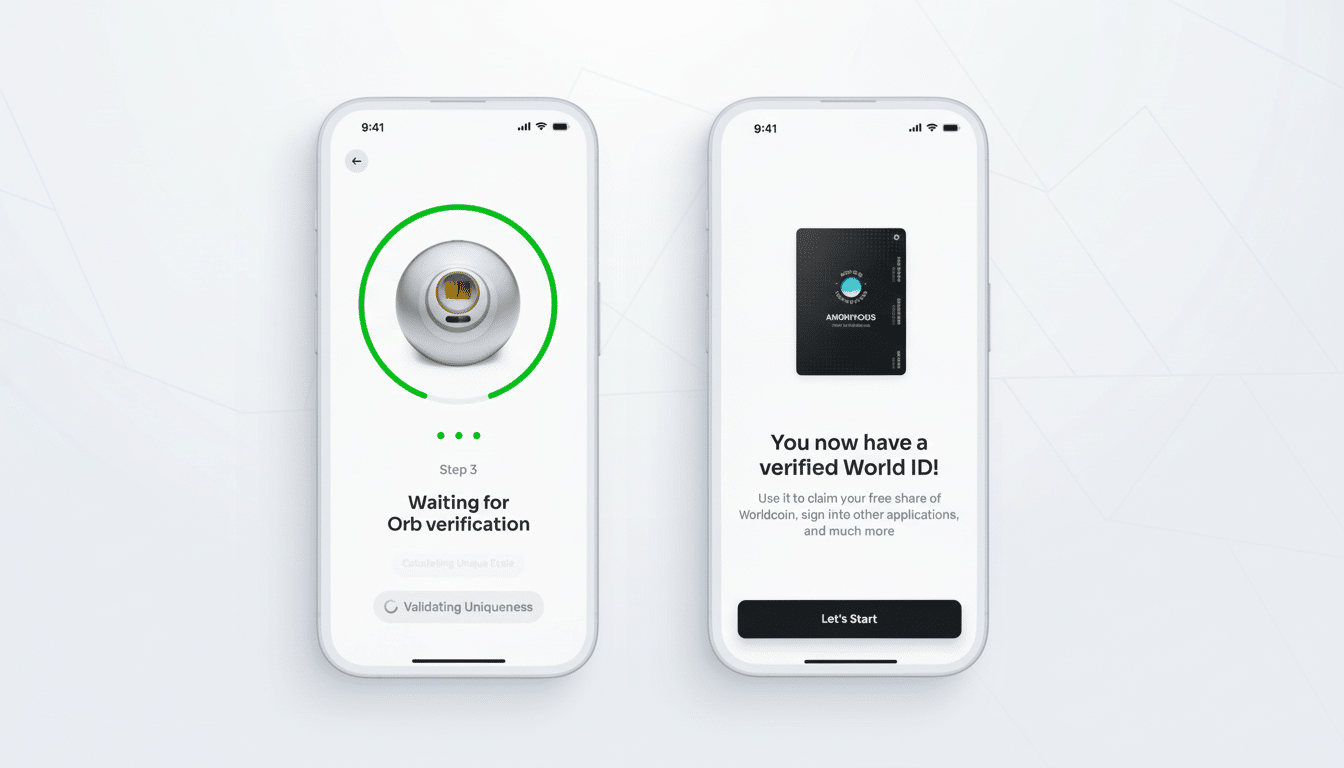
Partnerships suggest pragmatic use cases. World ID is not just a feature to verify Razer accounts but also provides perks. When it comes to dating, Tinder has started rolling out a “Verified Human” badge (linked to World ID) in Japan for a market that often faces fake profiles and romance scams.
Privacy and policy questions for biometrics and chat
Combining encrypted messaging with biometric-based identity systems is fraught. Orbs create a cryptographic proof, and then erase the raw biometric data so that only minimal information is kept, according to Tools for Humanity. Privacy advocates and groups like the Electronic Frontier Foundation typically call for transparency about data flows, accountability of cryptographic claims, and unambiguous opt-out paths if biometrics are included.
There are also security design issues. Messaging apps generally don’t leave their security open to the public, but they do publish encryption protocols and have third-party analysts examine them in an attempt to gain trust. If World Chat turns out to be end-to-end encrypted, the protocol details and formal audits will make a difference only for security researchers and civil society groups auditing the system’s resilience.
What to watch next as World App scales identity features
World App’s founders say they are at about 1% of their total market — ambitious, given that infrastructure has to be built up to verify hundreds of millions. More Orbs, more seamless NFC verification, and high-utility partnerships will be needed to turn these sign-ups into verified active users who keep the app so they can text messages for money.
If World Chat can help reduce fraud in marketplaces, dating and creator communities around the world — all without sacrificing privacy — it will put pressure on incumbents to reconsider identity in messaging. The danger is overreach: Making identity too binding could undermine the safety pseudonymity allows in oppressive environments.
For now, World App is gambling that a visual indicator of “this is a real person” in an encrypted chat alongside low-friction payments are enough to alter user behavior. Whether that bet pans out will depend on faith in its cryptography, the convenience of its authentication measures and the everyday value proposition of a wallet-messenger hybrid that aspires to be more than the sum of two parts — wallets and chat apps.
