


Winemaking is both an art and a science. While tradition plays a strong role in shaping wine styles and techniques, modern wineries rely heavily on professional equipment to ensure consistency, efficiency, and quality. Whether you are launching a boutique winery or scaling an established operation, choosing the right winemaking equipment is one of the most important investments you will make.
From grape processing to fermentation, aging, and bottling, each stage requires specialized tools and systems. The right setup not only improves wine quality but also enhances workflow, reduces labor, and supports long-term growth.
- Understanding the Winemaking Process
- Grape Processing Equipment
- Fermentation Equipment
- Pressing Equipment
- Aging and Storage Systems
- Filtration and Clarification Equipment
- Bottling and Packaging Equipment
- Automation in Modern Wineries
- Choosing the Right Equipment for Your Winery
- Designing an Efficient Winery Layout
- Maintenance and Cleaning of Winemaking Equipment
- Cost Considerations and ROI
- Future Trends in Winemaking Equipment
- Conclusion: Building a Modern Winery with the Right Equipment
- FAQs
In this complete guide, we will explore professional wine making equipment in detail, helping wineries and serious makers understand how to build an efficient and scalable winemaking system.
Understanding the Winemaking Process
Before selecting equipment, it’s important to understand the key stages of winemaking. Each stage requires specific tools and careful control.
The main steps include:
- Harvesting and sorting grapes
- Crushing and destemming
- Fermentation
- Pressing
- Aging and storage
- Filtration and bottling
Each phase contributes to the final flavor, aroma, and structure of the wine. Equipment must be chosen to support these processes while maintaining hygiene and precision.
Grape Processing Equipment
The winemaking process begins with grape handling, where quality preservation is critical.
Sorting Tables
Sorting tables allow winemakers to remove damaged or unwanted grapes before processing. This step ensures only high-quality fruit enters the fermentation stage.
Crushers and Destemmers
These machines separate grapes from stems and gently crush them to release juice. Adjustable settings allow winemakers to control the level of crushing, which can influence extraction and flavor.
Pumps and Conveyors
Efficient movement of grapes and must is essential, especially in larger wineries. Pumps and conveyors reduce manual labor and help maintain consistent flow through the production line.
Fermentation Equipment
Fermentation is where grape juice transforms into wine, making it one of the most critical stages in the process.
Fermentation Tanks
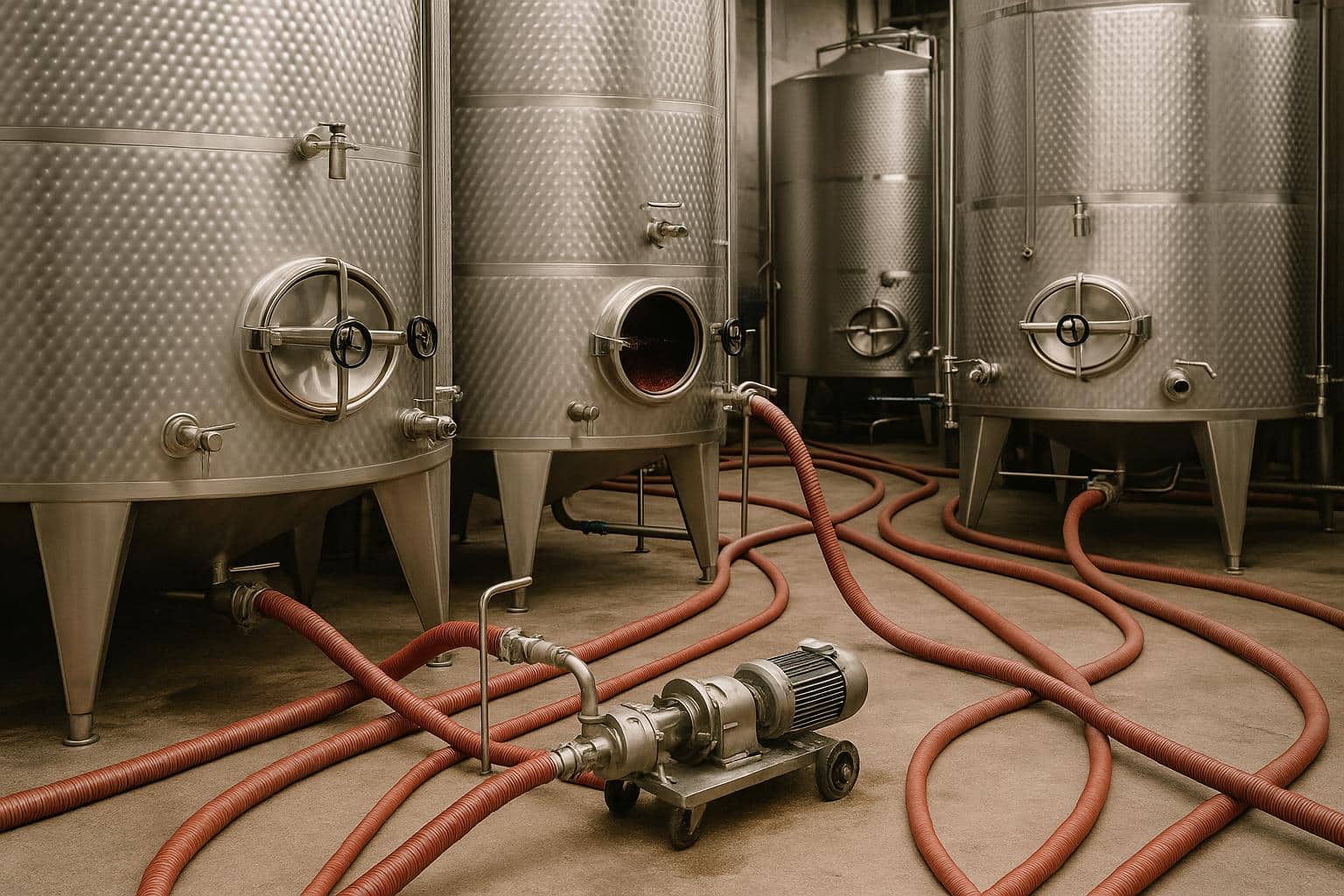
Fermentation tanks come in various materials and designs, including stainless steel, concrete, and oak.
- Stainless steel tanks offer precise temperature control and easy cleaning
- Concrete tanks provide natural insulation and micro-oxygenation
- Oak vessels add complexity and flavor
Modern wineries often use stainless steel tanks equipped with temperature control systems for consistency and flexibility.
Temperature Control Systems
Temperature plays a crucial role in fermentation. Cooling jackets and glycol systems help maintain optimal conditions for yeast activity.
Open vs. Closed Fermentation
Open fermentation is often used for red wines to allow oxygen exposure and manual cap management. Closed systems are more common for white wines, preserving delicate aromas.
For wineries looking to integrate advanced systems, exploring professional winery equipment solutions can provide valuable insight into scalable fermentation setups.
Pressing Equipment
After fermentation, pressing separates liquid wine from solids.
Basket Presses
Traditional basket presses are gentle and often used in small-scale or premium wine production.
Pneumatic Presses
These presses use air pressure to extract juice more efficiently and are widely used in commercial wineries.
Choosing the right press depends on production scale and desired extraction levels.
Aging and Storage Systems
Aging is where wine develops its character, making storage equipment essential.
Oak Barrels
Oak barrels are widely used for aging, adding flavor and allowing controlled oxygen exposure. Different oak types and toast levels influence the final profile.
Stainless Steel Tanks
For wines that require freshness and minimal oxygen exposure, stainless steel tanks are ideal.
Storage Tanks
Large storage tanks help wineries manage inventory and prepare for bottling.
Proper storage conditions, including temperature and humidity control, are critical for maintaining wine quality.
Filtration and Clarification Equipment
Before bottling, wine often undergoes filtration to remove unwanted particles.
Filtration Systems
Common options include:
- Plate filters
- Membrane filters
- Crossflow filtration systems
Each method offers different levels of clarity and efficiency.
Clarification Techniques
Natural clarification methods such as settling or fining agents may also be used, depending on the winemaker’s approach.
Bottling and Packaging Equipment
The final stage of winemaking involves bottling and packaging.
Bottling Lines
Automated bottling lines can handle filling, corking, labeling, and packaging. Smaller wineries may use semi-automatic systems.
Labeling Machines
Consistent labeling enhances brand presentation and ensures compliance with regulations.
Packaging Solutions
Packaging must protect the wine while maintaining visual appeal. Options include glass bottles, alternative packaging, and custom designs.
Automation in Modern Wineries
Automation is becoming increasingly important in winemaking.
Benefits of Automation
- Improved consistency
- Reduced labor costs
- Enhanced process control
- Increased production efficiency
Automation systems can monitor temperature, manage fermentation, and track production data.
For wineries looking to adopt modern technology, reviewing systems like craft beverage production equipment can provide insights into integrated automation solutions.
Choosing the Right Equipment for Your Winery
Selecting the right equipment depends on several factors:
Production Scale
Small wineries may prioritize flexibility, while large operations focus on efficiency and automation.
Wine Style
Different wines require different equipment configurations. For example, red wines often need open fermentation and cap management tools.
Budget
Balancing cost and quality is essential. Investing in durable equipment can reduce long-term expenses.
Space and Layout
Your facility must accommodate equipment while allowing efficient workflow.
Designing an Efficient Winery Layout
A well-planned layout improves productivity and safety.
Workflow Design
Arrange equipment in a logical sequence to minimize unnecessary movement.
Space Utilization
Ensure adequate space for maintenance, cleaning, and future expansion.
Utility Integration
Proper access to water, electricity, and temperature control systems is essential.
Maintenance and Cleaning of Winemaking Equipment
Clean equipment is essential for producing high-quality wine.
Cleaning Practices
- Clean equipment immediately after use
- Use appropriate cleaning agents
- Rinse thoroughly
Maintenance Tips
- Inspect equipment regularly
- Replace worn components
- Monitor temperature systems
Consistent maintenance ensures long-term performance and reduces downtime.
Cost Considerations and ROI
Winemaking equipment represents a significant investment.
Cost Factors
- Equipment size and complexity
- Automation level
- Installation and setup
Return on Investment
High-quality equipment improves efficiency, reduces waste, and enhances product quality, leading to better profitability.
Future Trends in Winemaking Equipment
The wine industry continues to evolve, with trends such as:
- Sustainable production practices
- Energy-efficient systems
- Data-driven winemaking
- Alternative aging techniques
Wineries that invest in adaptable equipment can stay competitive in a changing market.
Conclusion: Building a Modern Winery with the Right Equipment
Professional winemaking requires a balance of tradition and technology. By choosing the right equipment and designing an efficient system, wineries can produce consistent, high-quality wine while optimizing operations.
From grape processing to bottling, every stage of the process benefits from well-designed equipment and thoughtful planning.
For wineries and beverage producers seeking reliable and scalable solutions, Micet’s equipment products offer an excellent choice. With strong engineering, customizable designs, and proven performance, Micet provides systems that support both small producers and large-scale operations.
FAQs
1. What is the most important equipment in a winery?
Fermentation tanks are often considered the most critical, as they directly impact wine quality and production capacity.
2. Can small wineries use automated equipment?
Yes, many small wineries use semi-automated systems to improve efficiency while maintaining flexibility.
3. How much does winery equipment cost?
Costs vary widely depending on scale, but small setups may start at tens of thousands of dollars, while large wineries can invest hundreds of thousands or more.
