


If your daily routine involves doom-scrolling through Twitter, checking the polling averages on 538, and shouting at the TV during cable news roundtables, you might be suffering from a common affliction: Political Burnout.
We’ve all been there. The modern political landscape is often covered like a horse race. Who is up? Who is down? Who insulted whom? While that drama is addictive, it rarely explains why things are happening. We know that voters are polarized, but we rarely get a satisfying answer as to why. We know misinformation spreads like wildfire, but we don’t always understand the cognitive machinery that makes us click “share.”
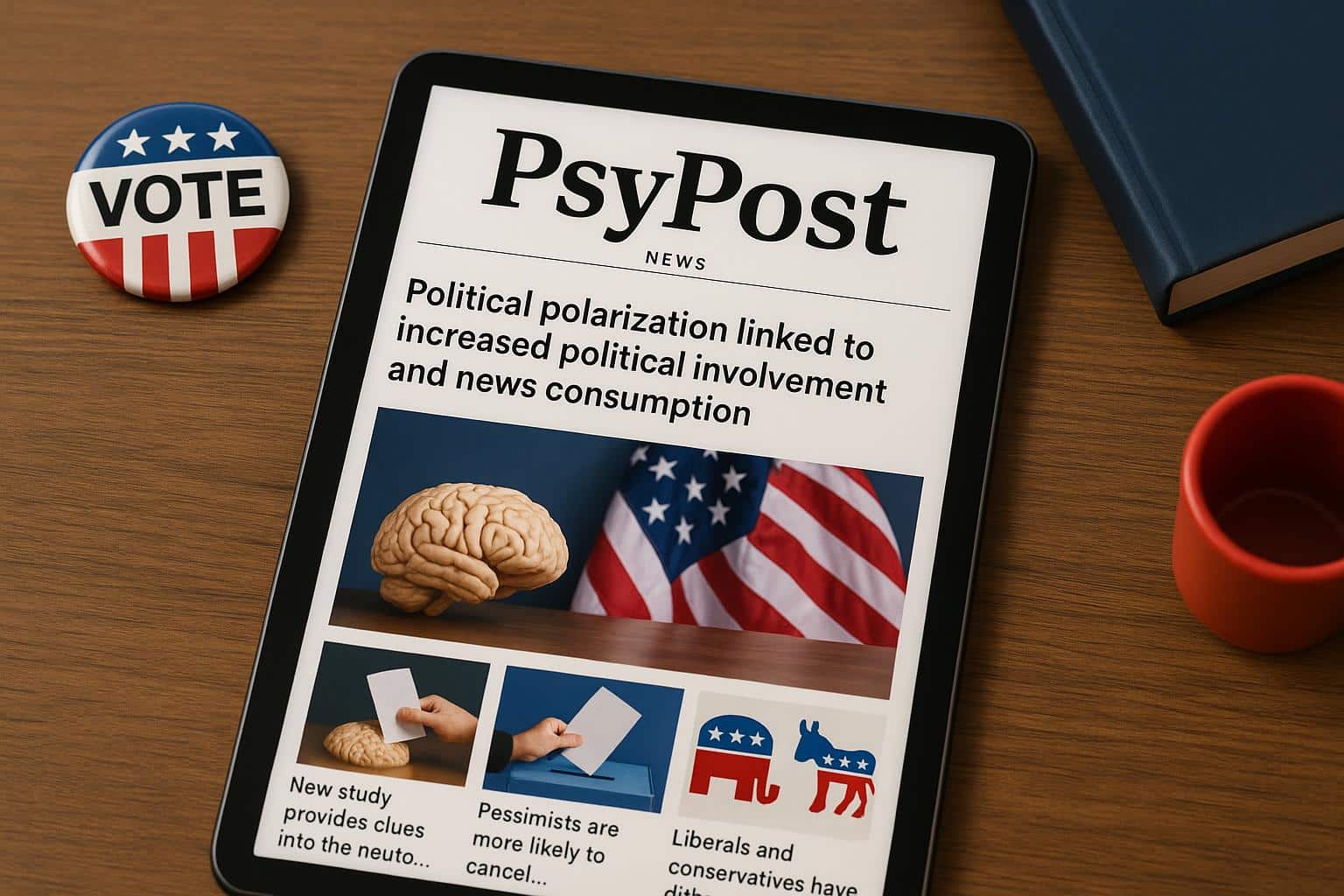
Enter PsyPost, and specifically their Political Psychology section.
If you haven’t bookmarked this page yet, you are missing out on the missing link in political journalism. It is the place where hard science meets the ballot box. Here is why it needs to be part of your daily rotation.
1. It Explains the “Why,” Not Just the “What”
Standard political reporting tells you what happened. Candidate X won this county by 5 points. PsyPost tells you what was happening inside the voters’ brains when they pulled the lever.
For example, take a look at their recent coverage. While mainstream news might just say “Young people are leaning left,” PsyPost digs into studies showing that neuroticism is linked to liberal ideology in young Americans—but interestingly, not in older generations. Or consider the headlines about the “cult of personality”; PsyPost breaks down research identifying that staunch supporters of figures like Donald Trump often score unusually high in conscientiousness—a trait usually associated with discipline and order, not chaos.
This isn’t just trivia. It’s the blueprint of human behavior. When you understand that political orientation is often tied to deep-seated personality traits (like how we process fear, disgust, or order), the political landscape stops looking like a battle of “good vs. evil” and starts looking like a complex map of human psychology.
2. It Helps You Understand Your “Enemies”
Let’s be honest: We are living in an era where the other side often seems irrational, or even incomprehensible.
PsyPost excels at bridging this gap by focusing on cognitive styles. One fascinating area of research they cover is how liberals and conservatives gather evidence differently.1 Recent studies highlighted on the site suggest that liberals tend to seek comprehensive statistical comparisons, while conservatives may rely more on categorical data points.1
Neither approach is necessarily “wrong” in an evolutionary sense; they are just different operating systems. Reading PsyPost helps you realize that your crazy uncle at Thanksgiving isn’t necessarily ignoring facts on purpose—he might just be processing information through a completely different moral hierarchy (prioritizing loyalty and authority) than you are (prioritizing care and fairness).
3. It’s Science, Not Punditry
The best thing about PsyPost? It doesn’t scream at you.
Turn on cable news, and you get opinion hosts paid to be outraged. PsyPost, on the other hand, aggregates peer-reviewed studies. They report on findings from the Journal of Experimental Social Psychology or Science Advances.
They don’t shy away from uncomfortable truths that cut both ways. You might find an article on Monday about how collective narcissism fuels conspiracy theories on the right, and then an article on Tuesday about how both Democrats and Republicans are equally likely to justify undemocratic actions if it helps their team win.
It is refreshingly non-partisan in its pursuit of data. If the data says that “political disappointment” (voting for a losing candidate) is linked to higher mortality rates in U.S. counties, they report it.1 They don’t spin it; they just show you the correlation.
4. It Covers the Stuff No One Else Is Talking About
While the New York Times is covering the latest bill in Congress, PsyPost is covering the hidden undercurrents of society.
Some of their recent headlines are absolutely fascinating conversation starters:
- The “Woke” Right: New studies identifying a counterpart to “woke” culture on the political right characterized by white grievance.
- The Economics of Anxiety: How people with anxious tendencies are more likely to support left-wing economic policies, regardless of their actual bank account balance.
- The Mortality of Politics: How living in a county that voted for the loser can literally increase death rates due to stress and social isolation.
These are the stories that explain the mood of the electorate, which is often a far better predictor of election outcomes than policy papers.
The Bottom Line
If you want to be the smartest person in the room—or at least the most empathetic—you need to stop looking at politics purely through a political lens. You need to look at it through a psychological one.
PsyPost offers a daily dose of clarity in a chaotic world. It reminds us that at the end of the day, voters are just human beings driven by ancient biological hardwiring, trying to make sense of a modern world.
So, go give it a read. It might not change how you vote, but it will definitely change how you see the people standing in line next to you.
