


Smart devices are everywhere. Your thermostat learns your preferences and adjusts temperature automatically. Your fitness tracker monitors your steps and heart rate throughout the day. Your car communicates with traffic systems to optimize routes and prevent accidents. Behind every one of these convenient interactions lies a sophisticated system of embedded engineering that makes the Internet of Things possible.
The IoT has transformed from a futuristic concept into an everyday reality, connecting billions of devices across homes, hospitals, factories, and cities. These connected systems collect data, make decisions, and communicate with each other to create intelligent environments that respond to human needs.
- The Foundation of IoT Device Functionality
- Core Functions That Power Smart Devices
- Meeting Real-Time Performance Demands
- Balancing Performance with Practical Constraints
- Enabling Seamless IoT Connectivity
- Mastering Communication Protocols and Standards
- Integration with Networks and Ecosystems
- Security Architecture for Connected Devices
- Building the Connected Future Through Engineering Excellence
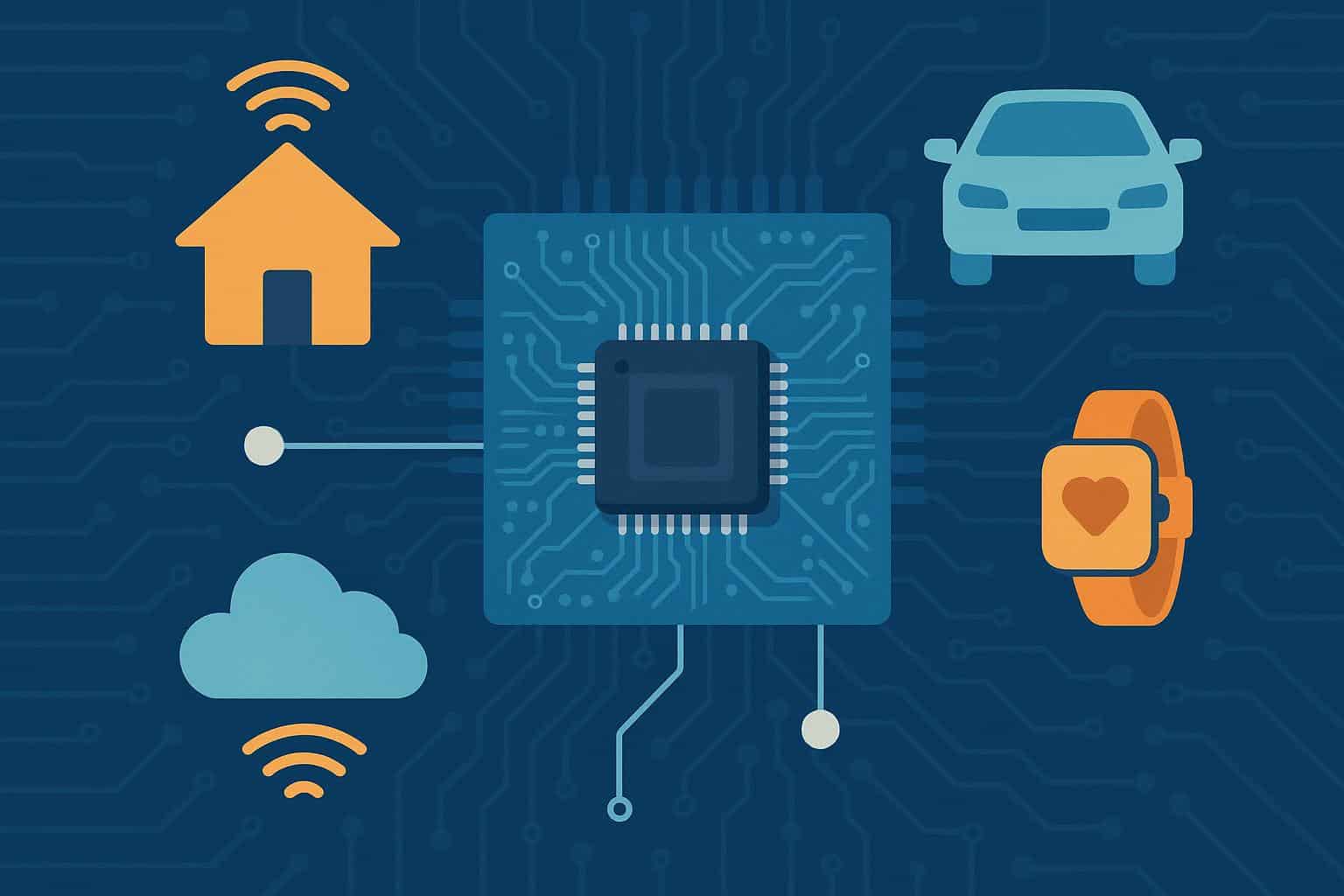
However, none of this magic happens by accident—it requires carefully designed embedded systems that can operate reliably within strict constraints while maintaining seamless connectivity. What makes IoT devices truly effective goes far beyond their ability to connect to the internet. They must process data locally, respond in real-time, conserve battery power, and maintain security while operating in diverse environments.
This complex combination of requirements makes embedded engineering the foundation upon which successful IoT implementations are built.
The Foundation of IoT Device Functionality
Embedded engineering serves as the invisible backbone that transforms simple hardware components into intelligent, connected devices capable of autonomous operation and meaningful interaction with their surroundings.
Core Functions That Power Smart Devices
Every IoT device relies on embedded systems to handle three fundamental tasks: collecting information from the physical world, processing that data to extract meaningful insights, and communicating findings to other devices or central systems. These functions may seem straightforward, but implementing them effectively requires sophisticated engineering solutions.
Data collection involves interfacing with various sensors that measure temperature, humidity, motion, light, sound, or countless other physical parameters. Embedded systems must accurately read sensor data, filter out noise, and convert analog signals into digital information that software can process.
This conversion process requires precise timing and calibration to ensure data accuracy. Processing capabilities determine how intelligent an IoT device can be. Simple devices might only transmit raw sensor data, while more sophisticated systems can analyze information locally, make decisions, and respond autonomously to changing conditions.
Essential processing tasks in IoT devices include:
- Data filtering and validation to ensure information quality and accuracy
- Pattern recognition that identifies significant events or changes
- Decision algorithms that determine appropriate responses to different situations
- Predictive analysis that anticipates future conditions based on current trends
Communication functions enable IoT devices to share information and coordinate actions with other systems. This involves managing wireless protocols, handling network connectivity, and ensuring reliable data transmission even in challenging conditions.
Meeting Real-Time Performance Demands
Many IoT applications require immediate responses to changing conditions, creating demanding real-time performance requirements that embedded systems must satisfy without fail. Industrial monitoring systems need to detect equipment problems within milliseconds to prevent damage or safety hazards.
Medical devices must respond instantly to patient condition changes. Smart traffic systems require split-second timing to coordinate signals and manage traffic flow safely.
Embedded engineering addresses these timing requirements through careful system design that prioritizes critical tasks and ensures predictable response times. Real-time operating systems help manage multiple concurrent tasks while guaranteeing that high-priority functions receive immediate attention when needed.
Timing precision becomes particularly important when multiple IoT devices must coordinate their actions. Smart lighting systems that adjust brightness and color throughout buildings require synchronized timing to create smooth transitions. Autonomous vehicle systems need precise coordination between sensors, processors, and actuators to maintain safe operation.
Balancing Performance with Practical Constraints
IoT devices often operate under strict limitations that challenge traditional engineering approaches. Battery-powered devices must minimize energy consumption to extend operational life, sometimes for years between battery replacements.
Physical size constraints demand compact designs that fit into space-limited installations. Cost pressures require solutions that deliver necessary functionality without exceeding budget limitations.
Power management represents one of the most critical aspects of IoT embedded engineering. Devices must perform their intended functions while consuming minimal energy, often requiring creative approaches such as sleep modes, duty cycling, and intelligent power scheduling that activates components only when needed.
Key design considerations for IoT embedded systems include:
- Ultra-low power operation that extends battery life to practical limits
- Compact form factors that enable installation in space-constrained locations
- Cost-effective solutions that make IoT deployment economically viable
- Environmental resilience that ensures reliable operation in challenging conditions
Reliability requirements often exceed those of traditional computing systems because IoT devices typically operate unattended for extended periods in locations where maintenance is difficult or expensive. Embedded engineering must anticipate potential failure modes and implement appropriate safeguards that maintain functionality even when components fail or operating conditions exceed normal parameters.
Enabling Seamless IoT Connectivity
The true power of IoT emerges when devices can communicate effectively with each other and with centralized systems, creating networks of intelligence that deliver greater value than individual components could provide alone.
Mastering Communication Protocols and Standards
IoT devices must navigate a complex world of communication protocols, each optimized for different applications, range requirements, and power constraints. Wi-Fi provides high-bandwidth connections for data-intensive applications but consumes significant power.
Bluetooth offers low-power connectivity for short-range applications. Zigbee and other mesh protocols enable networks of devices to communicate over longer distances while maintaining energy efficiency.
Embedded engineering services help organizations choose appropriate communication protocols and implement them effectively within their specific applications and constraints. The selection process involves balancing factors such as data throughput requirements, power consumption limits, range needs, and network topology considerations.
Protocol implementation goes beyond simply connecting to networks—it involves optimizing communication patterns to minimize power consumption, handling network disruptions gracefully, and managing data transmission efficiently to avoid overwhelming network infrastructure.
Modern IoT deployments often require devices to support multiple communication protocols simultaneously, enabling them to connect to different types of networks and adapt to varying connectivity conditions. This multi-protocol capability adds complexity but provides flexibility that enhances system reliability and user experience.
Integration with Networks and Ecosystems
Successful IoT devices must integrate seamlessly with existing network infrastructure while supporting future expansion and technology upgrades. This integration involves more than technical connectivity—it requires careful consideration of network management, device provisioning, and system scalability.
Network integration challenges include:
- Automatic device discovery that simplifies installation and configuration
- Bandwidth management that prevents individual devices from overwhelming network capacity
- Quality of service that ensures critical communications receive priority
- Interoperability that enables devices from different manufacturers to work together
Device provisioning processes determine how easily new IoT devices can join existing networks and begin operation. Well-designed embedded systems can automatically configure themselves based on network conditions and requirements, reducing installation complexity and support costs.
Scalability considerations become important as IoT deployments grow from pilot projects to enterprise-wide implementations. Embedded systems must support network architectures that can accommodate thousands or millions of devices without degrading performance or reliability.
Security Architecture for Connected Devices
IoT security presents unique challenges because devices often have limited processing power and memory for implementing traditional security measures, yet they handle sensitive data and control important systems. Embedded engineering must balance security requirements with resource constraints while ensuring that protection measures do not interfere with normal device operation.
Comprehensive IoT security involves multiple layers of protection that work together to prevent unauthorized access, protect data integrity, and maintain system availability. These security measures must be built into embedded systems from the ground up rather than added as afterthoughts.
Critical security components include:
- Device authentication that verifies device identity before network access
- Data encryption that protects information during transmission and storage
- Secure boot processes that prevent malicious software from compromising devices
- Regular security updates that address newly discovered vulnerabilities
Security implementation must consider the entire device lifecycle, from manufacturing and deployment through operation and eventual decommissioning. Each phase presents different security challenges that embedded engineering must address through appropriate design decisions and implementation strategies.
Privacy protection adds another layer of complexity, particularly for IoT devices that collect personal information or monitor human activities. Embedded systems must implement privacy-preserving techniques that protect user data while still enabling useful functionality.
Building the Connected Future Through Engineering Excellence
Embedded engineering forms the foundation that makes IoT possible, transforming simple hardware components into intelligent, connected systems that enhance productivity, safety, and quality of life across countless applications. The technical challenges involved in creating effective IoT devices require specialized expertise that combines deep knowledge of hardware systems, software development, and communication protocols.
Organizations that invest in high-quality embedded engineering for their IoT initiatives gain competitive advantages through devices that perform better, last longer, and integrate more seamlessly with existing systems. This investment becomes increasingly important as IoT adoption accelerates and customer expectations continue rising for reliable, secure, and user-friendly connected devices.
Success in the IoT market depends on creating products that deliver meaningful value while meeting the stringent requirements for reliability, security, and efficiency that connected devices demand. Companies that prioritize embedded engineering excellence position themselves to lead in markets where technical performance often determines commercial success and long-term viability.
