


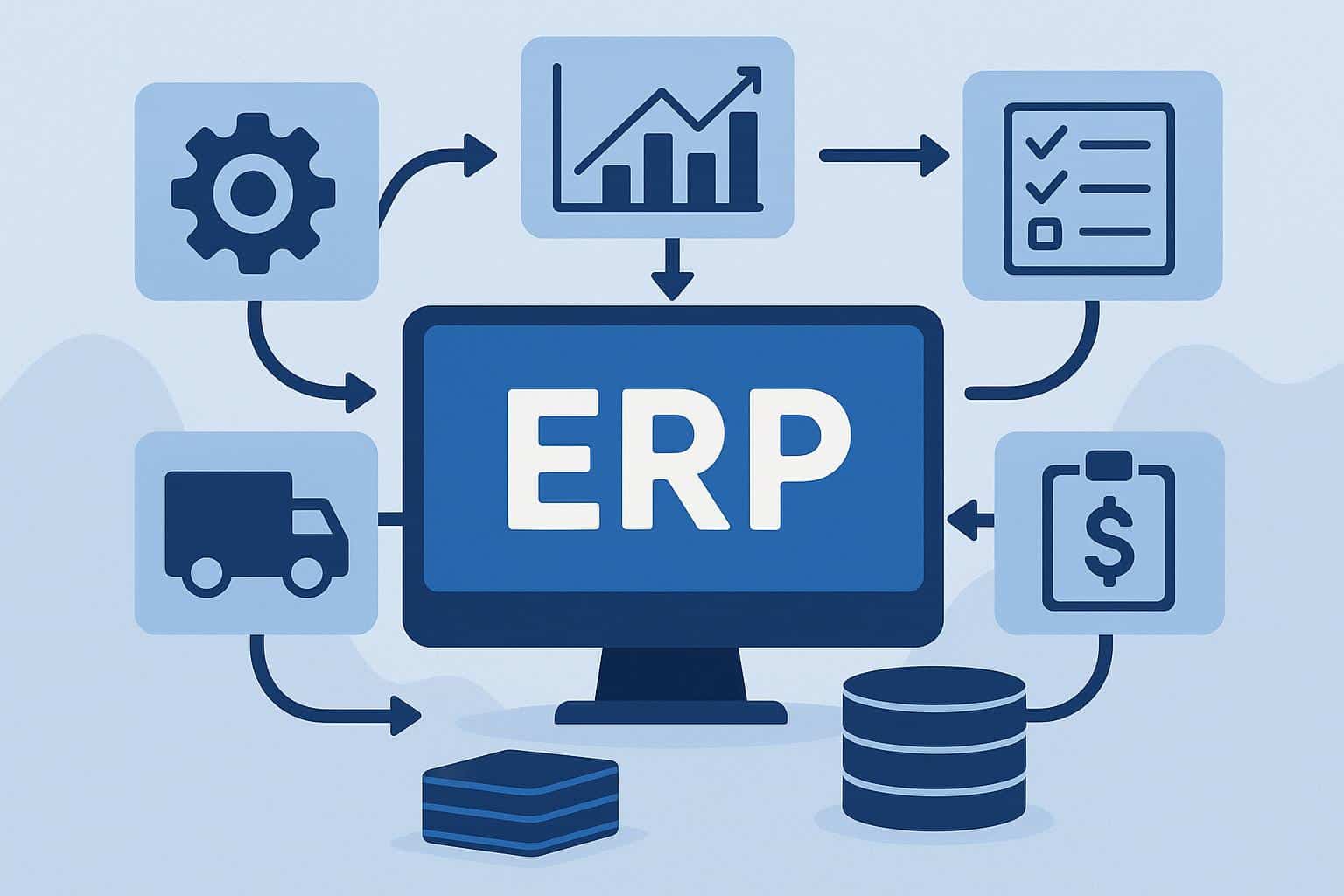
Efficient business operations require seamless coordination across departments, processes, and resources. Fragmented systems often create data silos, miscommunication, and delays in decision-making. Integrated enterprise resource planning software addresses these challenges by centralizing operations, unifying data, and automating workflows. By consolidating critical business functions into a single platform, organizations can enhance visibility, improve collaboration, and optimize overall performance, enabling teams to operate more strategically and deliver consistent results.
Concentrated Data Management
It is difficult and prone to error to manage data spanning a number of departments when there is no single system in place. All business information is integrated into a single system through ERP platforms, hence readily available and can be acted upon by decision-makers. One repository means that all records are identical, the data is maintained and will facilitate proper reporting. Real-time access allows teams to react efficiently to operational variations, whereas analytics offer evidence-based data that enhances efficiency. The pooling of all data also promotes co-operation and coordination throughout the organization and makes sure that no one is in conflict with the others, as everyone is working towards the same objectives.
- Concentrated Data Management
- Smooth Financial Processes
- Resource Management is Optimized
- Increased Project Management
- Risk Mitigation and Compliance
- Business Intelligence and Analytics
- Scalability and Integration
- Standardization of Processes in the various departments
- Transparency and Accountability of Operations.
Smooth Financial Processes
Enterprise success cannot be achieved without financial management. The ERP software makes the complicated financial processes easier since it links budgeting, accounting, and reporting. The automated invoicing, payroll, and expense tracking workflows ensure reduced errors, enhanced compliance, and give staff time to work on strategy. Predictive analytics is also used in budgeting and forecasting, which allows the allocation of resources efficiently and the preventive tracking of cash flow. ERP as well generates audit-ready reports and comprehensive financial KPI insights, which allow leaders to manage costs and enhance performance without heavy manual work.
Resource Management is Optimized
Effective use of resources saves them and enhances the projects. Enterprise asset management software in Saudi Arabia organizations to track, maintain, and optimize assets in addition to ERP. The workforce, material and equipment utilization productivity in real-time enables the managers to utilize resources effectively. The scheduling of preventive maintenance, proper inventory management, and intelligent labour distribution minimizes downtimes, minimizes waste, and increases the efficiency of operations in any project.
Increased Project Management
Massive projects involve critical planning, control, and coordination. ERP systems offer the ability to develop schedules, allocate work, and follow milestones using a single system. Project status, work done, and actions to be done are displayed in real time on a dashboard so that managers can take proactive measures in case of difficulties. ERP enhances cross-team working and responsibility by incorporating design, procurement, and field operations.
Risk Mitigation and Compliance
The projects in construction and enterprises should satisfy the requirements of safety and regulation. ERP construction services facilitate compliance and minimize operational risks in terms of centralization of tracking and providing automated notifications. Platoons are able to track certifications, permits, and safety compliance and alert managers of any imminent problems. Electronically recorded safety events and performance indicators allow companies to study the trends and take preventive steps as well as maintain audit-compliant records.
Business Intelligence and Analytics
KPIs, operational metrics, and project progress are shown on the performance dashboards in real-time, allowing the managers to identify inefficiencies and optimize workflows. Predictive analytics makes use of past information to predict the requirements of resources, to predict the risks and future planning of projects. Scenario simulation is used to make informed decisions that minimize uncertainty in organizations. The continuous performance analysis will lead to continuous improvement and increased productivity in the long term.
Scalability and Integration
The contemporary business must have systems which expand with it. ERP systems are scalable and integrate in finance, human resources, procurement and operations and connect all departments together seamlessly. Access to the clouds enables secure, mobile workflow management, and the customizable modules enable businesses to customize ERP properties to their industry requirements. Scalable solutions can serve expansions or multi-site business operations without compromising efficiency, building a business solution that is future-proof and able to accommodate business changes.
Standardization of Processes in the various departments
Regular working processes are essential in terms of consistent performance. ERP solutions will bring uniformity in how operations are done in all departments, and this is how organizational best practices are upheld. Standardization reduces errors, enhances quality and fosters consistency in its operations. The protocols are identical in all the teams, and a team member can be easily taken over by others, which can also reduce the number of misunderstandings. Regular processes also make the training and onboarding easier because new personnel can easily adjust to the standards of operation.
Transparency and Accountability of Operations.
ERP has the advantage of visibility into all of its operations. Managers view departmental performance, individual performance, and project performance in real-time. Clear workflows allocate and monitor duties and promote accountability. The teams are efficient, and the management can identify improvement areas without having fragmented reports.
Integrated enterprise resource planning software is very beneficial to organizations that strive to achieve operational excellence. The software is used to consolidate workflows, increase teamwork, and provide actionable insights in all departments. Project and asset management can be integrated with ePROMIS, a platform that demonstrates the effectiveness of ERP solutions in Saudi Arabia. They enhance decision-making, maintenance of business operations, and coordination, as well as assist businesses to predicting challenges, remaining in compliance, and improving productivity. The outcome is the shift of broken processes into effective, data-driven processes that promote sustainable development.
