


For roughly ten hours, a sweeping Verizon wireless outage turned routine errands and critical tasks into a communications blackout, stranding travelers, idling workers, and igniting fury across social feeds. Verizon said the incident stemmed from a software issue and not a cyberattack, but for millions dependent on mobile connectivity, the distinction offered little comfort as calls, texts, and data services sputtered across major U.S. metros.
What We Know About The Verizon Network Failure
Verizon confirmed a software-related fault and promised a full review. While the company hasn’t detailed the root cause, telecom engineers note that failures in carrier core systems—such as authentication servers, IMS for voice over LTE/5G, or routing control—can cascade quickly. Even a misconfigured update can disrupt how devices attach to the network, resolve voice calls, or maintain data sessions at scale.
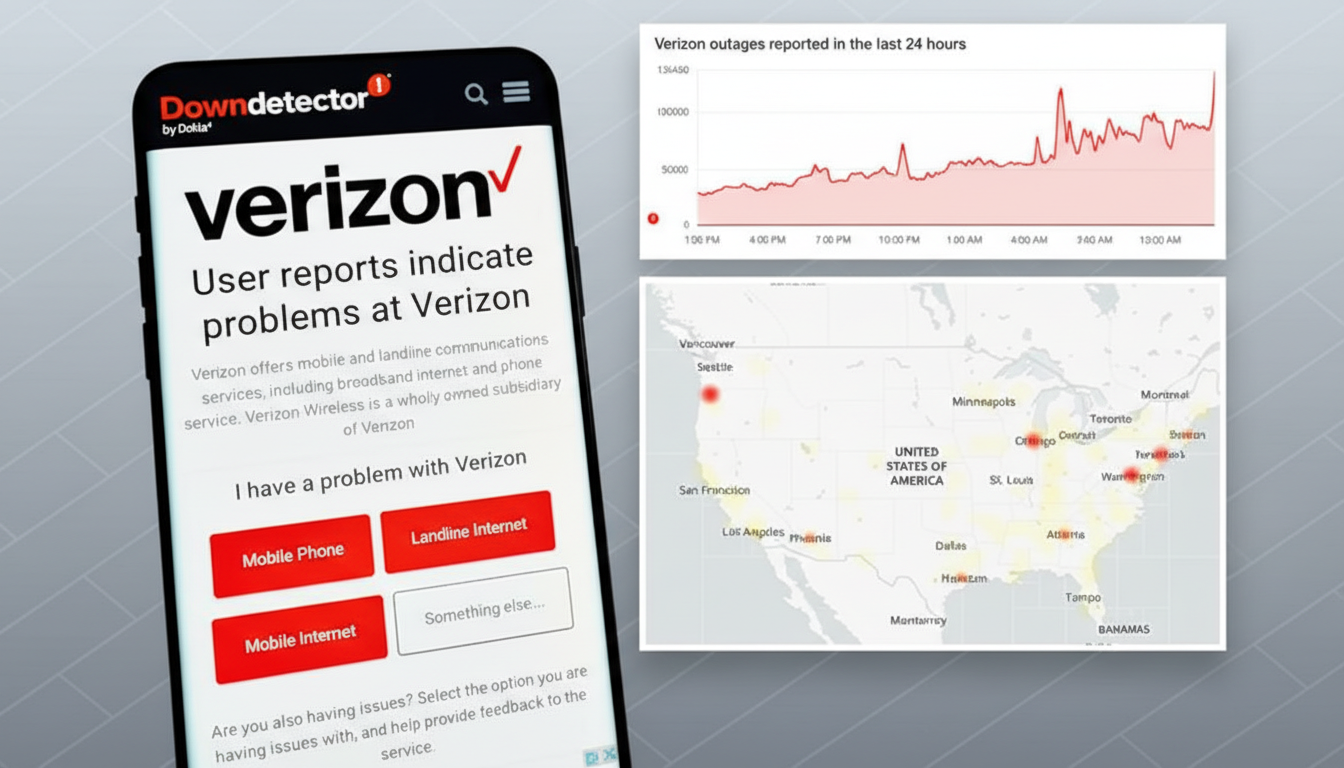
Crowdsourced trackers like Downdetector showed a sharp nationwide spike in problem reports, with clusters in dense markets including New York, Washington, and Los Angeles. With more than 100 million wireless connections on its books, Verizon’s network hiccups have outsized ripple effects, magnifying pain points from two-factor logins to ride-hailing and maps.
The Daily Toll Of A Modern Digital Standstill
Stories poured in of missed medical appointments, stalled deliveries, and parents unable to coordinate school pickups. Gig workers said they couldn’t log into platforms to start shifts. Couriers lost hours of pay. Some drivers reported parking garage exits that rely on phone-based contact or QR codes wouldn’t open. Others described being unable to receive bank and work app verifications, effectively locking them out of jobs, finances, and communications at once.
Navigation failures compounded the chaos. With cellular data down, GPS apps couldn’t load maps or update routes. Travelers reported being unable to hail rides at airports, while family pickups went sideways without real-time location sharing. Several commuters described detours that doubled their travel time, a reminder that “offline” is still a critical feature even in the 5G era.
911 And Public Safety Confusion During The Outage
Some customers said they could not reach emergency services. By design, U.S. phones should connect to any available carrier to place 911 calls, regardless of a user’s plan. Public safety groups including the National Emergency Number Association have long emphasized this roaming capability, but real-world results can vary with device settings, local coverage, or momentary network congestion.
Sheriff’s offices and emergency managers reminded the public not to tie up lines to report a carrier outage, urging residents to reserve 911 for life-threatening emergencies. The Federal Communications Commission’s outage reporting rules require carriers to notify authorities about disruptions that affect 911 facilities or cross specific thresholds; regulators will likely scrutinize the incident as part of routine post-mortem reviews.
Credits, Accountability, And A Policy Push
Verizon plans a $20 account credit for affected customers, but the relief is not automatic: users must redeem it in the Verizon app once available. That opt-in requirement triggered backlash from account holders who argued the disruption cost them income and created safety risks. Consumer advocates say voluntary credits rarely reflect the true cost of downtime for households and small businesses.
The debate is spilling into policy circles. One U.S. senator said the outage underscores the need for legislation requiring pro-rated refunds for cable, internet, and phone service interruptions that last hours. The FCC can already investigate major events and has previously pressed carriers to improve outage notifications and 911 resiliency. With more than 80% of 911 calls now originating from wireless phones, lawmakers are signaling that compensation and reliability standards deserve another look.
How To Build Personal Resilience For Outages
While no consumer can prevent a carrier-wide failure, a few habits can blunt the impact.
- Enable Wi-Fi calling and keep a known network handy at home and work.
- Download offline maps in your preferred navigation app and store critical directions as screenshots.
- Add backup verification methods to accounts—such as authenticator apps or hardware keys—so 2FA doesn’t hinge on SMS.
- Consider dual-SIM or eSIM setups with a second carrier, even via a low-cost MVNO you activate only when needed.
- Keep essential numbers written down, and ensure building access or payment workflows don’t rely on a single mobile link.
- For families, create a fallback plan for check-ins and meeting points when messaging fails.
The Bigger Picture On Network Outage Resilience
Nationwide carriers invest heavily in redundancy, yet software complexity and interdependent systems mean no network is immune. Transparent incident reports, fair credits, and stronger standards can rebuild trust after a meltdown, but the most durable fix pairs carrier resiliency with consumer readiness. When the next outage hits—and history says it will—those two layers can be the difference between an inconvenience and a crisis.
