


Varaha, the India-born carbon removal startup, has secured $20 million to accelerate projects across the Global South, pitching itself as a lower-cost, high-integrity supplier of verified carbon removal credits to multinational buyers.
The funding is the first close of a planned $45 million Series B led by WestBridge Capital, with participation from existing backers including RTP Global and Omnivore. Since launching in 2022, Varaha has amassed roughly $33 million in equity, supplemented by $35 million in project finance and $500,000 in grants, to build removal projects spanning Asia and Africa.
- Cost Advantages From the Global South in Carbon Removal
- Four Carbon Removal Pathways and Rigorous Verification
- Scale, Traction, and Blue-Chip Buyers Shaping Demand
- Geographic Expansion And Industrial Partnerships
- Team Growth and Investor Signals for Climate Scale-Up
- Market Context and Quality Guardrails in Carbon Markets
Cost Advantages From the Global South in Carbon Removal
India has emerged as a strategic base for carbon removal: operating costs are lower, agricultural supply chains are extensive, and engineering talent is deep. As corporates confront rising emissions from data centers and AI workloads—trends the International Energy Agency has highlighted—demand for credible, durable removals is intensifying. That dynamic favors developers who can deliver quality at scale without premium pricing.
Varaha’s leadership argues that execution, not proprietary technology, is the decisive edge. With project economics under scrutiny and credit prices in flux, the company says lean operating models in emerging markets can outcompete cost structures typical of Europe and North America while still meeting top-tier verification standards.
Four Carbon Removal Pathways and Rigorous Verification
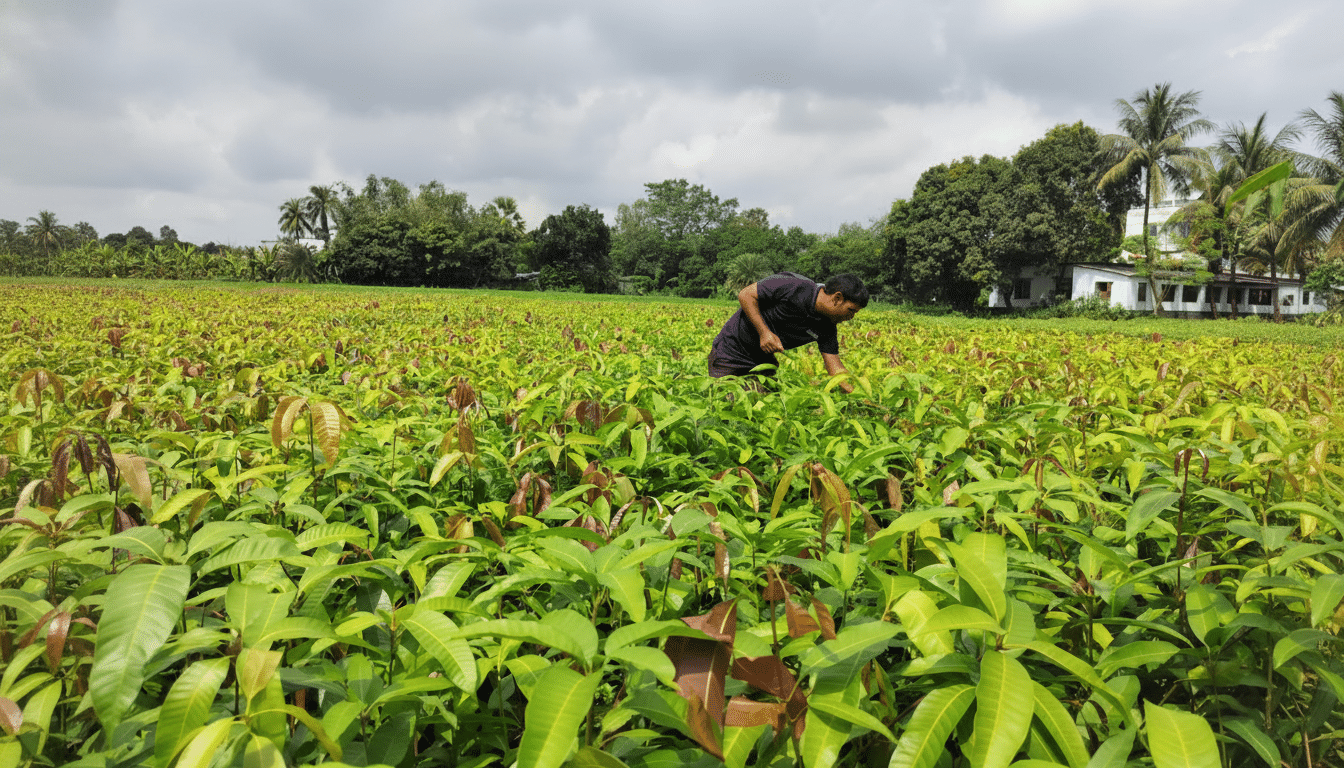
Varaha develops carbon removal across four pathways: regenerative agriculture, agroforestry, biochar, and enhanced rock weathering. The portfolio leans on thousands of smallholder farmers, as well as industrial partners that can convert sustainable biomass into biochar at scale.
Credits are issued through recognized registries, including Puro.earth, Isometric, Verra, Gold Standard, and Carbon Standards International. The company reports it was the first in India to issue biochar credits and the first in Asia to issue enhanced rock weathering credits through an international registry—important markers as the Integrity Council for the Voluntary Carbon Market and the Voluntary Carbon Markets Integrity Initiative push higher quality thresholds across the sector.
Scale, Traction, and Blue-Chip Buyers Shaping Demand
Varaha says it has removed more than 2 million tons of CO₂ to date across 14 active projects and has generated around 150,000 verified carbon removal credits. Removal volumes and credit issuance can be out of sync due to measurement windows, durability rules, and conservative verification protocols—an area where the company emphasizes transparent measurement, reporting, and verification.
Commercial traction is notable for an early-stage platform. Varaha reported ₹430 million (about $4.76 million) in revenue last financial year and forecasts nearly ₹2 billion (roughly $22.15 million) this year, while staying profitable after tax. Long-term offtakes include Google and Microsoft, alongside Lufthansa, Swiss Re, and Capgemini—buyers signaling preference for vetted, durable removals that complement internal decarbonization.

Geographic Expansion And Industrial Partnerships
The company currently operates in India, Nepal, Bangladesh, Bhutan, and Ivory Coast, engaging roughly 170,000 to 175,000 farmers across about 1.7 million acres. New capital will support expansion into South and Southeast Asia, with Vietnam and Indonesia next on the roadmap, while deepening existing footprints.
To scale asset-light, Varaha is rolling out an Industrial Partners Program for operators with sustainable biomass and gasification capacity to produce verified biochar credits using Varaha’s MRV systems. The program is live with partners in West Africa and India, including agribusinesses and a steel producer—an approach designed to multiply supply without owning all the infrastructure.
Team Growth and Investor Signals for Climate Scale-Up
Varaha employs about 225 to 230 people, with approximately 55 in technology, science, product, and data roles, and more than 80% of staff based in India. The company also has personnel in Nepal, Germany, the U.S., and Australia to support international customers and verification partners.
WestBridge Capital’s participation—its first climate tech investment—signals growing mainstream venture interest in carbon removal infrastructure. The firm’s leadership framed Varaha as a credible platform to deliver integrity, scale, and measurable impact from an India hub to global buyers.
Market Context and Quality Guardrails in Carbon Markets
The voluntary carbon market is in a reset. Investigations into certain avoided-emissions credits have driven buyers toward removal options with clearer durability and traceability. Biochar and enhanced rock weathering are often favored in academic literature, including work from the Oxford Smith School, for longer storage times relative to many nature-based avoidance projects, though robust MRV remains essential.
Corporate net-zero strategies increasingly pair deep operational cuts with high-quality removals for residual emissions. Frontier-style advance market commitments by companies such as Stripe, Shopify, Alphabet, Meta, and McKinsey have also catalyzed supply by guaranteeing future demand. In that context, Varaha’s thesis is straightforward: scale durable, verified carbon removal from the Global South at a price point and pace global buyers can absorb—without compromising on scientific rigor.
