


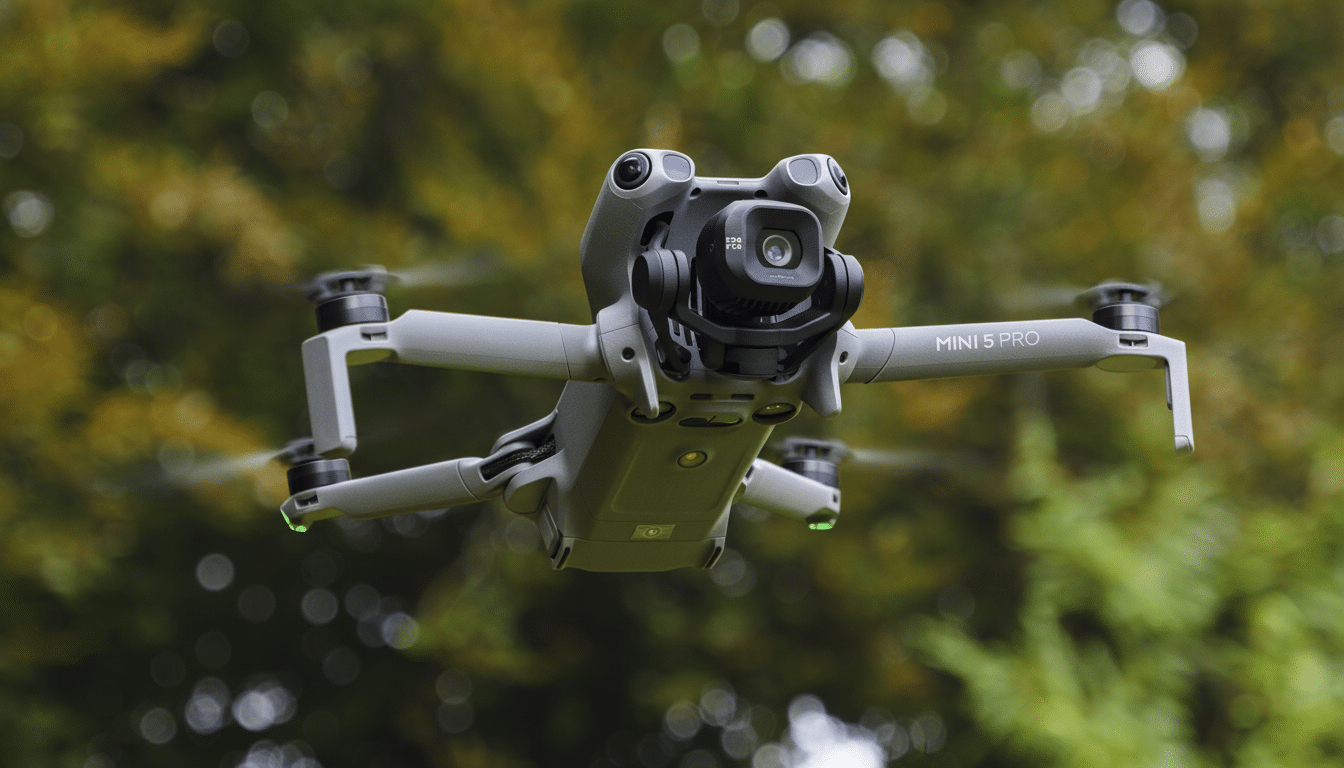
DJI Mini 5 Pro is the ultraportable drone heavy-enough creators will do a double-take at: 249g, Type 1 image sensor, LiDAR-assisted obstacle avoidance and battery life that extends way beyond your average short hop.
But for US buyers, it remains out of reach. (The reasons are not technical; they are regulatory, geopolitical and becoming ever more ingrained.)
A big-camera leap in a sub-250g shell for creators
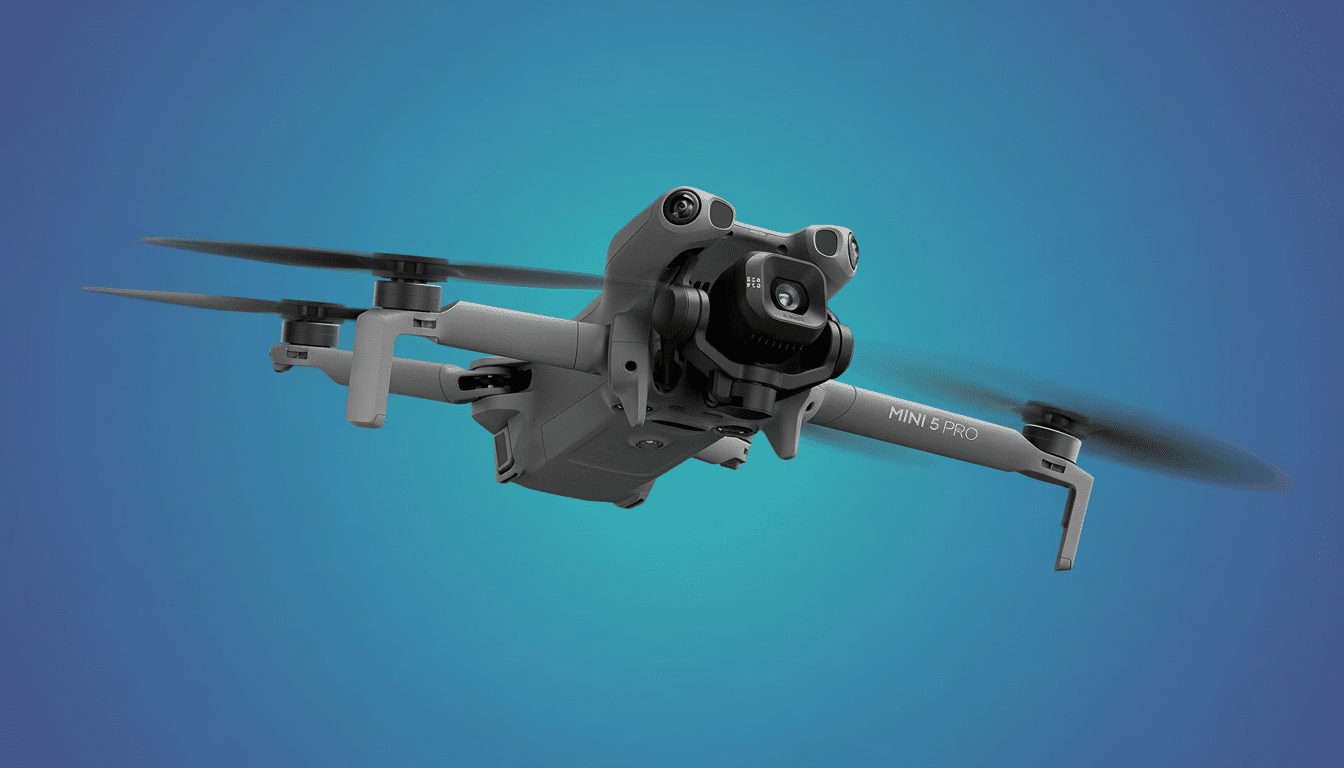
On paper, the Mini 5 Pro’s star feature is its beefy 50MP Type 1 imager – which has a surface area around 65% larger than the one-inch (or rather, 1/1.3-inch) sensor in last year’s Mini 4 Pro. That places its imaging more in line with DJI’s top-end midrange craft, which means cleaner low light shots, wider dynamic range and more forgiving color in high-contrast scenes. It captures up to 4K60 HDR, and is mounted on a 3-axis gimbal that can rotate from landscape to portrait orientation without cropping.
DJI also included a clever gimbal trick: a rolling move which rotates about 225 degrees that now allows you to pull off shots you’d usually associate with heavier, cine-focused drones. When combined with the company’s subject tracking, it’s just the type of flourish that makes smaller rigs remain relevant even for professional B-roll.
Obstacle avoidance also gets a step beyond. The Mini 4 Pro had omnidirectional sensing; the Mini 5 Pro adds forward-facing LiDAR to spot trouble in conditions where normal vision systems have trouble, like when it’s dusk or objects are glowingly backlit, low-contrast and hard to see. The plane can also fly back along its flight path and return to launch even after satellite positioning is lost—an added insurance in GPS-denied environments.
Battery life increases to about 36 minutes on the standard pack, with an included optional extended battery pushing flight time far beyond half an hour. That bigger cell does nudge the drone over that 249g threshold, but the compromise will be too tempting for pilots who need longer one-take shots. There’s a reason to get under 250g in many areas; those are jurisdictions where recreational registration rules relax and there are more places you can fly.
Why it’s skipping the US market and official launch
Answer: Increasing federal scrutiny of Chinese-produced aerial and imaging technology. DJI is named by the US Department of Commerce on the Entity List, which refers to a string of allegations linked with surveillance and human rights violations concerning China’s Uyghur minority. Those abuses have been extensively documented by human rights organizations. DJI has rejected the accusations, noting that its products aren’t meant to promote rights violations and pointing out that it builds its drones in Shenzhen.
For its part, incoming DJI drones are, according to US Customs and Border Protection, already subject to heightened scrutiny. There have been credible reports that consumer imports are being delayed or held for months. One such case was from a California-based creator, whose imported camera drone had been fixed by a repair facility operated by DJI that was located in a foreign country, only to be seized en route back to the US. The result is that the drone remained grounded for months at a time due to this interference. That’s the chilling effect: even if you find a unit overseas, bringing it into the country — and having it serviced — can be dicey.
The policy squeeze: NDAA, audits and the FCC Covered List
Another pressure point is national security policy. Under a recent National Defense Authorization Act, the federal government is studying certain “communications or video surveillance equipment” made by companies like DJI and Autel. Under the proposal, if products are found to pose an unacceptable risk, they can be added to the FCC Covered List — effectively cutting off the mainstream commercial distribution and sale of such devices in the US.
The language is vague enough that it could potentially cover not just drones, but action cameras, 360 cameras or wireless mics — categories DJI has moved into in recent years. Industry sources say the required audit has made little apparent progress. DJI has publicly stated that it welcomes the review and would like to see it finished. Autel, meanwhile, has moved on from consumer drones and is focusing on industrial and agricultural markets.
What it means for pilots and the market today
Home consumers will see an immediate effect: no formal US launch, limited availability from gray markets and unclear warranty or service routes. For the market, no new DJI models could be an earthquake. Independent analyst estimates have for years put DJI’s share of the consumer drone market well above two-thirds, reflecting image quality, flight reliability and software polish that rivals have been unable to match.
Alternatives exist, but they’re fragmented. Some budget choices like the Potensic Atom 2 can satisfy casual fliers and real estate photos, but image quality and obstacle avoidance usually lag behind. Insta360 recently released a teaser for a 360-camera drone that seems like it’d be fun for creators; however, it’s not going to replace the cinema. Previous challengers have failed: GoPro abandoned ship after the Karma, and Sony’s Airpeak S1 was canned. On the enterprise side, US agencies have “Blue sUAS” lists of certified airframes, but those aren’t targeted at filmmakers looking for the look a Mini-class DJI can achieve.
The bottom line for US shoppers considering imports
As accomplished as the Mini 5 Pro is, US pilots can anticipate a wait — and decide whether to take a gamble on importing. There are customs checks, which can delay (or block) deliveries, and service logistics get complex. If you’re already flying a modern Mini, the smart move is to stay as is, watch for official announcements from both the FCC and trade-related agencies such as the Department of Commerce and Customs & Border Protection (CBP) regarding what logistics company insiders refer to as “harmonized standards updates,” and let the policy process play out. The consumer drone shelf could snap back quickly if the audit comes back favorable; if not, there’s a void in sub-250g pro-grade imaging that will be tough to fill.
However the policy questions are resolved, the Mini 5 Pro itself underscores an uncomfortable reality: Technological change in small-camera drones is still snowballing, but in the US, access to some of the most advanced models now depends less on engineering and more on geopolitics.
