


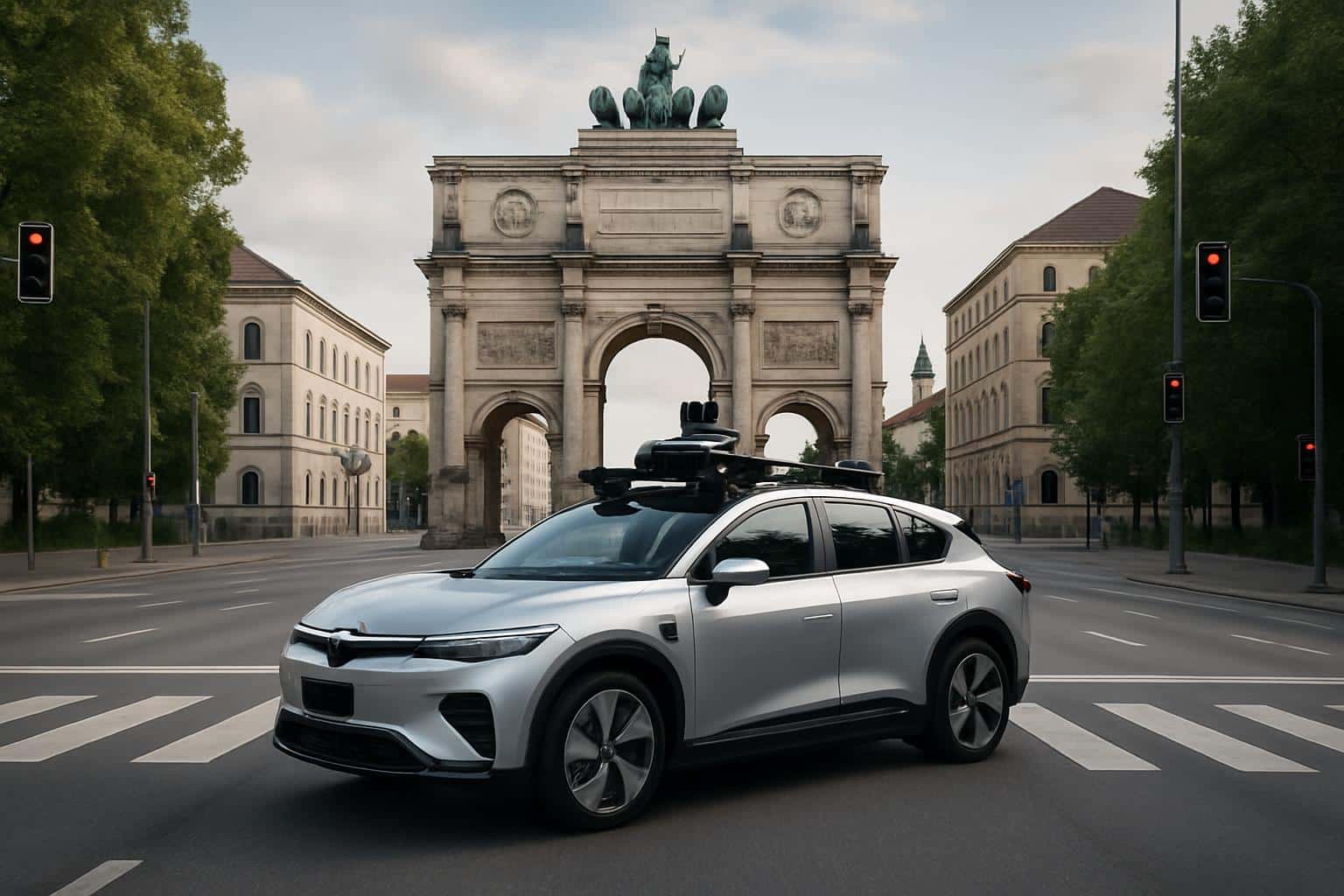
Uber and a Chinese self-driving company, Momenta, said on Monday that they would start testing robotaxis in Munich in 2026, in a high-profile challenge to Germany’s closed market for on-demand self-driving services. The pilot program will begin with trained safety operators behind the wheel, and expand to more German cities should testing and approvals proceed as anticipated.
Why Munich is the launchpad
Munich has an unusual combination of factors that matter to autonomy — layered city grids, four-season weather, and deep auto roots. The city has BMW’s global headquarters, researchers from the Technical University of Munich and a concentration of Tier 1 suppliers and software companies that make it a natural proving ground. Uber has pitched the decision as a bet on Germany’s engineering heritage and an ecosystem to accelerate industrial-grade deployments.
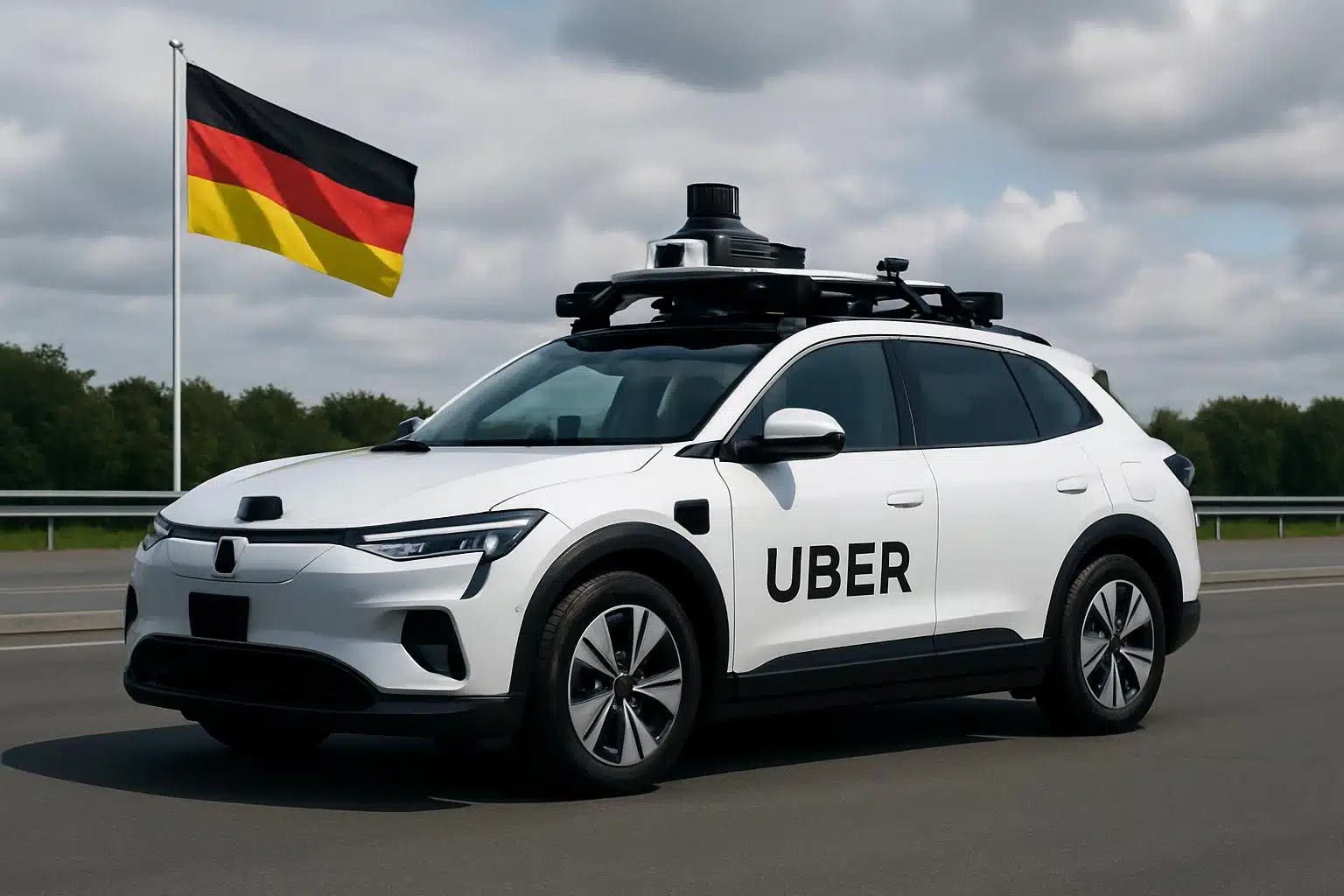
Germany also has a clear legal path to autonomous services. The country’s Autonomous Driving Act defines a framework for Level 4 ODDs before technical rules were released by federal authorities to govern their deployment. It provides companies with a predictable although demanding path from piloting to scaled service — something that many European markets still lack.
How the pilot will work
The Munich trial is set to startup at SAE Level 4 on restricted routes, with human safety operators on board and ready to take over if needed. Probably at first, service zones will be limited by map to corridor routes and peak-demand routes and then expand as vehicles sufficiently demonstrate their performance levels. Short-term objectives usually focus on decreasing disengagement per 1,000 kilometers, decreasing pickup ETAs, and providing consistent behavior in difficult situations, such as construction zones and in areas of mixed traffic.
The deployment would be the first robotaxi service in Europe for Momenta, which was founded in 2016. The company has run self-driving pilots in Shanghai and it has said it hopes to commercialize services that have onboard safety operators. Side by side with robotaxis, Momenta offers automotive-grade software for advanced driver assistance systems to car manufacturers — including German makes such as Mercedes-Benz, BMW and Audi — with the company saying that its ADAS stack is on around 400,000 customer vehicles.
Competition intensifies in Europe
Uber’s action puts it in the midst of its ride-hail network rivals and a burgeoning slate of developers of AV on European streets. Lyft unveiled an agreement with China’s search giant Baidu to roll out robotaxis throughout Europe, first in Germany and the U.K., ramping up competition to lock in prime lanes and airport entry and municipal deals.
Uber has also taken a partner-first approach when it comes to incorporating AVs. The company has some 20 autonomy partners globally across ride-hailing, delivery and freight, and says these collaborations are already resulting in an annualized rate of 1.5 million autonomous vehicle-enabled mobility and delivery trips. In the United States, Waymo robotaxis can be booked in several cities through Uber’s app. Uber has partnered with Momenta on its platform for autonomous driving — alongside other Chinese AV companies WeRide and Pony — in international markets. ai in the Middle East, and with U.K.–based Wayve for prospective public road testing in London.
Germany’s safety bar and its path to approval
German regulators demand a thorough safety case to be established before rolling out service, the Federal Motor Transport Authority (KBA) and independent technical services like TÜV organizations are crucial.) Firms need to show that they can function safely in compliance with something like ISO 26262, that they satisfy cyber security requirements that are in the spirit of ISO/SAE 21434 and that they comply with data governance and privacy under GDPR.
Unlike California’s poorly done disengagement reports, Germany focuses on good planning, incident reporting, and operational design domain definitions, not a single headline metric. Anticipate that geofenced service, remote operations procedures, and traffic authority coordination will be included in the approval package long before the safety driver is removed.
What success would look like
For Uber, winning in Munich could prove out a federated AV model, in which the platform passes the baton to several autonomy providers, city by city, and where vehicle capabilities are tailored to local requirements. For Momenta, the pilot is not only an on-ramp to Europe’s high-end automotive market but also an opportunity to demonstrate the transferability of its China-tuned stack to European roads and rules.
Key milestones to monitor include continued human intervention reduction, migration from fixed corridors to larger service areas, and preliminary cost-per-kilometer improvements. If the test in Munich goes well, the companies could aim to expand to other German cities with receptive transport agencies and robust testing infrastructure. The bigger picture: Germany’s rulebook — strict but doable — could become the blueprint for scaling Level 4 ride-hailing across continental Europe.
