


News of Catherine O’Hara’s death set off a wave of affection across social media, as fans and colleagues celebrated a singular talent whose work defined smart, heartfelt comedy for generations. People magazine confirmed the Emmy and Golden Globe winner’s passing, and within moments, timelines filled with clips, quotes, and fan art honoring the actor best known for Schitt’s Creek, Home Alone, Beetlejuice, and her trailblazing days on SCTV.
A Digital Vigil For A Comedy Original Unfolds Online
What followed online resembled a global, crowdsourced memorial. On X and Instagram, short scenes of Moira Rose’s most outlandish monologues ricocheted between comedy accounts and longtime fans. TikTok stitched together O’Hara’s voice work from The Nightmare Before Christmas with her deadpan brilliance in Christopher Guest’s mockumentaries, turning decades of material into a living anthology.
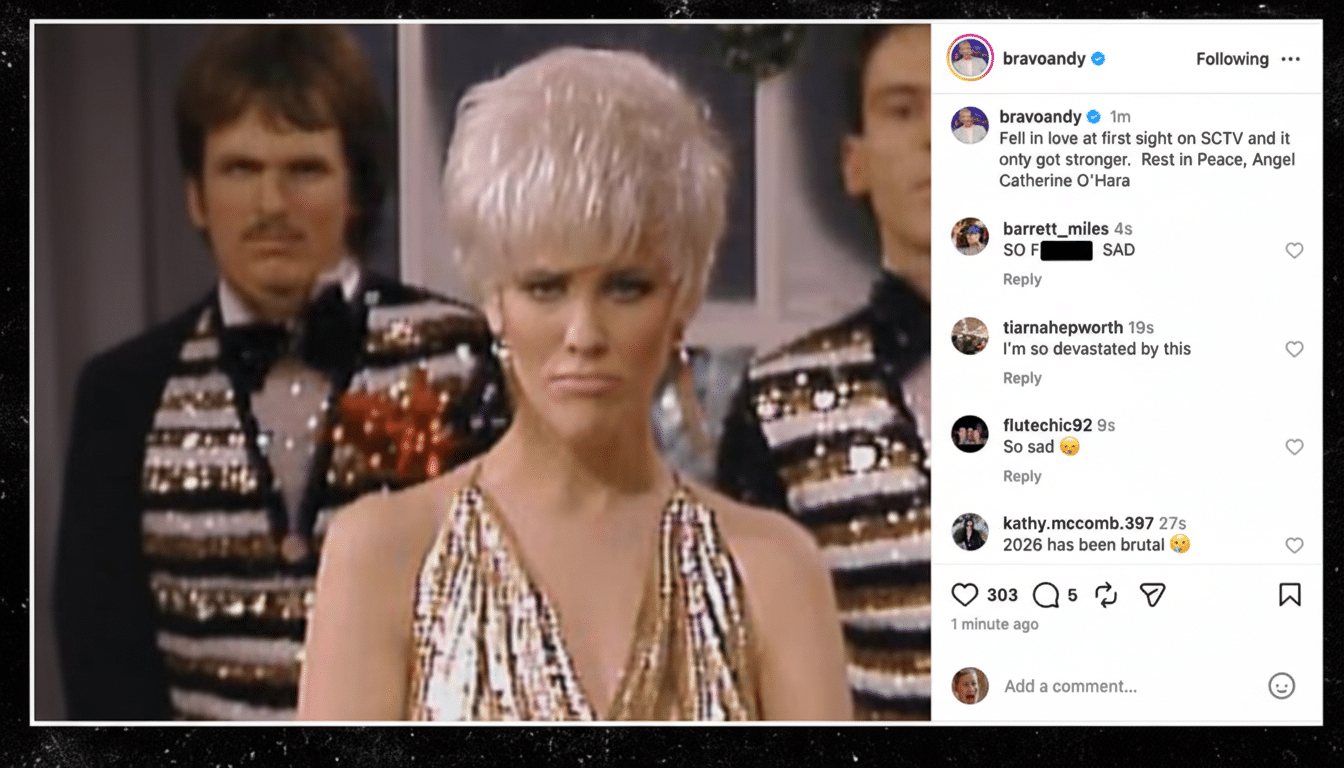
Social listening firms and newsroom dashboards showed a rapid surge in mentions, with hashtags referencing O’Hara and Moira Rose trending across multiple countries. Reddit threads in r/television and r/movies became communal spaces for deep cuts: SCTV sketches resurfaced, as did behind-the-scenes stories from Waiting for Guffman and Best in Show that highlighted her improvisational fearlessness.
The tenor of the posts skewed celebratory rather than mournful. Fans thanked O’Hara for “teaching timing” and “making weirdness beautiful,” a sentiment that underscores how her characters became a language of their own online. Media researchers have long noted that shareability often hinges on quotability and character specificity—two qualities O’Hara delivered in abundance.
Colleagues And Co-Stars Lead The Tributes
Actors who worked with O’Hara added their memories to the digital chorus. Pedro Pascal, who appears with her in The Last of Us, shared a photo and praised the privilege of being near her genius. Justin Theroux, her Beetlejuice Beetlejuice co-star, called out the immense loss felt by those who admired her craft on and off set. Macaulay Culkin, forever linked to her as Kevin McCallister’s mother in the Home Alone films, posted a tender remembrance that echoed a generation’s holiday nostalgia.
Their tributes mirrored how peers often frame O’Hara’s legacy: a consummate collaborator known for elevating the room. Directors and comedians frequently cite her precision with language and her gift for improvisation—skills honed on SCTV and perfected across decades of film and television.
Why Her Work Resonates Online Across Generations
Few performers translate to the internet as effortlessly as O’Hara. Moira Rose became a meme engine not because of one-liners alone, but because the character fused absurdity with pathos—an ideal formula for short-form video. On TikTok, the #MoiraRose tag has long been a reliable fountain of lip-syncs, audios, and reenactments, while GIF databases are saturated with her signature expressions and couture-heavy entrances.
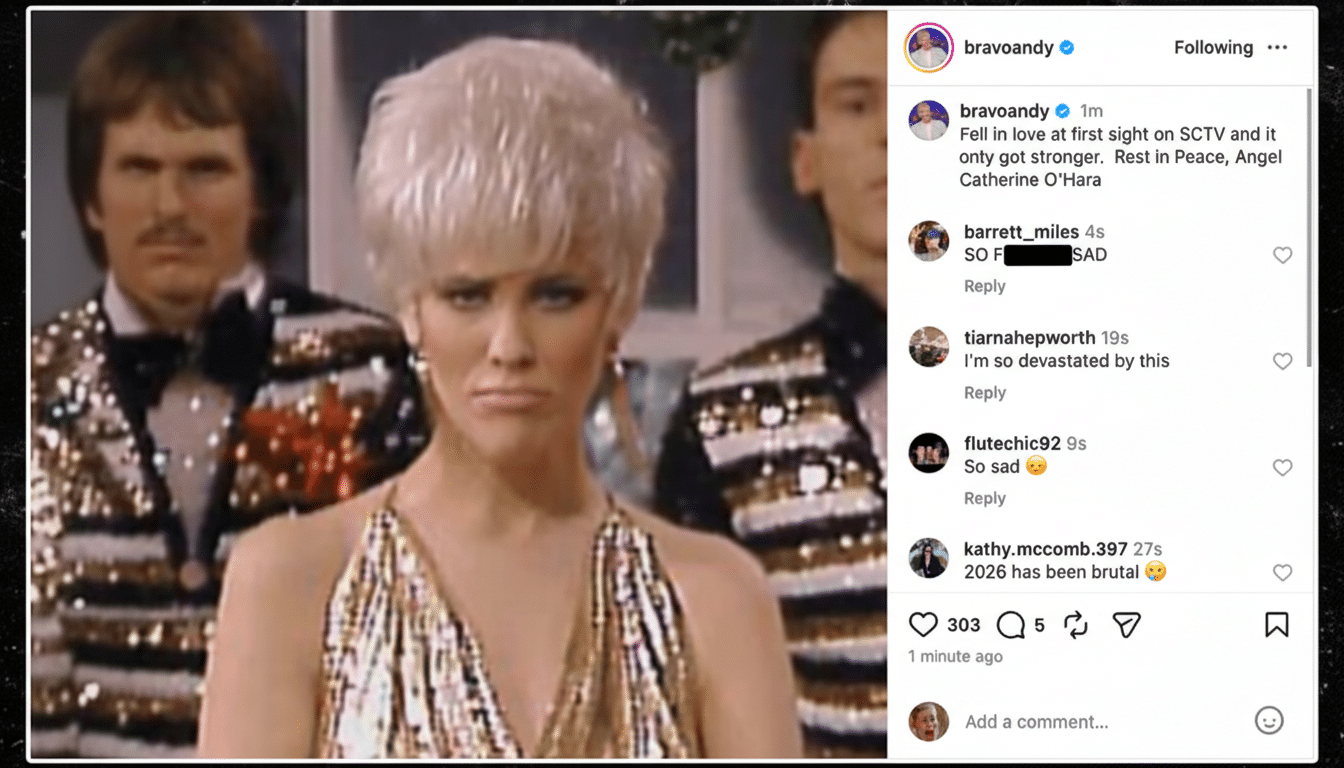
Beyond Schitt’s Creek, seasonal touchstones like Home Alone and The Nightmare Before Christmas keep O’Hara in the cultural bloodstream year-round. That cyclical rediscovery compounds her online footprint: according to audience measurement reports, library hits see recurring spikes in attention, which in turn feed new waves of tribute content and commentary.
A Career Etched In Awards And Enduring Influence
O’Hara’s influence spans five decades and multiple formats. She earned Emmy recognition both as a writer (SCTV) and as an actor (Schitt’s Creek), a rare cross-discipline distinction that underscores her range. Her collaborations with Christopher Guest—Waiting for Guffman, Best in Show, A Mighty Wind—have become case studies in character-based improv. And her film roles, from Beetlejuice to her wry, warm turn in Home Alone, cemented a cross-generational appeal that few comedians achieve.
Culturally, she bridged Canada’s sketch-comedy lineage with Hollywood prestige television, shaping how contemporary audiences understand “heartfelt humor.” Entertainment guild tributes and awards body archives trace a throughline: O’Hara consistently transformed eccentricity into emotional clarity, making big choices feel universal.
Collective Grief In The Age Of Feeds And Timelines
The scale and speed of the response to O’Hara’s passing follows a familiar pattern in the social era. Research from organizations like Pew and the Reuters Institute has documented how major cultural losses catalyze online communities into acts of remembrance—clip compilations, charity callouts, and memory-sharing threads—creating a hybrid space that is part memorial, part archive.
In that sense, the outpouring for O’Hara doubles as a living map of her influence. It shows how a performer can leap mediums and decades, and still feel immediate in the scroll. As timelines continue to fill with Moira-isms, SCTV gems, and Home Alone reunions, one throughline keeps surfacing: people felt seen by her comedy. That, more than any metric, explains why the tributes feel both endless and entirely earned.
