


Meta’s Threads is rolling out Dear Algo, an AI-powered way to tell the app exactly what you want to see more or less of in your feed, turning one of social media’s most opaque systems into something you can talk to in plain language.
Type “Dear Algo” in a public post, add a request like “show me more posts about podcasts” or “show me fewer TV spoilers,” and the feed adapts for three days. It’s a simple mechanic with outsized implications: explicit intent signals that temporarily steer the algorithm without forcing you to overhaul who you follow or juggle multiple tabs.
- How the Dear Algo feature works on Threads feeds
- Public by design and the trade-offs for visibility
- Why it matters for real-time social feeds and UX
- Availability and rollout across initial markets
- Signals behind the scenes of Threads ranking shifts
- Competitive context and early momentum on mobile
- What to watch next as Threads tests public prompts
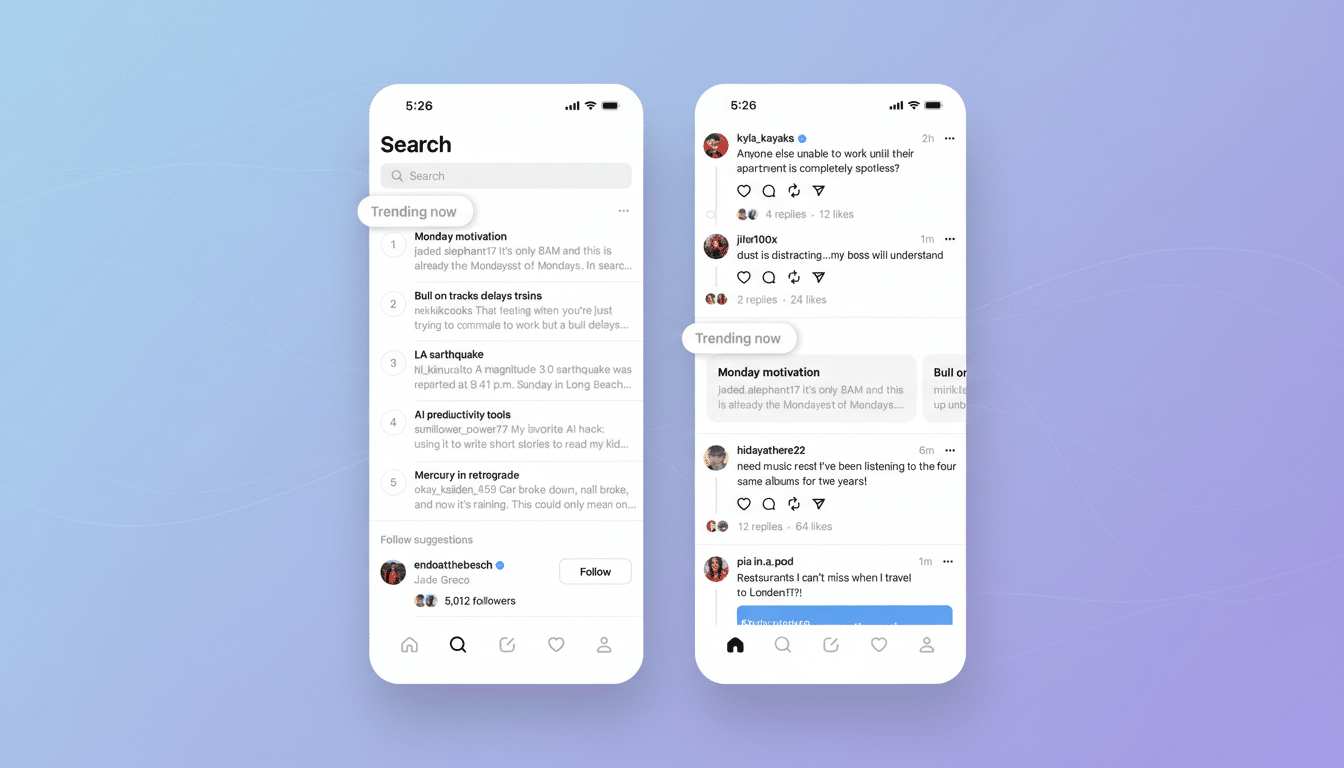
How the Dear Algo feature works on Threads feeds
Dear Algo listens for prompts in public Threads posts. Requests can nudge your feed toward topics, events, or creators, or away from them. The tuning window lasts three days, after which your feed reverts, preventing long-term lock-in that often plagues algorithmic personalization.
Unlike generic signals such as likes or “Not Interested” buttons, Dear Algo captures your immediate intent. You can stack requests during a live game, a breaking news cycle, or a product launch, then let the effect expire so your feed doesn’t calcify around a momentary interest.
Public by design and the trade-offs for visibility
Every Dear Algo post is public, and others can repost your request to apply the same tuning to their own feeds. Meta frames this as a discovery booster—turning personalization into a shareable, trend-like behavior. The social layer could help people find communities fast, especially around live events.
The flip side is visibility. Some users won’t want to broadcast their interests or aversions. Public prompts could also invite bandwagoning and coordinated pushing of topics. Because the feature is temporary and scoped to individual feeds, it should limit systemic manipulation, but platform researchers will be watching for brigading patterns and spammy prompt chains.
Why it matters for real-time social feeds and UX
Rivals like X and Bluesky rely on a mix of Follow and algorithmic feeds, plus standard feedback controls. Dear Algo adds intent-level steering that’s closer to a search prompt than a passive preference. It’s a small UX shift with big potential: real-time feeds that are both dynamic and user-led.
The three-day window is notable. Ephemeral personalization mirrors how interests spike and fade—think playoffs, award shows, or major news—without forcing users into new follows that they later have to undo. That should keep feeds fresher and reduce the “algorithmic ruts” that users often complain about.
Availability and rollout across initial markets
Dear Algo is available now in the U.S., New Zealand, Australia, and the U.K., with broader expansion planned. Early access in English-speaking markets lets Meta test prompt quality, safety filters, and the balance between topical breadth and depth before scaling globally.
Signals behind the scenes of Threads ranking shifts
While Meta hasn’t detailed the full stack, Dear Algo likely works as a strong, time-bound ranking signal layered atop existing engagement and quality models. By letting users declare intent in natural language, Threads reduces reliance on noisy proxies like dwell time and increases precision during fast-moving moments.
Importantly, the feature’s expiration helps maintain content diversity. Recommendation systems can overfit to short bursts; a 72-hour cap encourages exploration while preventing long-term feed homogenization.
Competitive context and early momentum on mobile
The launch lands as Threads builds mobile traction. Market intelligence firm Similarweb reports that Threads recently surpassed X in daily active users on mobile, with 141.5 million for Threads versus 125 million for X. X still leads on the web, but mobile is where real-time posting habits are forged—and where feed control features can have immediate impact.
If Dear Algo drives a perception that Threads feels more “live” without overwhelming users, it could solidify that mobile advantage. The feature also gives creators a new lever: they can encourage audiences to post prompts during events, effectively coordinating discovery without complex hashtags or linkouts.
What to watch next as Threads tests public prompts
Key questions remain: how granular can prompts get, how well will the AI interpret nuance, and what safeguards limit spammy or harmful prompt patterns? Transparency reports from Meta, even at a high level, would help validate that public prompts aren’t a backdoor for coordinated manipulation.
For now, Dear Algo is a rare twist on social personalization—explicit, time-bound, and inherently shareable. If users embrace it, Threads may have found a practical way to make feeds feel both personal and communal, without trapping anyone in yesterday’s interests.
