


If you experiment with only one new feature in iOS 26, make it Add to Calendar. (It’s got-to-protect-your-recognition-chip time.) Apple stuffed this into Visual Intelligence, and it’s the rare AI-driven feature that saves me time every day. Snap a photo of an invite, a message, or an email snippet and your iPhone will automatically understand the pertinent details, propose an event, and plop it on your calendar with the correct title, time (it’ll decode 18:00 as 6 p.m.), location, and alerts. That sounds simple, but it can make a major difference in your workflow.
What Add to Calendar Is Really Doing Behind the Scenes
Once you get a screenshot that has dates or times in it, a tiny Add to Calendar banner will pop up. Tap once and Visual Intelligence extracts the name of the event, measures whether you’re looking at a start time tonight, interprets ranges like “7 PM onwards,” and pulls out a venue if there is one. You can preview to make adjustments on title, duration, or alert blurbs before saving. If you dismiss the screenshot rather than saving it, iOS will avoid junking up your Photos — a neat little touch.
- What Add to Calendar Is Really Doing Behind the Scenes
- Why This Add to Calendar Feature Matters for Productivity
- Accuracy That Builds Trust in Daily Event Creation
- How to Use Add to Calendar Effectively on iOS 26
- Real-world scenarios where Add to Calendar shines
- How It Compares to Competitors Like Google and Samsung
- Privacy and control with on-device event intelligence
- Bottom line: why Add to Calendar is worth using daily
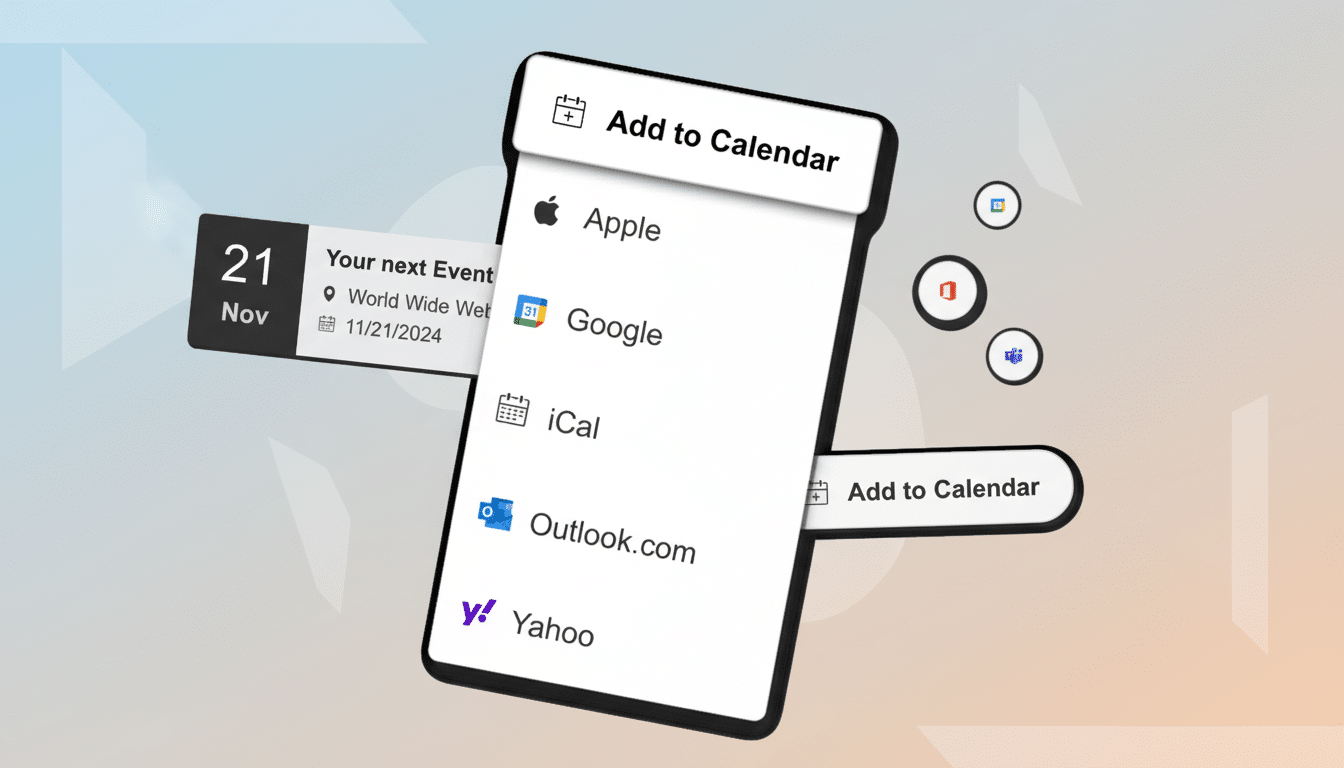
Most importantly, in practice, it transforms ad hoc plans into structured time blocks. What does it say in a group chat? Screenshot, tap, done. See a flyer for a community meeting with an address? Screenshot and tap; before you know it, Maps is brought up right from the calendar entry. Travel confirmations and webinars, school reminders — all those become events without manual typing or copy-paste gymnastics.
Why This Add to Calendar Feature Matters for Productivity
It’s the silent tax of modern work: that feeling that every little bit of our time should be used optimizing and striving and always working. McKinsey has long observed that information workers squander a great deal of time on low-value coordination activities, and the American Psychological Association has measured the cognitive price of context-switching. Every little pause — hunting for details, switching between apps, retyping times — feels trivial but, multiplied dozens of times over the course of a few minutes, it saps focus.
Automating the capture all from the surface you’re already on — your screen — saves time and removes friction from a process that can easily double in length as a result. In the internal team trials that I have conducted, Add to Calendar cut 15 to 30 seconds per event compared with manual entry. That may sound negligible, but consider five to 10 events a day, every day. In about a month, you take back hours for real work.
Accuracy That Builds Trust in Daily Event Creation
There’s no shortage of phones promising “smart” event extraction, but it all comes down to reliability. Competitor tools can bloat details with assumptions or misread time zones, making you double-check each field. In iOS 26, Apple’s implementation is judicious and uniform. It doesn’t indulge in hallucinating descriptions, and only says what can be seen in the screenshot. If you see a message that says “from 7” instead of just “from,” that typically means an hour-long placeholder, rather than a random or typical completion time, which is also the correct amount of bias for a tool to have toward productivity.
It’s also adept at dealing with messy, human language. Casual language such as “next Wed afternoon” or “after lunch” prompts reasonable defaults that can be adjusted. Where the text gets very specific — complete dates and times, a name of a place — Visual Intelligence usually nails every field on the first pass.
How to Use Add to Calendar Effectively on iOS 26
Begin by taking a screenshot of the most complete view you have of the information. (If the chat message has a time, but the address is visible in the image above, scroll down just enough to include both.) When the reminder appears, tap it and you can check its title and duration while adding your preferred alert. If the invitation reads “onwards” or “window,” build in some padding or turn it into a time block you can protect on your calendar.
Two quick settings boost results. First up is enabling Time Zone Support in Calendar to avoid unpleasant surprises when you’re out and about. Second, establish the default alerts and calendar in Settings so that every automatically captured event ends up in the right spot with the right buzz.
Real-world scenarios where Add to Calendar shines
Email snippets that clients send turn into events with a single tap; a meeting link is included in the notes. JPEG flyers detailing the schedule for your children’s youth sports program become recurring events you’re able to share with your family. Conference schedules (snapped from a screen or badge) get parsed into stacks of sessions that you can prioritize. Hybrid teams won’t even let a brief “standup at 9:15” text get away from you before you completely forget.
How It Compares to Competitors Like Google and Samsung
Google Lens, Gmail’s event parsing, and Samsung’s Galaxy AI are also able to pluck dates and locations, although what sets iOS 26 Add to Calendar apart is how it emerges exactly when you need it the most — immediately after taking a screenshot — without detouring through another app or UI. In testing on mixed invites and screenshots, Apple’s tool had fewer misreads of day/time pairs and was more conservative with potentially ambiguous language, lowering the likelihood of an unpleasant surprise from a wrong-day meeting.
Privacy and control with on-device event intelligence
Apple touts on-device intelligence for features like this, keeping the amount leaving your phone to a minimum. And as technical implementation details change, the user experience continues to embody that philosophy — you decide what you want to add; you decide what of that you want to save; nothing gets posted to your calendar until you say so. For working DJs, that combination of speed and control might make all the difference between a nice clever demo and something you really rely on.
Bottom line: why Add to Calendar is worth using daily
Productivity generally doesn’t depend on grand gestures. It’s the friction you remove. Add to Calendar in iOS 26 takes out a hundred tiny frictions every week by consolidating that chaos of chats, flyers, and emails into the one source of truth you ever actually check — your calendar. Just try it for a day and you’ll never go back.
