


Paul Feig’s The Housemaid comes teeming with buzzy IP, marquee stars, and a genre that should purr with menace — but hits the screen like a thud.
Sydney Sweeney and Amanda Seyfried clash in a luridly erotic thriller that never quite decides whether to head for a delicious camp quality or an icy cruelty, instead delivering itself as a limp and weirdly airless package — and underlining Sweeney’s mixed fortunes as a big-screen performer.
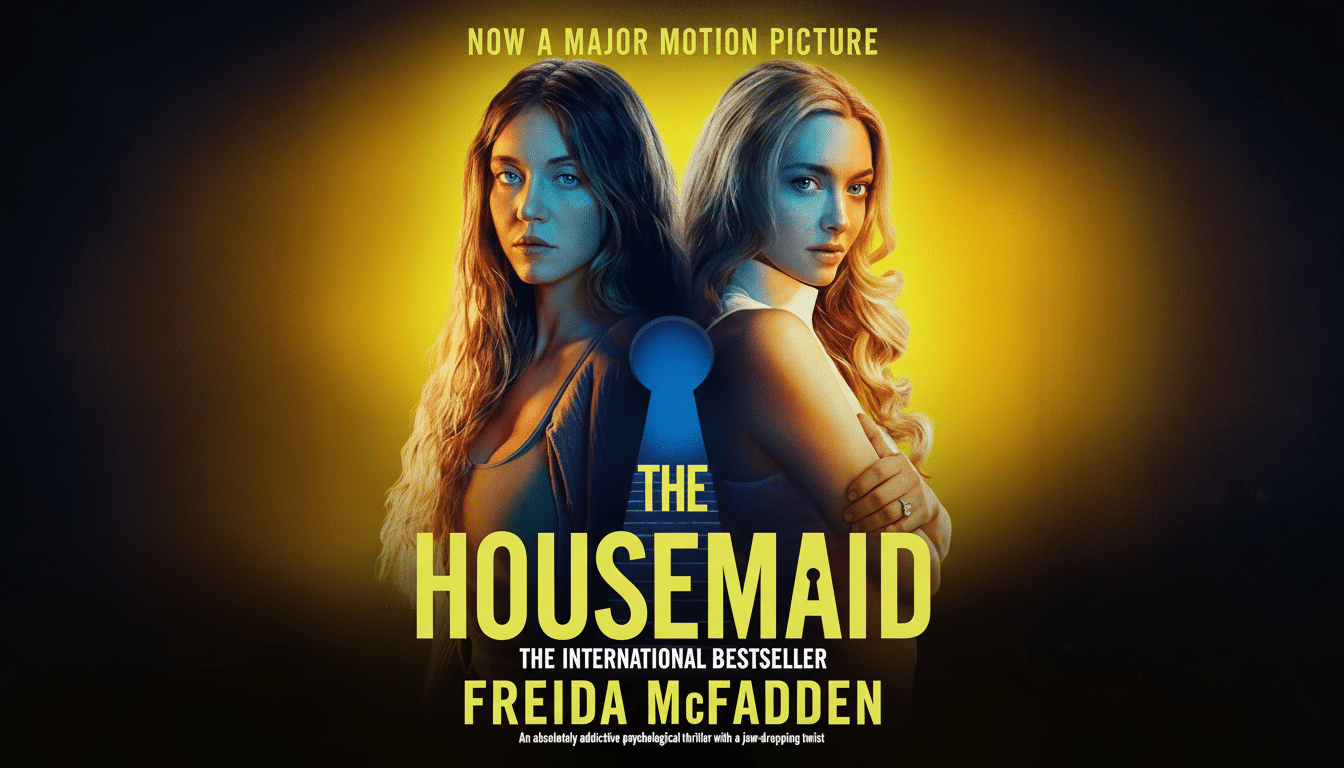
Why the adaptation misfires on page-to-screen promise
Based on the best-selling novel by Freida McFadden, The Housemaid follows Millie (Sweeney), a young woman descending into labor as she lands a live-in job for the wealthy Winchester family and is tormented in short order by Nina (Seyfried), lady of the house.
On the page, it’s that double-POV construction and breathless internal monologues that feed into the soap-operatic contortions. Onscreen, the adaptation relies on intermittent diary voiceovers and a few letters, eschewing the book’s locomotive interiority without seriously attempting visual bravura or tonal bite.
One of these or the other, right? Feig, a gentleman who once sneaked Hitchcockian mischief into A Simple Favor for laughs and kicks in the first place, never commits to a lane. The film won’t descend to the high-gloss trashiness of ’90s examples like The Hand That Rocks the Cradle and Basic Instinct, but neither will it indulge in that quite funny, fashion-forward excess that made A Simple Favor pop. It’s an odd step back for a filmmaker whose genre muscle memory (A Simple Favor made about $97 million worldwide, according to Box Office Mojo) seemed like a more natural match than this.
McFadden’s tale cries out for audacity: the change of fortunes, class envy, a revelation that reframes everything. But for the most part, the movie’s heard-it-before-and-played-the-hits sound is dial tone; it isn’t quirky enough or bold enough (in its perceptions but also in its form) to play as requiem or whistle past the graveyard. Even a last-minute pivot into slasher territory feels perfunctory, just genre garnish rather than an idea fully imagined.
Performances without pulse leave the thriller underpowered
Sweeney’s Millie is a puzzle with no cover picture. The character needs the scrappy-survivor spark — cagey, seductive, and volatile when cornered — but Sweeney, her register kept muted here, doesn’t provide it: she sounds the same whether Millie is being bullied or seduced or implicated. It’s a furrow-browed vacuum in the middle of a film that cries out for an enigmatic antihero to keep us guessing. Following a series of high-profile misfires critically (Madame Web among them), it’s yet another showing that makes one wonder how her star persona travels outside of comedy and television.
Seyfried tries to dial Nina up to operatic frequency, and a casting switcheroo (as Nina: a slick, icy opponent rather than the book’s described physique) hints at an opposite-world mind game that promises thrills. But the movie seldom frames or styles her as fearsome, or sexy; she’s playing to the rafters while the filmmaking whispers. The cinematographer John Schwartzman and the editor Brent White err toward coverage instead of point of view, which flattens scenes that ought to crackle with risk and desire. A kitchen meltdown of shattered plates and snarled accusations is shot from protective angles, watering down Seyfried’s fury and the hazard in the room.
The romantic heat, too, is undercooked. The Millie ballad and the affair between her and Andrew (Brandon Sklenar) are designed to invite complicity, and dread, in equal measure. Despite an R rating and liberal intimacy between characters, the sequences are antiseptic — starved of chemistry and consequence. Indiana Elle (as Cecilia) and Michael Morrone (a leering groundskeeper) are little more than genre signposts, not characters. Elizabeth Perkins, on the other hand, who swoops in as Andrew’s flinty, old-money mom, finds immediately the tone that the movie continually darts past — arch and pinpoint and deadly.
A genre that requires style the film never quite musters
Erotic thrillers have long fed on nerve and polish. At their best, these movies were commercial juggernauts because they mixed provocation with discipline — “Fatal Attraction” made more than $320 million worldwide, and “Basic Instinct” over $350 million. Today’s hunger for glossy, adult-skewing suspense has not gone away — streaming successes such as Fair Play and sustained BookTok-abetted interest in twisty paperbacks demonstrate that the appetite is there, according to reporting from industry trackers and trade publications. I think what it lacks is that commitment — to visual storytelling, to moral hazard, a sensuality that seduces instead of merely ticking some ratings box.
The Housemaid had all the components: a novel gone viral, two bankable stars, and a director with some measure of relevant bona fides. Sweeney herself has demonstrated box-office pull in the right vehicle (Anyone But You managed to crack the $200 million threshold worldwide, per Box Office Mojo), so it would seem that the issue here isn’t star wattage but tonal execution. This picture called for crisp costuming, tactile production design, and camera decisions that ensnare us in a game of shifting allegiances. Instead, it is objectionable for its soft focus where hard edges were needed.
Bottom line: a pulpy premise without the thrills or heat
Not sinfully fun, not genuinely suspenseful, The Housemaid squanders its pulpy potential. Seyfried claws for something big and poisonous, but she’s rudderless in a timid aesthetic and a lead turn that never ignites. With one shining supporting performance as exception, this is a thriller without thrills, a romance without heat, and most damningly for its star, another indicator that not every project fits Sweeney’s toolkit.
