


We all know that feeling. You walk into a room and immediately forget why you’re there. You read the same paragraph in a book three times without absorbing a single word. Or maybe you just feel a general “fuzziness” clouding your thinking, making complex tasks feel like wading through mud.
For years, the standard advice for brain fog has been physical: drink more coffee, get more sleep, or maybe take a handful of vitamins. But recently, a different approach has been gaining traction—using sound to influence how our brains work.
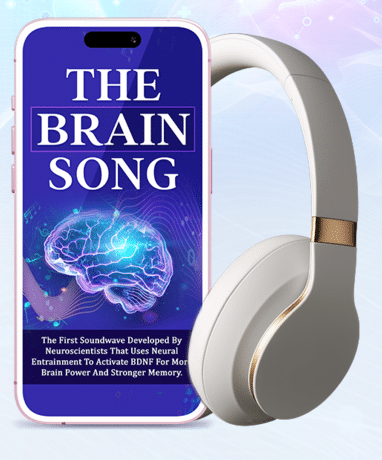
One product in this space that has been generating buzz is The Brain Song. It’s not a pill, a diet, or a grueling meditation practice. It is simply a digital audio track. The promise is straightforward: listen for 12 minutes a day to activate specific brainwaves that help your mind function better.
But can listening to a short audio track really sharpen your focus and improve your memory? I decided to take a deep dive into the science, the claims, and the practical reality of The Brain Song to see if it’s a tool worth adding to your mental toolbox. Click To Learn More About The Brain Song Audio Program
What Exactly Is The Brain Song?
At its core, The Brain Song is a digital audio program. When you purchase it, you don’t get a physical CD or a gadget in the mail; you get access to a 12-minute audio file designed to be played on your phone, computer, or tablet.
The creators describe it as a bridge where “neuroscience meets sound.” The audio isn’t just pleasant background music; it is engineered using specific sound frequencies. The goal of these frequencies is to gently guide your brain into a state that promotes the production of a crucial biological protein called BDNF.
If you haven’t heard of BDNF, don’t worry—most people haven’t. But in the neuroscience community, it’s a very big deal. Before we judge the product, we have to understand the science it claims to leverage.
The Science: Gardening for Your Brain
To understand why this product exists, you have to understand two concepts: BDNF and brainwave entrainment.
1. The Fertilizer: BDNF
BDNF stands for Brain-Derived Neurotrophic Factor. That’s a mouthful, so think of it as “fertilizer for your brain.”
Your brain is made up of billions of neurons. For you to learn a new skill, remember a name, or focus on a task, these neurons need to connect and communicate with each other. BDNF is a protein that helps support the survival of existing neurons and encourages the growth and differentiation of new neurons and synapses.
When you have high levels of BDNF, your brain is adaptable. It learns faster, remembers better, and generally feels “sharper.” When levels drop—which can happen due to aging, stress, or poor sleep—that adaptability slows down. You might feel foggy, slow, or forgetful.
2. The Frequency: Gamma Waves
Our brains run on electricity. The neurons communicating with each other create electrical pulses that can be measured in waves. Depending on what you are doing, your brain “hums” at different speeds (frequencies):
- Delta Waves: Deep, dreamless sleep.
- Theta Waves: Light sleep or deep relaxation.
- Alpha Waves: Calm, relaxed alertness (like when you finish a task and sit back).
- Beta Waves: Active thinking, problem-solving, or stress.
Then, there is the Gamma Wave. This is the fastest frequency. It is associated with high-level information processing, “aha!” moments of insight, peak focus, and expanded consciousness.
Here is the connection The Brain Song makes: Recent research suggests a link between Gamma brainwave activity and the production of BDNF. The theory is that if you can get your brain to resonate at that Gamma frequency, you might stimulate the production of that essential brain fertilizer.
How The Brain Song Works
The mechanism behind The Brain Song is likely a form of “brainwave entrainment.” This is a fancy term for a natural phenomenon: our brains tend to sync up with rhythmic stimuli.
If you hear a steady drumbeat, you might start tapping your foot. Your brain does the same thing electrically. If you feed the brain a sound pulsing at a specific frequency (like 40Hz, a common Gamma frequency), the brain tends to align its own electrical activity to match that beat.
The Brain Song uses advanced sound patterns to “guide” your brain out of its sluggish or stressed state and into those high-performance Gamma frequencies. The idea is that you don’t need to force yourself to focus; the sound does the heavy lifting for you. Click To Learn More About The Brain Song Audio Program
A Practical Look: The Daily Routine
One of the biggest hurdles with any self-improvement tool is adherence. We all buy books we don’t read and exercise equipment that becomes a clothes rack.
This is where The Brain Song has a significant practical advantage: It is short.
The track is only 12 minutes long. In a world where we are constantly time-poor, asking for 12 minutes is a lot more reasonable than asking for an hour of meditation.
Ideally, a user would:
- Find a quiet spot: You want to minimize outside distractions so the sound frequencies are the dominant input for your brain.
- Use headphones: While the website says it can be enjoyed at home, audio stimulation like this is almost always more effective with stereo headphones. This delivers the frequencies directly to the ears without room echo.
- Relax: You don’t need to “try” to focus. You just listen.
The accessibility here is a major pro. You could listen to it first thing in the morning with your coffee, during a lunch break to reset for the afternoon, or even while sitting on the train during a commute (provided you have noise-canceling headphones).
Potential Benefits: What Might You Feel?
So, if you listen to these sounds and your brain syncs up, what is the payoff? The creators list several benefits centered around mental performance.
Enhanced Focus and Concentration
This is the most immediate potential benefit. Gamma waves are the brain’s “get it done” gear. If you struggle with a wandering mind or finding the motivation to start a task, shifting your brain state via sound could act as a reset button. Many users of similar audio therapies report feeling a sense of clarity shortly after a session.
Better Retention and Learning
Because BDNF is so critical for synaptic plasticity (the ability of the brain to change and grow), increasing its activity should theoretically help you learn faster. This makes the product intriguing not just for older adults worried about memory, but for students or professionals studying for certifications.
Mood and Mental Wellness
There is a strong link between brainwave patterns and emotional regulation. Stuck in high-Beta (stress)? You feel anxious. Stuck in too much Theta during the day? You feel spacey. Moving into a regulated flow of Gamma can sometimes help lift that mental heaviness, leading to a generally more positive outlook.
The Balanced Perspective: Pros and Cons
No review is honest without looking at the limitations. The Brain Song is an interesting tool, but it is not magic. Here is a breakdown of the strengths and weaknesses.
The Pros
1. Non-Invasive and Safe
Unlike supplements, there are no pills to swallow. There are no side effects like an upset stomach or jitters from caffeine. It is purely auditory. If you don’t like it, you just turn it off. For people sensitive to medication or supplements, this is a huge plus.
2. Extremely Low Effort
You do not need to learn a skill. You do not need to practice mindfulness for months to get good at it. You just press play. It is a “passive” therapy, which makes it very easy to stick to.
3. Cost-Effective
At roughly $39 (at the time of writing), it is a one-time purchase. Compare this to a monthly supply of brain-boosting supplements (nootropics), which can cost $50-$100 every single month. Once you have the file, you own it forever.
4. Science-Backed Foundation
While we should be careful not to overstate things, the underlying principles are real. Brainwave entrainment is a studied phenomenon, and the importance of BDNF is well-documented in neuroscience journals.
The Cons and Limitations
1. Individual Results Vary
Brains are unique. Some people are highly susceptible to audio entrainment and feel a shift immediately. Others might listen and feel… nothing. It relies on your individual neurology. It isn’t a guaranteed fix for everyone.
2. It Requires Habit Formation
Even though 12 minutes is short, you still have to actually do it. Listening once won’t change your life. Increasing BDNF or retraining brain patterns is a cumulative process. If you aren’t the type of person who can stick to a daily routine, you might not see results.
3. Digital Only
For some, not having a physical product is a drawback. If you aren’t tech-savvy with downloading files or managing audio on your phone, there might be a slight friction point in getting started (though it is generally very simple).
4. It Doesn’t Replace Healthy Habits
This is the most important warning. You cannot sleep 4 hours a night, eat junk food, never exercise, and expect a 12-minute song to save your brain. The Brain Song should be viewed as a supplement to a healthy lifestyle, not a replacement for it. Exercise, for example, is also a massive booster of BDNF. The best results would likely come from combining this audio with a walk.
Who Is This Product For?
After reviewing the features and the science, I believe The Brain Song is best suited for three specific groups of people:
1. The “Overwhelmed” Professional:
If you work a desk job and find yourself hitting a wall at 2:00 PM everyday—staring at your screen unable to process emails—this is a perfect tool for you. It serves as a dedicated “brain break” that is more restorative than scrolling through social media.
2. The Lifelong Learner:
Whether you are a college student or a retiree learning a new language, you are asking your brain to make new connections. Anything that supports neuroplasticity (like BDNF) is your friend.
3. The Wellness Skeptic:
If you are someone who wants to improve their health but hates the idea of meditation or therapy, this is a great middle ground. It’s scientific, mechanical, and private.
Comparison: Is It Worth $39?
In the grand scheme of the wellness industry, $39 is a very low barrier to entry.
A single session with a neurofeedback therapist can cost hundreds of dollars. A quality bottle of high-end fish oil or lion’s mane mushroom supplements costs about the same as this product but runs out in 30 days.
Given that The Brain Song comes with a money-back guarantee (common for ClickBank products), the financial risk is minimal. You are essentially paying the price of a few coffees to test a tool that could help you reclaim your focus. Click To Learn More About The Brain Song Audio Program
Final Verdict
Overall, The Brain Song reviews are positive. We live in an incredibly noisy world. Our attention is fractured by notifications, demands, and information overload. It is no wonder our brains feel tired.
The Brain Song offers a compelling proposition: use sound to fight the noise.
Does it guarantee you will become a genius overnight? No. But does it offer a scientifically grounded, easy-to-use, and affordable method for supporting brain health? Yes.
If you are looking for a magic bullet that fixes everything without effort, this probably isn’t it. But if you are looking for a practical, low-risk tool to help clear the fog and give your brain the biological support it needs to focus, The Brain Song is absolutely worth a listen.
Sometimes, the best way to move forward is to just stop, close your eyes, and listen.
Actionable Next Steps
If you decide to try The Brain Song, here is how to get the most out of it:
- Commit to 21 Days: Don’t judge it after one listen. Give your brain time to learn the pattern.
- Pair it with Water: Your brain needs hydration to conduct electricity. Drink a glass of water before your listening session.
- Morning or Mid-Day: Avoid listening right before bed. Gamma waves are for alertness, and they might keep you awake if used too late in the evening.
Disclaimer: This review is for informational purposes only. Always consult with a healthcare professional regarding medical concerns or before starting any new health regimen.
