


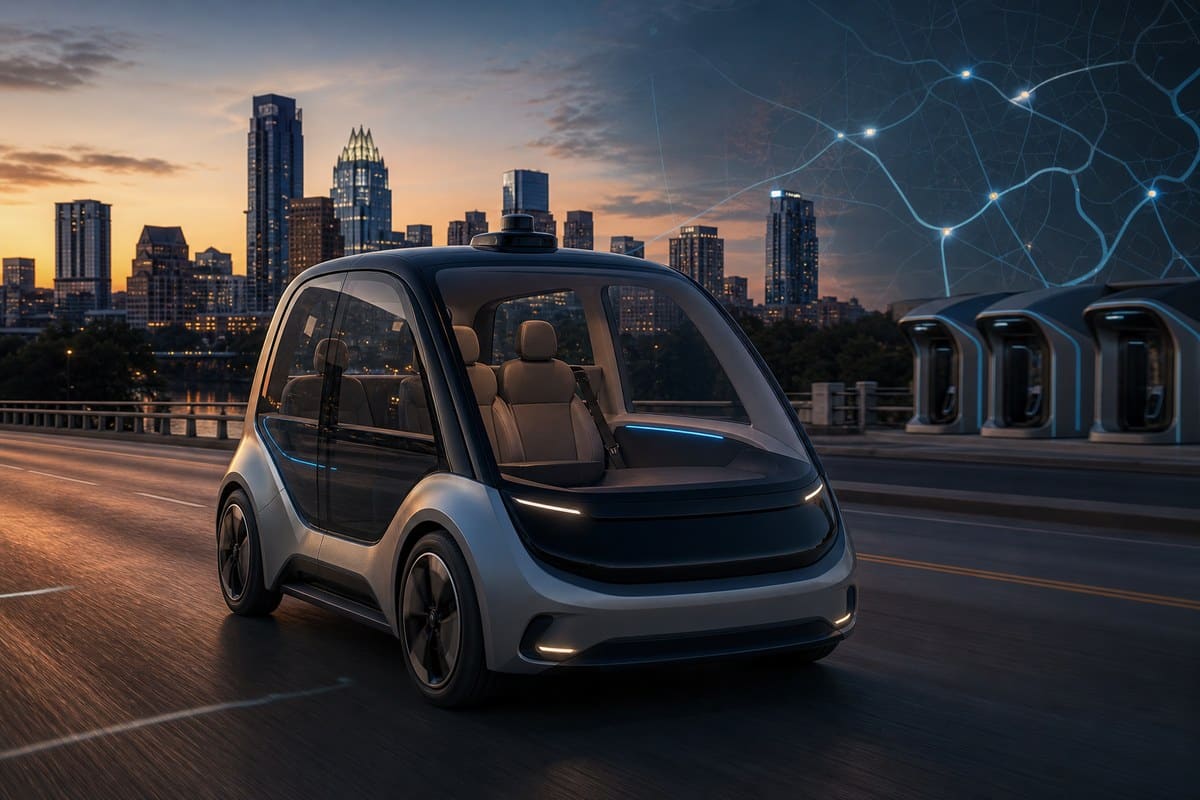
Tesla has begun introducing its purpose-built Cybercab into its Austin robotaxi operation, moving the two-seat vehicle from a 2024 concept reveal toward an operational test of its driverless-car strategy. Multiple reports say Tesla held a private Austin event in early September and has 45 Cybercabs registered in Texas. The vehicle has neither a steering wheel nor foot pedals, making its use a more consequential regulatory and technical step than the company’s existing Model Y robotaxi service.
The rollout also arrives with important gaps in the public account. Registration does not establish that all 45 vehicles are carrying passengers, and reports do not settle how many are available for trips, under what conditions they operate, or how remote assistance may be used. Mashable reported that Cybercabs appeared to be available through Tesla’s Austin Robotaxi app, while The Verge reported that the immediate number assigned to passenger service was unclear.
From Model Ys to a vehicle built for autonomy
Tesla launched its Austin robotaxi network in June 2025 using a small number of Model Y vehicles, according to WIRED’s account of the Cybercab event. Those cars retain conventional controls even when operating without a person in the driver’s seat. Cybercab does not. Its minimalist layout is intended for passenger service in which riders are not expected to drive.
That design puts Tesla closer to the model pursued by robotaxi companies developing dedicated autonomous vehicles, including Waymo and Amazon-owned Zoox.
Tesla executives have argued that a camera-only system can cost less than autonomous-driving stacks that also use lidar and radar. That is a company position rather than an independently established cost comparison, and the Austin deployment does not by itself show whether the approach can operate safely or economically at scale.
Reported fleet figures describe different things
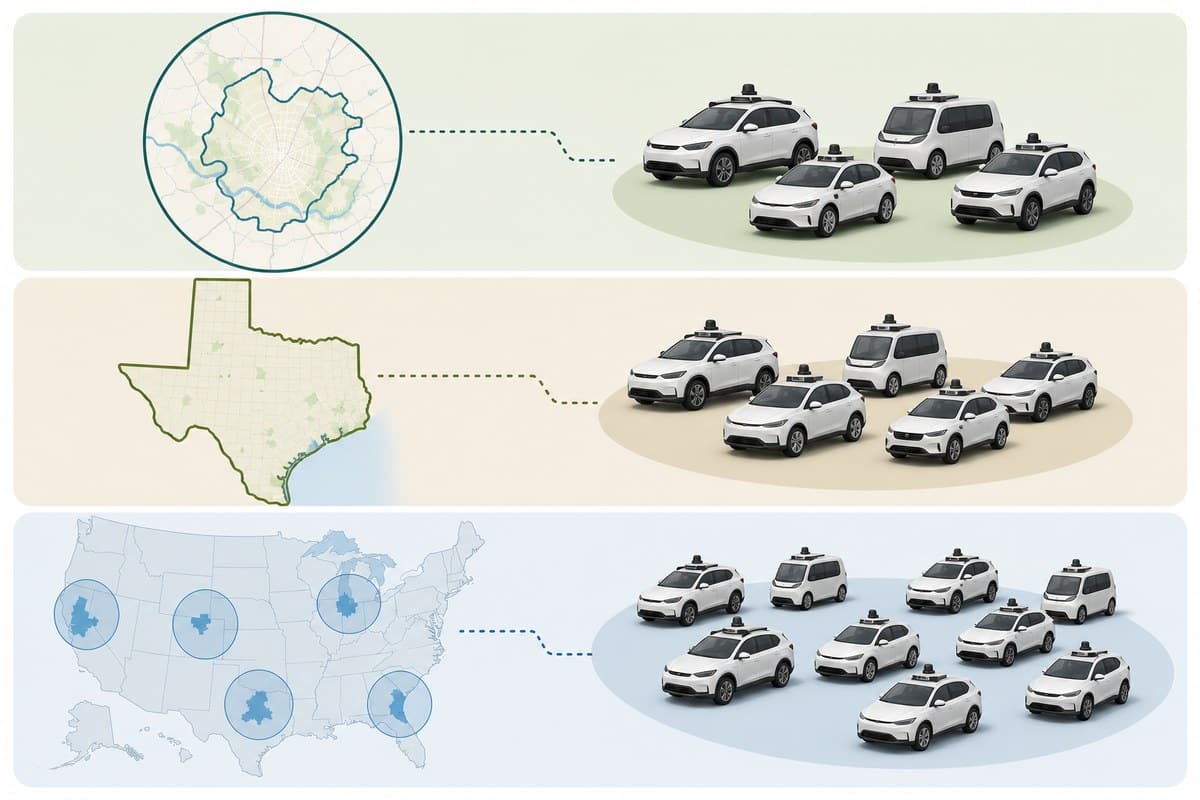
The most solidly corroborated number is the 45 Cybercabs registered in Texas, reported by both WIRED and The Verge. It should not be folded into broader figures circulating around Tesla’s robotaxi program. WIRED said 420 Tesla robotaxis are registered in Texas; The Verge, citing Robotaxi Tracker, put Tesla’s unsupervised autonomous fleet at 256 vehicles across six cities; and Mashable, citing The New York Times, reported an Austin fleet total of 314 vehicles.
Those counts may cover different dates, places, vehicle categories or definitions of operation. A Texas registration total is not necessarily an Austin service fleet, and an estimate of unsupervised vehicles across six cities is not a state registration count. The figures therefore cannot support a single claim about the size of Tesla’s operating robotaxi fleet.
Tesla AI software head Ashok Elluswamy said Tesla vehicles had collectively traveled 1 million miles without humans behind the wheel, as reported by WIRED. Mileage alone does not establish comparative safety because the reports do not provide the operating conditions, intervention policies, crashes or near-misses needed for that comparison. WIRED noted that Waymo had reached the same broad mileage marker earlier, though the companies’ reporting methods and operating environments need not match.
A possible fleet business, not yet a sales plan
Alongside the Austin event, Tesla published an interest form asking businesses about possible Cybercab fleet purchases, mobility hubs and related infrastructure. The form suggests Tesla is exploring possible participation by operators beyond Tesla itself, rather than establishing a finalized sales or operating model.
But an expression-of-interest form is not a binding commercial program. As TechCrunch reported, it does not say Tesla has committed to selling Cybercabs to third parties, specify who could operate them, or set out the financial and legal arrangements for such a service. The form asks about mobility hubs and related infrastructure, which may indicate planning for operational needs without describing a finished business model.
Federal rules remain an obstacle
Cybercab’s missing controls put federal vehicle standards at the center of the rollout. Rules written around human-driven vehicles generally require features such as steering wheels and brake pedals. Federal efforts meant to make it easier to deploy autonomous vehicles without those features had not been finalized when WIRED published its report.
A National Highway Traffic Safety Administration spokesperson told WIRED that Tesla had not filed an exemption request for Cybercab and that the agency was evaluating the situation. The report also said a Tesla executive maintained an exemption was not necessary. Those positions leave unresolved the route Tesla believes allows deployment of a vehicle designed without conventional driver controls, particularly beyond a limited Austin program.

