


T-Mobile is raising its monthly Regulatory Programs & Telco Recovery Fee by $0.50 per line, which would be the carrier’s first fee hike of the year and the second such bump in less than 12 months.
The change applies to both voice lines (the workhorse, majority service) and mobile internet lines, and while it doesn’t increase base plan prices — thank the heavens! — it will gently nudge monthly bills higher for most customers. The update was spotted on a revised T-Mobile support page, which was first reported by Droid Life.
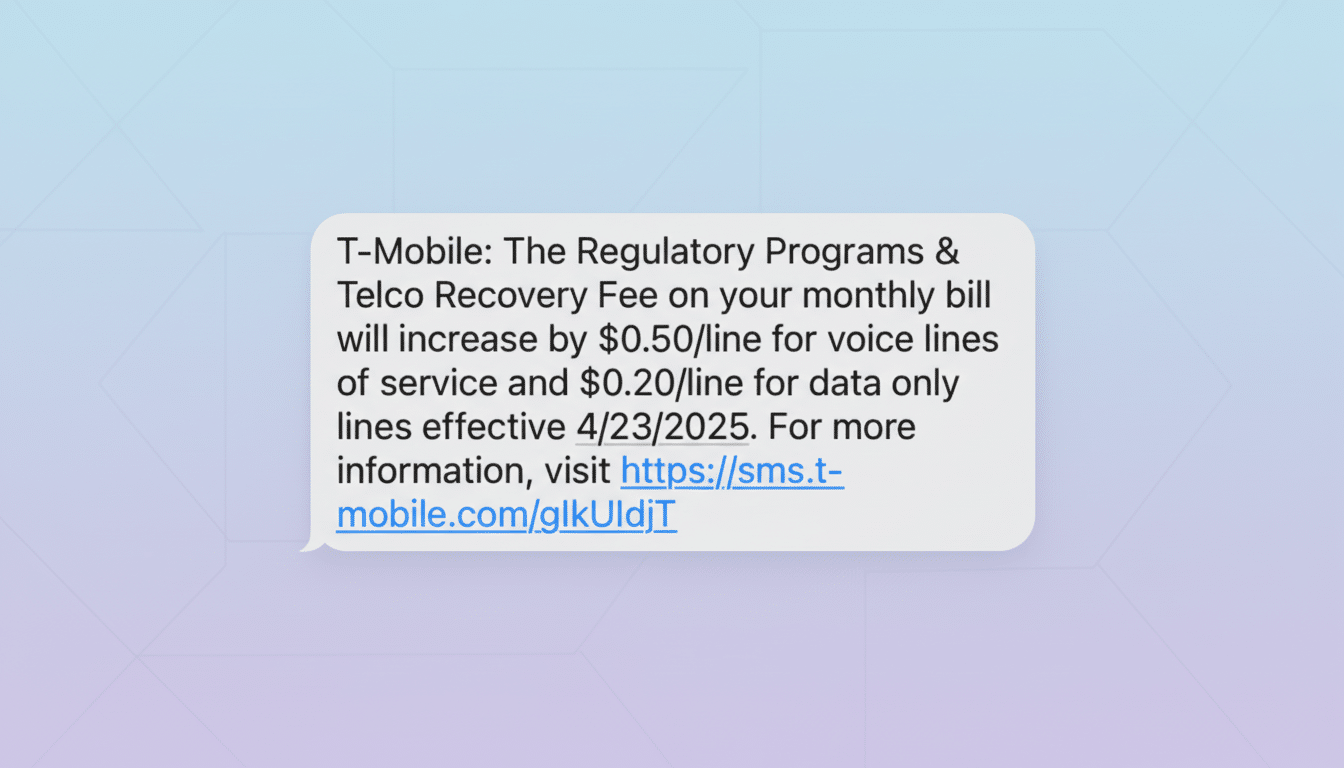
The move is yet another sign of how big wireless providers are relying more and more on add-on fees to boost revenue without raising the price of their plans themselves. It also reignites longstanding questions about transparency around what, precisely, these fees pay for and why they continue to rise.
What T-Mobile Is Changing with Its Regulatory Fee
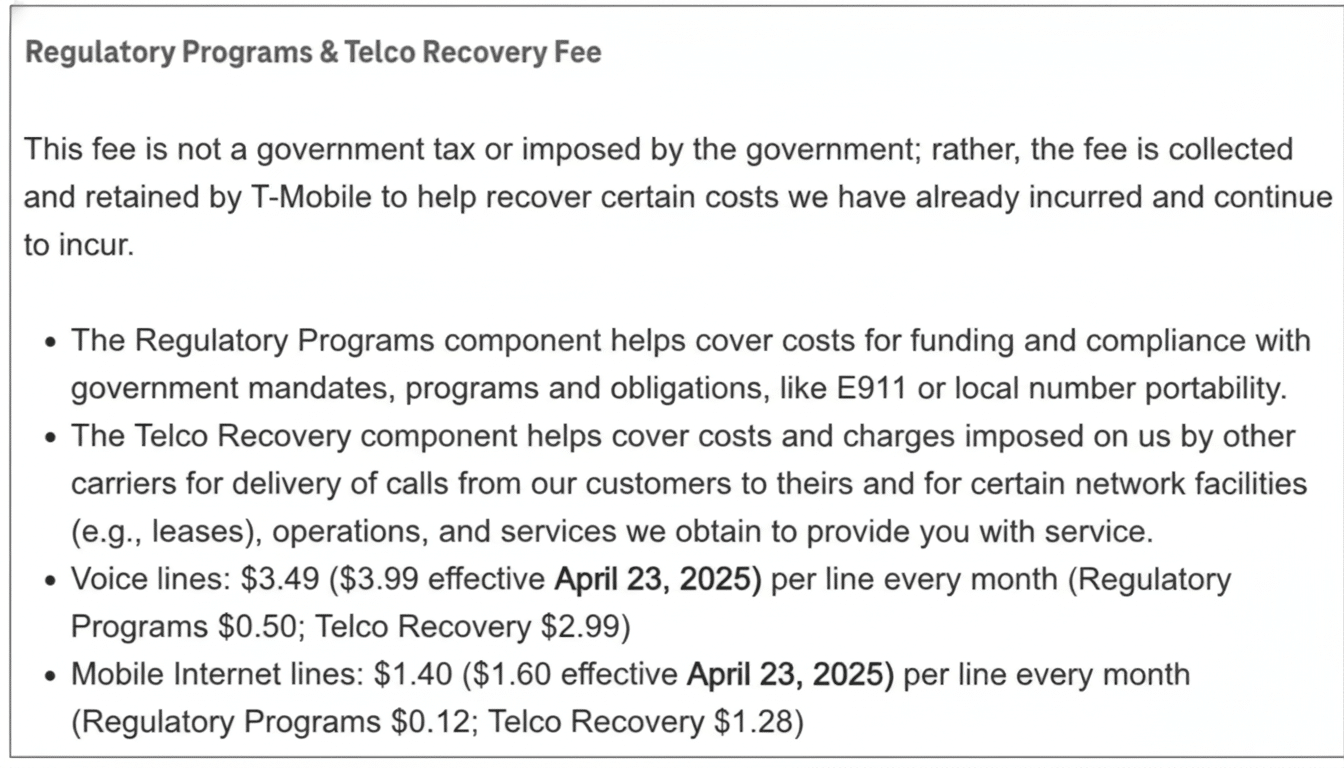
The Regulatory Programs & Telco Recovery Fee is a surcharge that the carrier assesses, not a tax from any level of government. T-Mobile says it defrays the costs of regulatory compliance, network programs and other operational expenses. Unlike taxes, it’s up to the company how much that figure is, and the company can change it as often as it would like.
This most recent $0.50 increase follows a previous $0.50 bump, so the combined run-up is now about $1 per line in less than a year. The change applies to both consumer and mobile internet lines, and it is on top of other routine surcharges and taxes that are already listed on bills. Crucially, legacy “taxes and fees included” plans are insulated; customers on those older plans should not find this increase in the fee.
How the Higher Fee Will Appear and Add Up on Bills
Fifty cents may seem small on paper. In reality, it can add up fast on multi-line accounts. A single-line user will pay an additional $6 a year from that change alone. A family of four pays $24 more annually from the new bump — and in total, about $48 more when accounting for both recent increases. It will multiply even more for households with connected watches, tablets or mobile hotspots.
And as the fee is applied per line, it acts like a silent ARPU lever. Analysts have long pointed out that small, incremental increases across tens of millions of lines can meaningfully drive service revenues up while minimizing the customer blowback that comes with major plan price hikes. And that’s especially the case when a carrier advertises the rate of its plan separate from taxes and fees, something almost all plans do today.
Why Wireless Carriers Increasingly Rely on Add-On Fees
Carriers say that fees compensate them for increasing costs related to regulatory programs, spectrum and network investments. Consumer advocates, like Consumer Reports, have criticized carrier surcharges as opaque “junk fees” that make it difficult to compare offers across multiple providers at the same time. The FCC and other policymakers have also urged more transparent billing practices, simplified advertising to inform consumers what they will pay each month once taxes and fees are set, and asked companies to clarify when the rates a customer pays rise.
In recent years, T-Mobile has also advertised base-plan security as a selling point with its price protection pledges. The details of those guarantees vary by plan, but in general they cover the plan rate, not ancillary charges. That dynamic has spurred carriers across the industry to lean on administrative and recovery fees — tools that can monetize more services without strictly breaking a promise not to increase prices.
Who Is Exempt and What T-Mobile Customers Can Do
If you’re on an older T-Mobile plan that specifically includes taxes and fees, this hike won’t affect you. For all other customers, the charge will pop up as a line item and it will be proportional to the number of lines on that account.
- Check your most recent bill to see how the fee is identified.
- Confirm whether your plan has taxes and fees built in.
- Reach out to customer care to inquire about available plan options.
If you click through one of these links, we may earn an affiliate commission. The poor will pay up — or switch to another plan, combine unused lines. Some users choose the more expensive plan rather than trying alternative plans. Business customers should also scrutinize their invoices carefully, as multi-line accounts and device-heavy ones will feel the compounding effect most.
Bottom line: This is a small but significant hike that reflects a wider industry strategy. It won’t increase how much your plan’s advertised price is, but it will bring up what you actually pay. In a market where the headline rate really is only the beginning, watching for line-item fees remains as crucial to your wallet as comparing plan features or promotions.
