


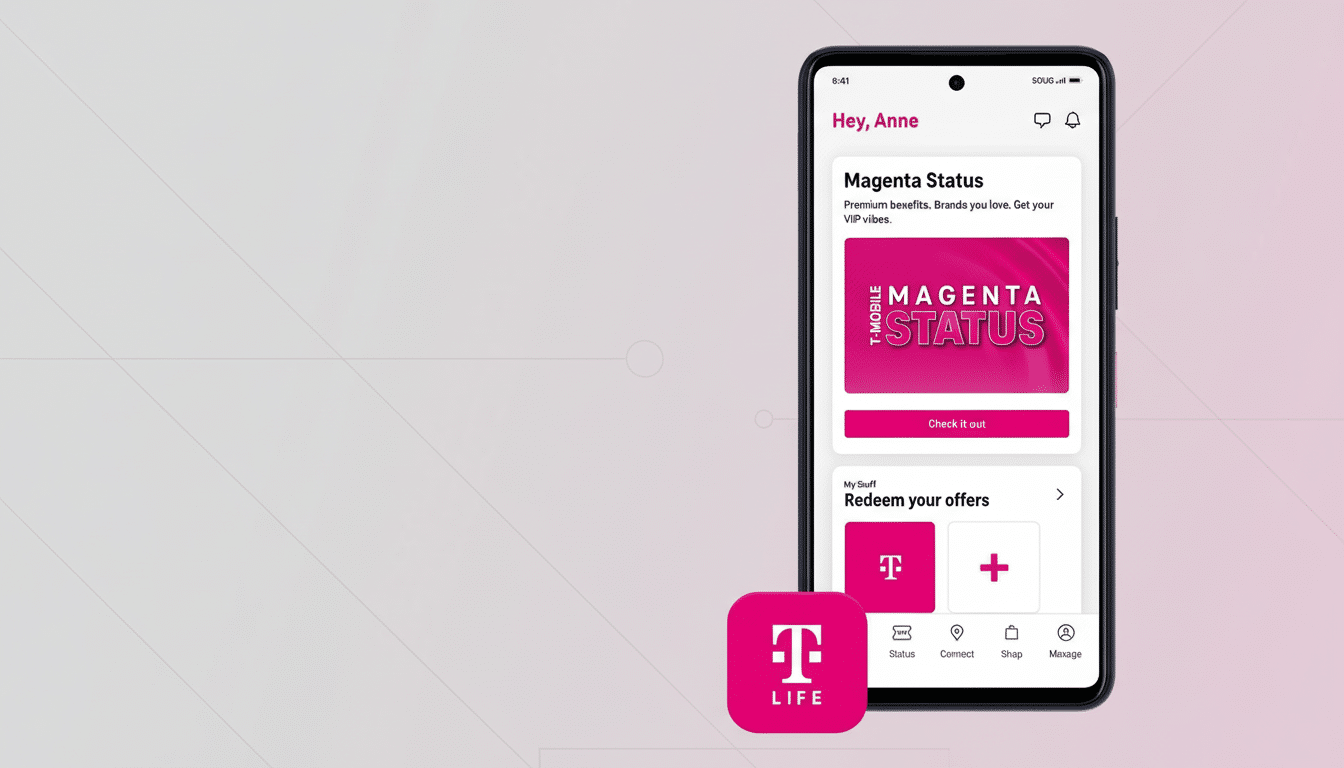
T-Mobile is getting ready to siphon just about every customer transaction—whether upgrades, activations, line adds, and account changes—into its T Life app, according to an internal roadmap that circulated on social sites. If it is fully executed, it would be among the most aggressive app-first pivots in the American wireless market.
Early goals for the roadmap are bold: approximately 90 percent of device upgrades and over four out of every five new activations will be both originated and completed inside T Life, with a direct trend toward app-driven new account setups as well. The company has not posted publicly about the plan, but such a direction fits with recent communications around AI-assisted, digital-first work.
Why carriers like T Life–centric transactions
Merging sales and support into the same app offers the potential for cleaner data, fewer handoffs, and lower cost-to-serve. Analysts in the industry—from companies like McKinsey and Forrester—have for some time highlighted the fact that shifting repetitive customer interactions to self-service can significantly lower service costs and accelerate resolution times. For T-Mobile, T Life serves as the “single pane of glass” across eSIM activation, device financing, trade-ins, number ports, warranty claims, and insurance management.
The shift is not starting from ground zero. In today’s stores, customers are already pushed into T Life, with traditional retail tools used almost entirely for exceptions. And in many places, sales compensation is now more directly linked to digital flows—all the better to incentivize staff and customers into the app, reducing reliance on back-office systems.
The UX bar: identity, eSIM and first-contact resolution
Success depends on nailing hard things: identity verification, credit checks, eSIM swaps, number porting, trade-in eligibility, and shipping logistics. A single snag means a pivot to live customer support or a retail store, eating up cost savings and irritating customers. First-contact resolution is a clear satisfaction driver for mobile apps. Research has confirmed that customer satisfaction and first-call resolution go hand in hand—meaning the app needs to solve problems without the back-and-forth customers might experience when toggling between channels.
The timing is good for eSIM. Embedded SIMs are becoming common in most of the top phones, and you can typically onboard as a new user in an app on the same day. That cuts physical inventory needs for SIM cards and allows line additions and device upgrades instantly from home, so long as those flows are reliable—and reversible if they go wrong.
The growing security, fraud and compliance requirements
App-led activations also raise the stakes for security. The FBI’s Internet Crime Complaint Center has issued alerts about SIM-swap and account-takeover scams that bypass two-factor authentication. An app-based model will require secure device binding, passkeys, and step-up verification for sensitive actions—along with proactive controls for port-out and SIM changes. Strong audit trails and clear consent flows will be key for compliance and resolving disputes.
Accessibility and inclusion can’t be an add-on. In order to not alienate customers due to disability or lack of digital access, the app needs to be designed with WCAG 2.1 AA in mind and provide easy-to-follow options when self-service is unsuccessful. And consumer rights—cancellations, disclosures, and payment authorizations—should be clear and easy to access in-app.
How T-Mobile’s shift will change retail and frontline roles
If most transactions are generated within a T Life environment, retail stores can shift from transaction centers to consulting sites for complex issues, hardware demos, and enterprise or family plans. Look for enhanced training and incentives that reward digital adoption, as well as app coaching. At some places, traffic mix may lean toward troubleshooting and device services instead of activations.
Competitors are watching closely. Verizon and AT&T already nudge customers to their apps for billing, plan changes, and basic support, but both still depend heavily on stores for high-consideration purchases as well as trade-ins. T-Mobile’s seeming readiness to push nearly all transactions through T Life could set new expectations across the category—if the experience is great.
What to watch for as T Life becomes the transaction hub
What can you measure to track whether the critical path toward your North Star is being effectively executed? Key execution signals may include:
- Faster average activation times
- Fewer failed ports
- Increased app engagement per account
- Higher digital NPS scores
Feature bloat seems probable: deeper network diagnostics, repair scheduling, device protection claims, and richer trade-in valuations, all laced with AI-driven guidance and escalation to humans when complexity becomes high enough.
The bottom line: Funneling transactions inside T Life is an efficiency-first gambit, though a bold one.
When it is done well, it shortens the sales cycle and reduces support costs while offering customers an easily predictable place to enact all of this stuff. Done badly, it risks app fatigue, increased escalations, and unnecessary churn. And in the end, the success of the strategy will be measured by one thing that matters both to customers and Wall Street: whether the app makes getting and using wireless service meaningfully easier.
