


T-Mobile’s latest Go5G lineup has supplanted Magenta for new sign-ups, which has some grandfathered Magenta customers wondering if the change is worth paying more. It depends where your loyalty lies: device promos and travel perks vs keeping a stable plan you’ve already used. Here’s a dispassionate, expert look at how the plans compare and when an upgrade really does make sense.
What Actually Changes From Magenta to Go5G
For day-to-day use, the experience is much more alike than it is different. Both Magenta and the base Go5G tier include unlimited talk, text, and a nice amount of so-called “premium data” before any network deprioritization kicks in. So-called bundles of entertainment add-ons — Netflix Basic and Apple TV+, often among them — have been routine for each ecosystem, and it is standard to incorporate taxes and fees into advertised prices on these tiers.
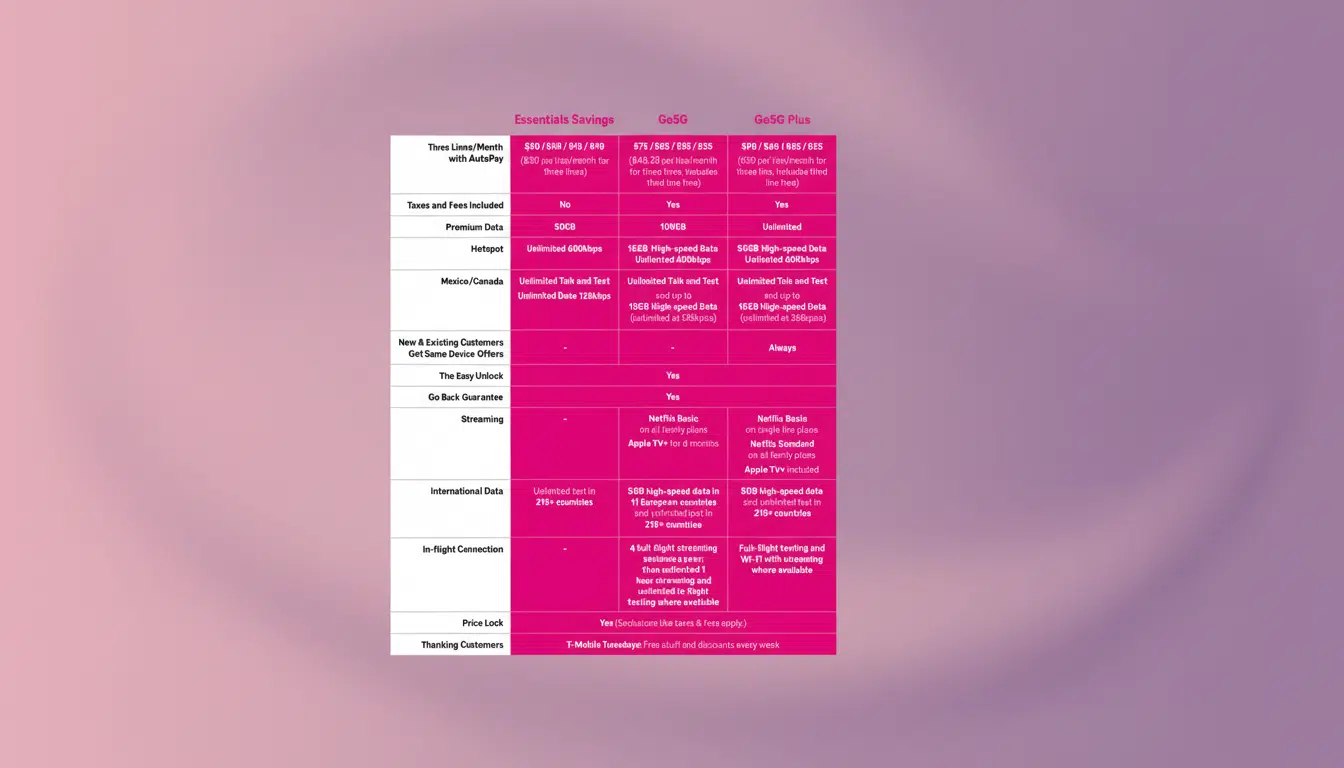
The real shuffles come in the upper echelons. T-Mobile Go5G Plus closely parallels Magenta Max on perks while offering extra high-speed hotspot data and stronger North America roaming. The big headliner adjustment that plan watchers love to point out is the bump to 50GB of hotspot on Go5G Plus vs 40GB on Magenta Max, as well as a significant increase in high-speed data available in Canada and Mexico (typically around 15GB of high-speed data on Go5G Plus compared with about 5GB for Max). If your phone is the cord to your laptop, or you cross the northern border into Canada or the southern one to Mexico any more often than just a few times a year — well, those numbers mean something.
Promotions and upgrade eligibility for new device deals
One of Go5G’s less-promoted benefits is that it gives you access to the best device deals. T-Mobile often links its juiciest trade-in deals and “free with trade” offers to Go5G and Go5G Plus. Many grandfathered Magenta customers often get left off of the headline promos, or they get limited trade credits. In real dollars, that often amounts to hundreds of dollars a line over a contract term.
Go5G Next ventures a step further for those who like to upgrade frequently, letting Go5G customers swap their phone once per year after half the device has been paid off. If you’re an every-cycle upgrader who wants the absolute best-in-class hardware, then Go5G Next is T-Mobile’s only path to baking this behavior into your plan formally.
Network Experience and Data Prioritization
On the network front, you are not purchasing a new T-Mobile. The carrier maintains topline national speed and availability rankings in Ookla and Opensignal’s most recent reporting as well, primarily on the strength of its mid-band “Ultra Capacity” 5G footprint, which it says now covers an estimated 300 million people. That translates into strong median speeds and jaunty 5G availability no matter whether you’re on Magenta or Go5G.
Both plan families have premium data thresholds that let you keep maximum performance even during congestion. If you don’t often reach the premium cap, it’s unlikely that you’ll have a consistently tangible day-to-day difference between Magenta and Go5G. Heavy hotspot users and commuters in crowded cells are the exceptions who will find themselves with the extra headroom on Go5G Plus.
Travel and extras that tip the scales for Go5G Plus
More significantly, cross-border data is a meaningful perk upgrade. The move to more Canada and Mexico high-speed data on Go5G Plus can translate to real savings for those who travel often by reducing the need for add-on passes. In-flight connectivity and streaming bonus features still show up on both plan families, though the exact allotments can move around, so it’s worth paying a visit to T-Mobile’s current plan pages before you make your decision.

For those who never tether and rarely venture beyond the US, these extras may feel like nice-to-have rather than must-have. For an international consultant or a family that drives into Canada each month for youth soccer and hockey tournaments, they can be game changers.
Price check and real-world math for Go5G versus Magenta
Go5G tiers should run slightly higher than their Magenta counterparts — generally about $5 per line at equivalent levels. This spread narrows on multiline accounts, as volume discounts kick in, but the premium remains. The question is whether you can make up that cost with device credits, more generous hotspot use or discounts on travel.
Example: A family of four that often tethers its tablets for road trips and goes up to Canada could easily justify Go5G Plus just through the added hotspot buckets and North America data. The ideal candidate to remain on the single-line Magenta plan would be someone who primarily uses Wi‑Fi when streaming away from home, doesn’t tether devices or use hotspots often (or at all), and regularly gets a new phone every few years—a person like this would probably end up saving more by holding onto their Magenta plan so long as grandfathered pricing doesn’t skyrocket.
Bottom line: when Go5G is worth it over Magenta plans
Go5G is a capable enough plan that it’s worth the extra expense if you want the best device promos, need more hotspot data, frequently travel to Canada or Mexico, or crave annual upgrades via Go5G Next.
The post Best choices for 5G hotspots appeared first on WhistleOut.
If those perks don’t align with your habits, a grandfathered Magenta plan still provides great value — on the same winning T-Mobile 5G network indicated by Ookla and Opensignal.
Monitor your bill and benefits. If the cost of remaining grandfathered continues to drift up, or if promos you’re interested in continue to omit Magenta, Go5G is becoming the better bet. If not, pocket the extra and stick with a plan that already matches your lifestyle.
