


SwitchBot chose the spotlight of the CES expo to show off a concept humanoid housebot it said is the most accessible yet of its kind, an indicator, perhaps, that smart home hardware is finally progressing from voice-triggered gadgets into actual physical action-takers that perform tasks.
The company is hoping that everyday utility, not flashy stunts, will win the living room.
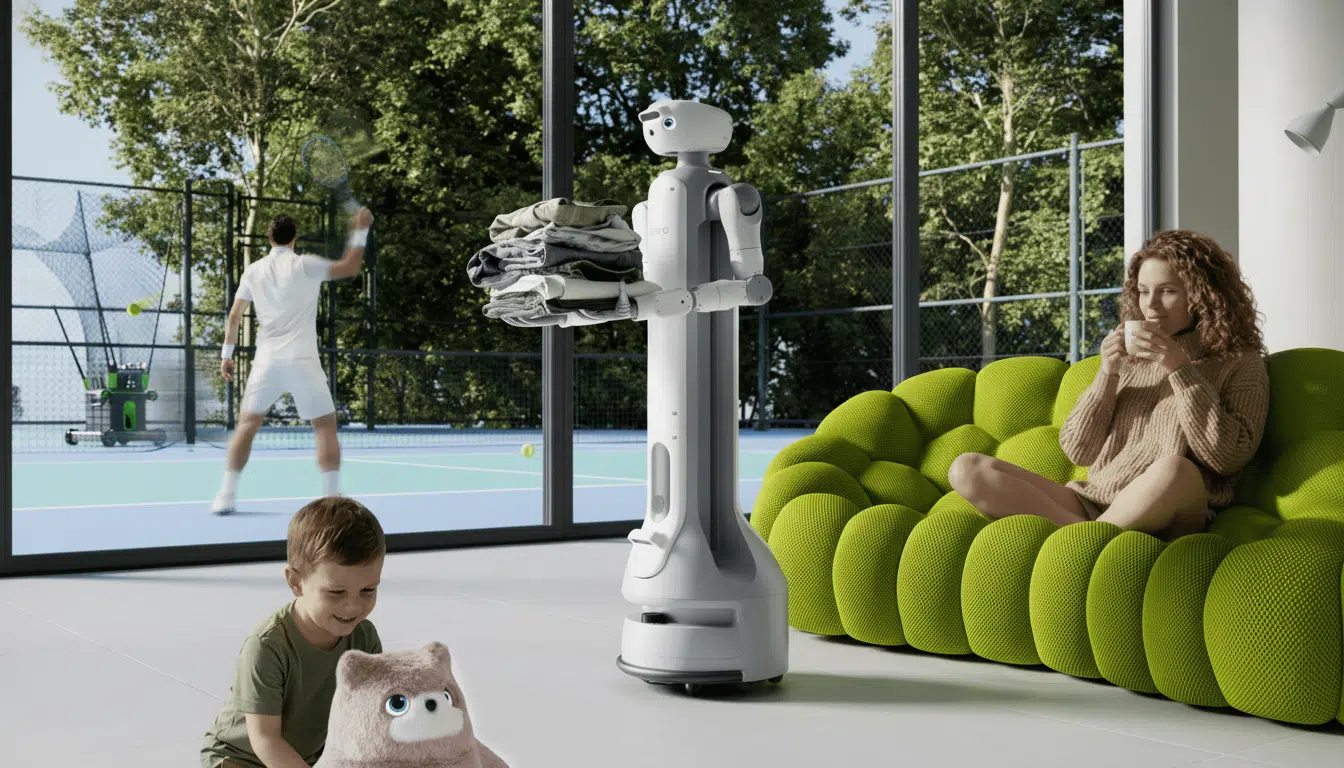
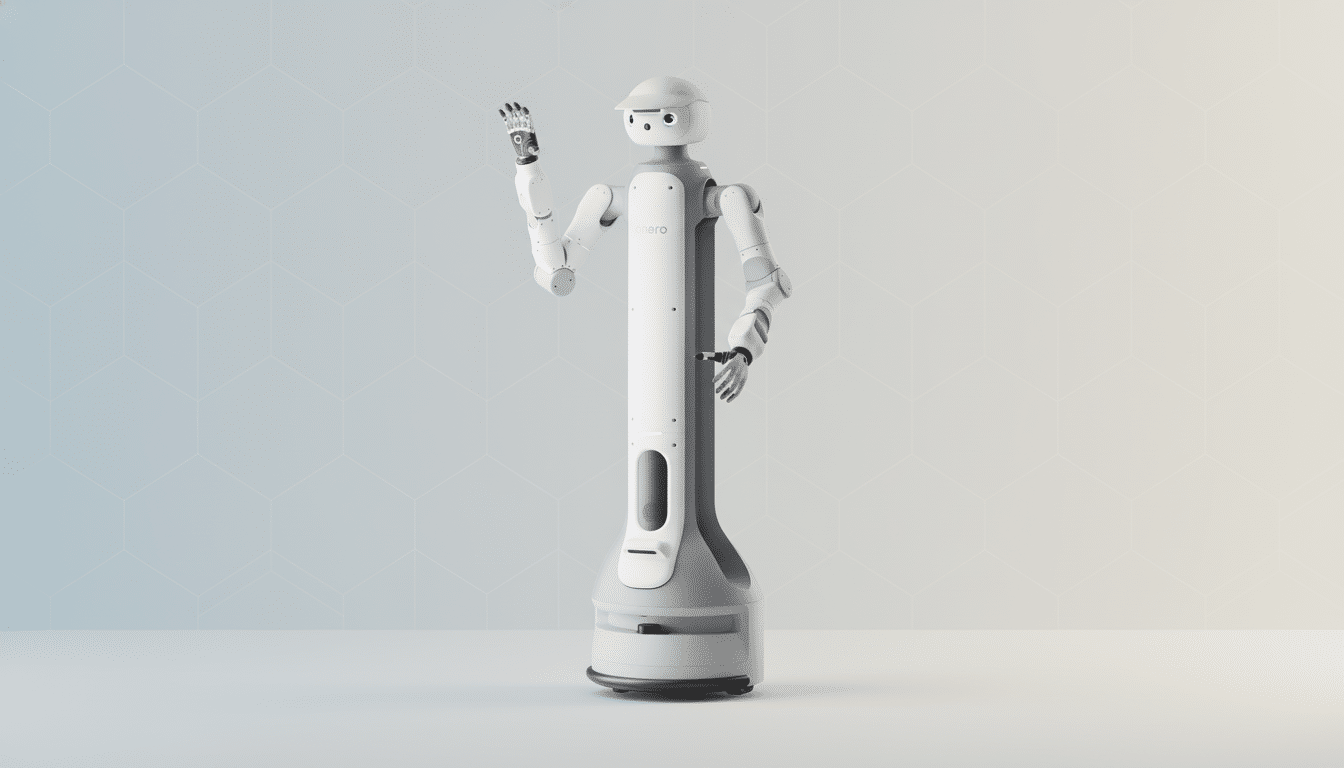
Dubbed the Onero H1, the prototype has a practical approach instead of theatrics. It marries vision, depth sensing, and touch sensitivity with 22 degrees of freedom and an on-device model that SwitchBot dubs the OmniSense VLA; the whole idea is to accomplish contact-heavy household tasks that have stumped just about every consumer robot.
A Realistic Humanoid Slant on Home Robotics
And though humanoids have returned to the limelight, today most deployments remain in factories and warehouses. Agility Robotics’ Digit trials with major retailers, Tesla’s Optimus demos focused on manufacturing, and even Figure’s industrial concepts all lean toward enterprise settings. The pitch from SwitchBot is something else: a generalist, one-size-fits-all assistant made for the kinds of mess and chaos that fill a house, where clutter and variety, along with unpredictable edge cases, are par for the course.
That includes gripping variously shaped objects, pulling doors open, organizing shelves, or manipulating day-to-day devices without rigorous pre-programming. These “unstructured” tasks are still the hard problems in labs. Research groups like the Carnegie Mellon Robotics Institute and Stanford’s AI labs have found success rates dropping when lighting, materials, or object placement are adjusted. And that’s where SwitchBot’s approach of relying on embodied AI and tactile-cue learning comes in.
What “Accessible” Likely Means for a Home Humanoid
SwitchBot has staked its reputation on retrofit smart home gadgets that can make what you already own a part of your smarter home — button pushers and curtain drivers, rather than whole-home overhauls. The notion of framing a humanoid robot as “accessible” follows that ethos, and is probably about three fronts: cost, simplicity, and integration.
On price, the consumer bar is stark. Reports by the International Federation of Robotics indicate tens of millions of consumer service robots are shipped each year, and an overwhelming majority are vacuums and mops that fall within mainstream people’s budgets. Any household humanoid must be tied to the ground far, far below the six-figure price point typical of industrial robots. SwitchBot has not announced pricing, but the assertion suggests that it’s aiming at a price point meant to broaden out beyond research labs and corporate pilots.
By simplicity: “Accessible” looks like smart speaker setup, not robotics research project onboarding; natural language commands instead of code; routine-building E.A.S.Y. and quick recovery when (not if) something goes sideways.
On integration, it seems the most relevant benefit would be closer coordination with existing SwitchBot functionality, where a robot could interact with the physical world at one moment, then swipe open devices compatible with the standard seconds later without any significant scripting.
An Embodied AI System Built for Household Mess
The Onero H1’s sensor stack and on-device OmniSense VLA model have been optimized to reduce cloud round trips that contribute latency and raise privacy concerns. More perception and control running locally, we would like to think, will cut lag time in fine motor tasks — twisting a sticky doorknob, balancing a slippery glass — when split-second feedback counts.
That reflects a larger trend in robotics and edge AI: push real-time decision-making down to the robot to improve reliability and keep sensitive in-home data off remote servers by default. Layers of safety systems, fall detection, and force limiting are most probably built in to allow the robot to stop or retreat if it meets resistance — or a person (a best practice that has made its way into standards work by groups such as ISO and IEEE).
How It Stacks Up in a Crowded Field of Home Robots
Work within consumer homes is a different benchmark than on controlled factory floors. A laundry basket moves, a pet walks in front of you, and you have to reach for something somewhere else. Companies like iRobot and Roborock have succeeded by zeroing in on vacuuming and mopping. The barrier to a general-purpose helper is bigger than just adding more sensors; it’s an autonomy problem that encompasses perception, planning, and dexterity.
In the shadow of that, SwitchBot’s focus on mundane chores is a refreshingly pragmatic one. It doesn’t fall into the trap of promising humanoid acrobatics and instead seeks repeatable value — putting dishes away, fetching things, tidying surfaces. Academic benchmarks such as BEHAVIOR and HomeRobot demonstrate that the composition of basic skills into multi-step tasks is still a frontier. But if SwitchBot could demonstrate a reliable sequence — grab, carry, place — in all of those different homes, it would be a real milestone.
Open Questions Ahead of the Living Room Rollout
It’s early days and there are still some unknowns. How long the robot can operate before docking will be a factor of battery life and a charging strategy. Noise, weight, and speed shape how easily it can coexist with families and pets. Maintenance — firmware updates, replacement parts, recalibrating sensors — is another factor that will influence the cost of long-term ownership and reliability.
Privacy and data management will also be closely watched. Always-on perception is terrible, and consumers demand clear controls, default-on device-side processing, and transparent policies for anything that ends up leaving the home. These concerns have been raised across smart home categories by regulators and consumer advocates, and humanoids will be held to a higher standard because of their mobility and reach.
The Bottom Line on SwitchBot’s Onero H1 Concept
In a sea of humanoid prototypes, the Onero H1 from SwitchBot is different in that it’s directly aiming itself at domestic usefulness. By honing in on tactile, contact-rich chores and signaling a focus on affordability and ease of use, the company is attempting to transform the robot butler from a sci-fi punchline into something practical.
What will matter is the execution, and whether “most accessible” turns out to be more than just a slogan. If SwitchBot can stand up to the reliability bar set by today’s home robots at the top end while broadening the task list beyond floors, it could redefine what a smart home does — or, more important, what consumers expect from it.
