


SwitchBot has announced the Onero H1, a humanoid “robot butler” that is able to perform everyday household tasks. The company markets it as being a generalist assistant that can perform tasks like folding laundry, carrying items and otherwise fitting into a wide range of activities rather than replacing a single appliance. Early images and demos depict a squat, bipedal bot whose arms are both dexterous and as packed with sensors as its body, designed for safe, collaborative work around people.
The Humanoid for Housework and Daily Tasks
Unlike single-purpose helpers like robot vacuums, the Onero H1 is designed to handle multiple domestic tasks. It has 22 degrees of freedom in its limbs, which is more than typical humanoids, and is designed to reach out and grab or manipulate things with a greater degree of fluidity than a wheeled bot-and-arm combo. SwitchBot claims that the system is “fully automatic and collaborative,” with its objective being hands-off, safe operation even in shared spaces.
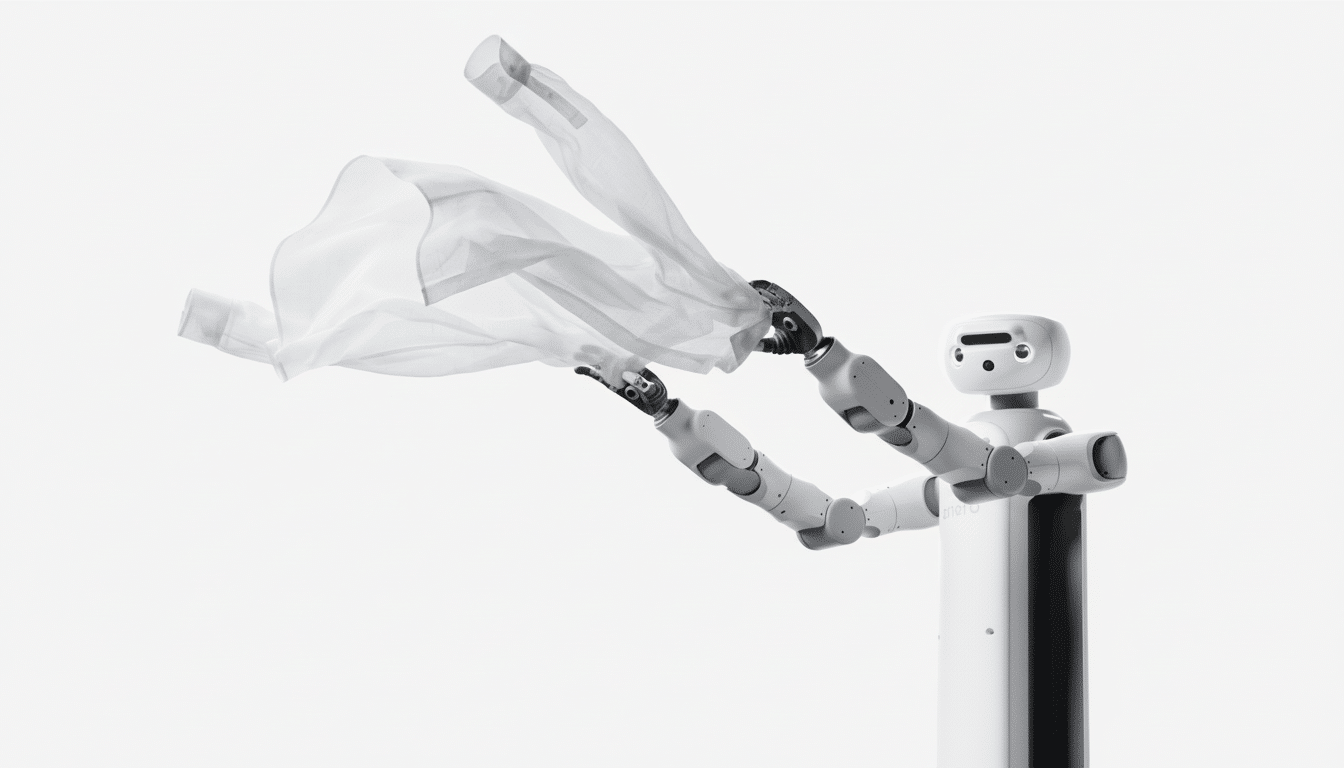
The company will match the H1 with modular A1 robotic arms, reflecting a focus on dexterity and upgrading over time. The robot is shown in press materials picking up shirts and carrying folded clothes — two deceptively hard tasks for machines, because fabric is difficult to see and control. If the H1 can reliably do these chores, it may reach beyond simple convenience and become a critical helper for older people with disabilities.
How It Sees and Moves Around Real Homes
It’s all about vision for the H1. The robot includes multiple Intel RealSense cameras on its head, arms, hands and abdomen to provide depth perception for 3D mapping, object sensing and obstacle avoidance. This stereo setup is great for hand-eye coordination through fine manipulation and navigating the environment in a cluttered room.
Behind the scenes, SwitchBot mentions its own OmniSense VLA model to ensure stability and decision-making in everyday household scenarios. While the company hasn’t shared details on its control stack, handling fabric and manipulating deformable objects is still a frontier challenge in robotics, as detailed by research groups at UC Berkeley, ETH Zurich and other labs. Questions remain about whether the H1 relies on force sensing or tactile sensors, and whether it also uses diffused light sensors in its grippers to cope with soft objects and increase reliability.
The runtime, payload, walking speed and fall recovery metrics — all of which are much more important when it comes to putting this robot in a real home than its ability to recover from a push — haven’t been publicly shared by the company. Battery swappability and charge behavior are also key concerns for robots that are meant to operate all day long with little babysitting.
Why a Generalist Robot Is Important for Homes
Generally, it’s a safe bet that as the smart home matures, there will be general-purpose homebots that do several things. Domestic service robots are already in the lead by unit volume, thanks to vacuums and lawn mowers (with single-function items dominating), according to the International Federation of Robotics. A good helper that can tackle a range of small tasks could be far more valuable than purchasing numerous niche gadgets.
Demographics add urgency. The World Health Organization estimates the number of people aged 60+ worldwide will nearly double by 2050, driving a corresponding need for in-home care. A capable robot that costs far less than other models — one that can schlep laundry, fetch stuff and clean rooms — would be a practical step toward aging in place, as long as the machine is reliable, simple to monitor and immune to household messiness.
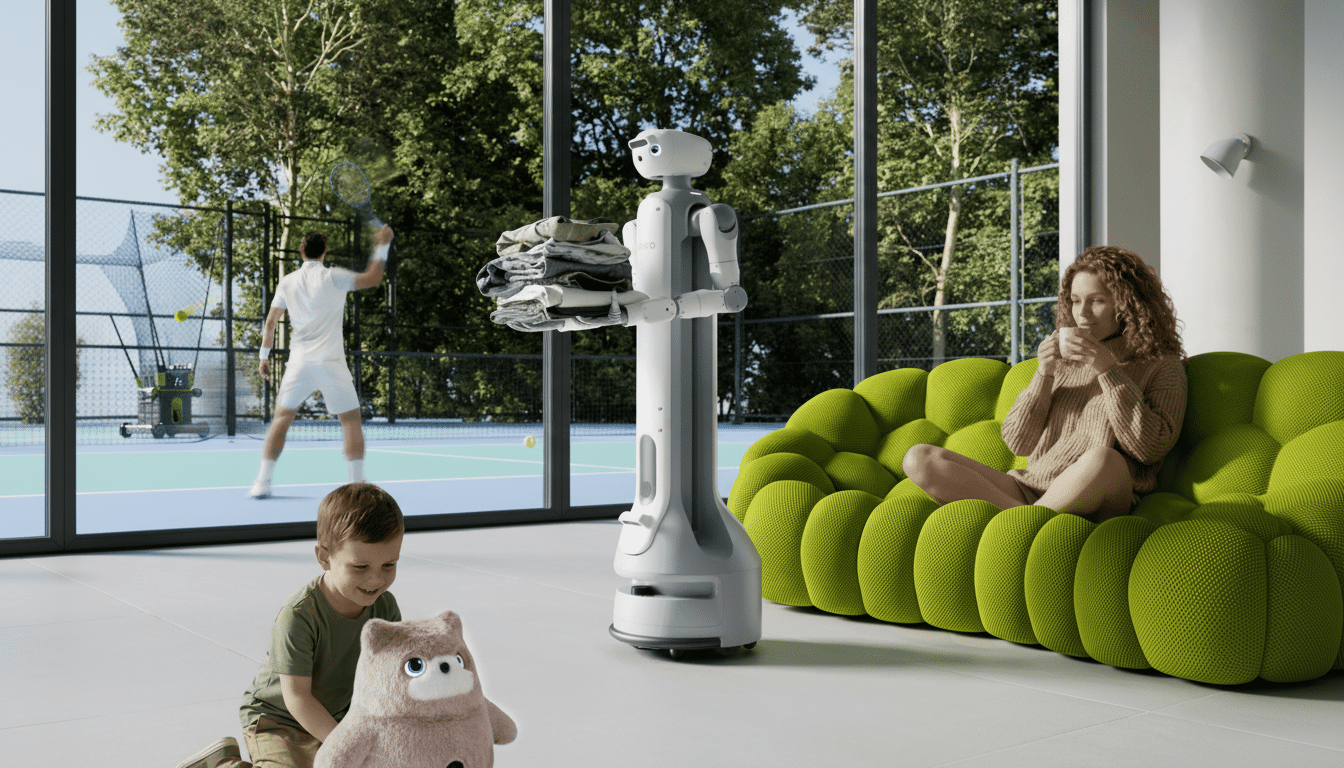
The H1 arrives amid a wider human-shaped race. There are enterprise-focused platforms, such as Agility Robotics’ Digit, which are running pilot tests in warehouses, and projects like Tesla’s Optimus or Figure’s 01 that claim they can do generalist manipulation. SwitchBot’s angle is the home: confined spaces, soft objects and constant human interaction. Success here will rely less on brute athleticism and more on perception, safety and graceful failure modes at the moment when things don’t go quite right.
Ecosystem and Privacy Considerations for the Home
SwitchBot says the H1 system connects with its broader ecosystem, which means it should be possible to automate scenes using existing bots, sensors and smart locks.
It also says it is releasing several new devices that further highlight its foray into AI-driven hardware, such as the Lock Vista smart locks with 3D structured-light facial recognition, an AI MindClip recorder that creates summaries and to-do lists, an E-Ink Weather Station and OBBOTO AI desk light. For the H1, this feature could allow routines across these devices to be more seamless.
A robot that ambles around with a handful of cameras provokes data protection concerns. Any prospective buyers are going to have questions about on-device processing, encrypted storage, incident logs and opt-in cloud features. Smart privacy controls and household profiles will be essential for shared living where not everyone wants to be on record.
Availability and Open Questions for Onero H1
SwitchBot says it will launch pre-orders of both the Onero H1 and its A1 arms on SwitchBot’s website. It’s unclear what the pricing, full specs or ship date will be. Hands-on demonstrations will be essential to establish uniformity of operation on real chores, particularly with deforming objects and for noise levels, safety interlocks and maintenance requirements.
If SwitchBot can turn its flashy demos into everyday reliability, the H1 could be the first widely available stride toward a genuine home helper. The pledge is a robot that doesn’t handle just one job, but the tedium of hundreds of small jobs — which just happens to be where most of our housework actually lives.
