


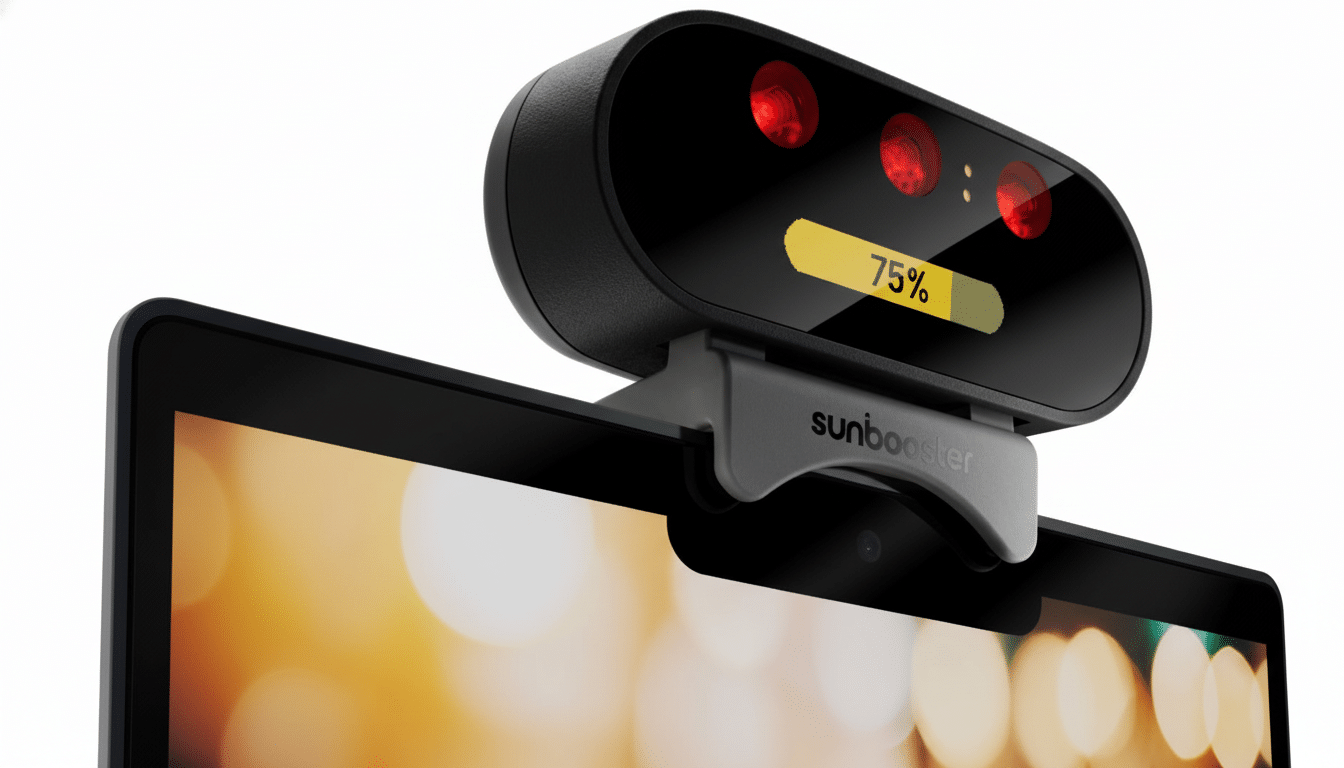
Trapped indoors but still want a pick-me-up? About the size of a webcam, a new device called SunBooster is trying to bring “sunlight-like” energy to your desk by shining near-infrared light above your computer screen. Showcased this week at a large tech exhibition, the clip-on accessory is aimed at workers, students, and gamers who spend protracted periods indoors and are looking for a daily boost to their personal well-being without altering routines.
Created by Amsterdam-based SunLED Life Science, SunBooster uses near-infrared (NIR) light—an invisible part of the spectrum that is often utilized in photobiomodulation—to juice up cellular energy functions while you work. According to the company, it monitors your daily dose on a tiny built-in display and automatically shuts off once you have reached the suggested amount.
The unit is due to hit the US in April and will retail for $249. The startup also said that it was in talks with laptop and monitor manufacturers about integrating its technology directly into forthcoming screens.
A Sunbeam the Size of a Webcam On Top of Your Screen
SunBooster installs like an external webcam on your monitor or laptop’s lid, placing its emitters slightly above your line of sight. And because NIR is invisible, there’s no glare or color cast on your display—useful if you’re on video calls or editing photos. You can glance at a simple progress bar that lets you know how much of your daily target has been filled, and the device idles once you’ve received what is described as being “topped up” to save power.
According to Anne Berends, CEO and co-founder of SunLED Life Science, the aim is passive, habit-compatible exposure: you sit down at your desk, get to work, and the system seeks to quietly do the rest.
The company positions the device with wellness claims to aid energy and mood—not as medical treatment.
The Science Behind Near-Infrared Light for Wellness
NIR photobiomodulation is usually performed within the 700–1,000 nm range, where penetration of light into tissue is greater than in visible red. Studies led by research groups such as the Wellman Center for Photomedicine at Harvard Medical School have shown that near-infrared radiation (NIR) can be absorbed in mitochondria by cytochrome c oxidase, which suggests improvements in ATP production within cells. This is what allows some people to feel more alert or less tired after short sessions.
Early trial data so far are promising, with effects observed on cognitive performance and mood in small trials. The journal Frontiers in Neuroscience published a review that found benefits to attention and working memory from transcranial photobiomodulation. In each case, researchers indicate that larger, longer studies are required to determine if the effects are observable in the real world. In other words, the science is interesting and evolving, but standards for dose, distance, and timing remain under development.
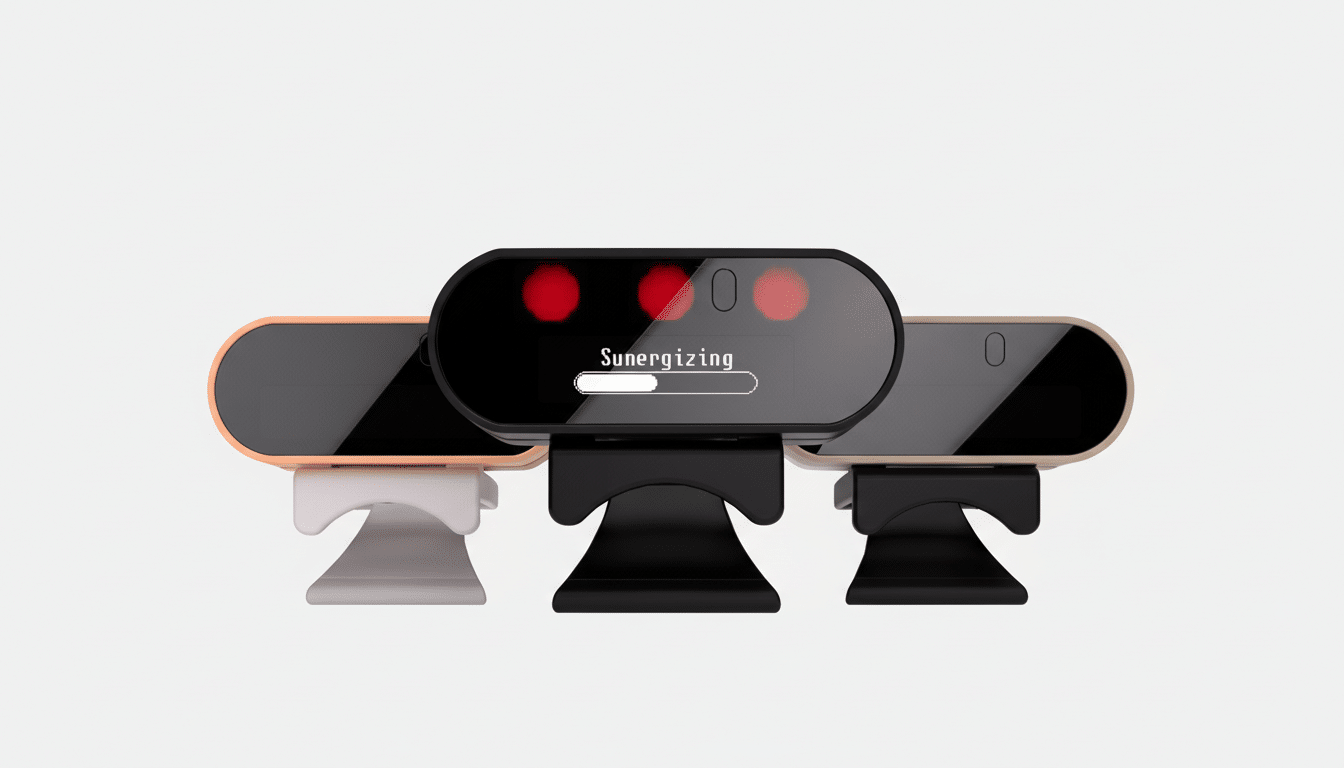
Important caveat: SunBooster does not generate vitamin D; for that, you need ultraviolet (UV) exposure, which this device has gone out of its way to avoid. UV is good for you in the right amount but poses skin and eye risks; NIR aims to supply cellular stimulation without those UV trade-offs.
Not a SAD Lamp, and Not the Same as Red Light
It’s tempting to lump SunBooster in with bright-light therapy boxes you use for seasonal affective disorder, but they’re not the same. Clinical light boxes emit enough visible white light (10,000 lux or more) to stimulate the circadian system through the retina. NIR devices operate via tissue penetration and cellular routes rather than through the eyes; therefore, they are complementary, not alternative.
It’s also different from cosmetic red light devices. Red light that is visible (typically 620–660 nm) addresses issues at the surface of your skin, such as its appearance. Near-infrared penetrates more deeply, which is why it’s been further studied for performance, recovery, and cognitive effects. No visible glow also means it won’t be distracting during meetings or gaming sessions.
Why It Matters for Remote and Hybrid Workforces
The US Environmental Protection Agency estimates that Americans spend over 90% of their time inside. The National Institute of Mental Health, for example, reports that some 5% of adults in the United States have seasonal affective disorder in any given year, and far more report winter declines in energy. As remote and hybrid work solidify into a routine, desk-friendly solutions that nudge energy and mood without requiring behavior change are getting attention.
Old-school remedies—taking much-needed daylight breaks, circulating beneath circadian-tuned lamps, or working near windows—still pack plenty of punch. SunBooster’s pitch is that it adds convenience: you take a measured NIR dose while answering email or editing slides. The auto-shutoff handles the “set-it-and-forget-it” user, a tiny but significant design consideration for busy routines.
Price, Availability, and What’s Next for SunBooster
US availability: SunBooster ships in April for $249. The same NIR platform can be hardwired into, say, laptops and monitors too—a path to wider acceptance if some large OEMs pick it up. That would place “invisible wellness lighting” in front of millions of users without adding to desk clutter.
As is the case with all wellness tech, independent validation will matter. Potential customers should see clear information about wavelength, irradiance, and recommended daily dose—plus third-party testing. If the company can combine ease with credible proof, SunBooster could be the latest addition to webcams and privacy shutters found in everywhere workers’ rotations.
