


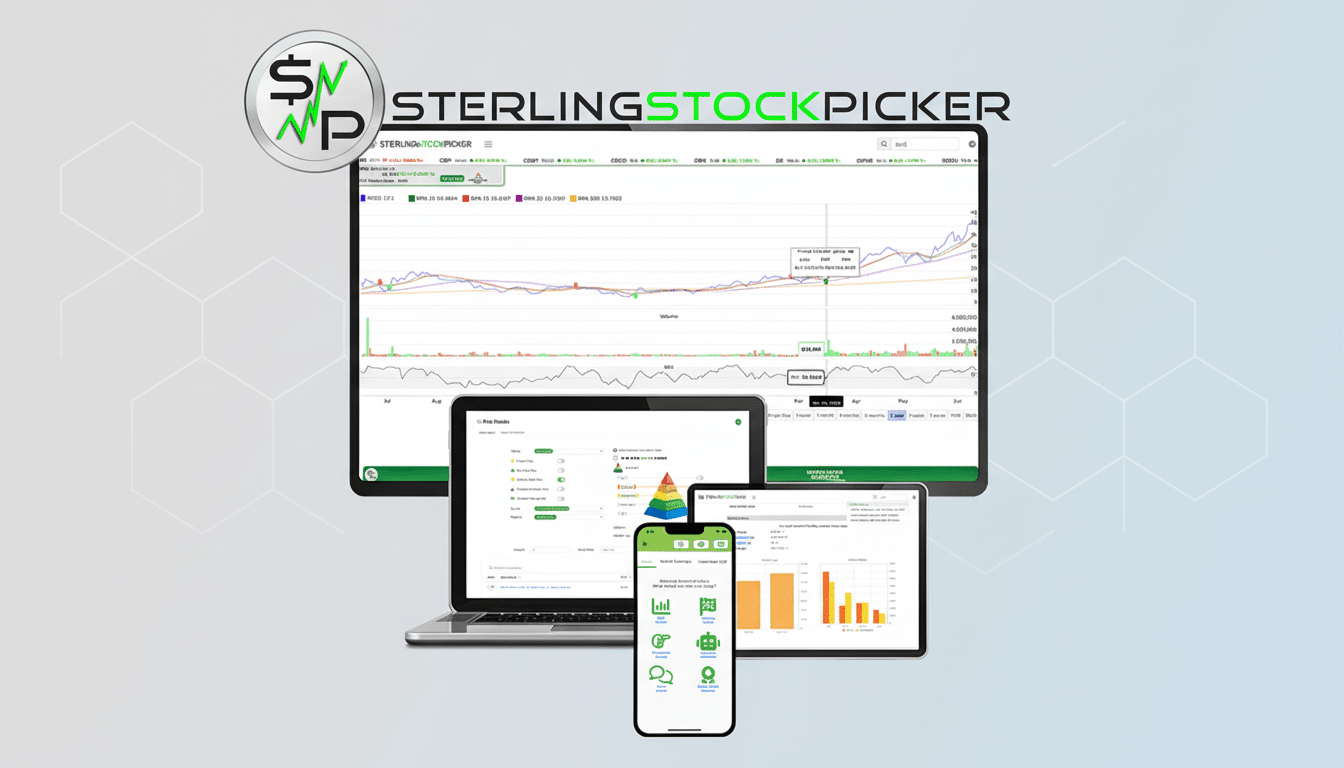
Sterling Stock Picker is selling a simple proposition to novice investors: allow artificial intelligence to translate Wall Street into plain English. The platform combines an explainer-first interface with an AI assistant that aims to demystify earnings reports, technical signals, and valuation metrics that typically have newbies scrambling for glossaries.
How the AI Makes Stock Research Easier for Beginners
In the center of all this is Finley, an AI coach that responds to questions in natural language. Ask what a P/E ratio of 35 means for a high-growth software firm or whether an increase in free cash flow outweighs margin compression, and Finley sends back a sourced refresher, perfect in length for your risk profile and time horizon. It is meant to reduce the churn of tab-hopping among definitions, charts, and earnings calls.
- How the AI Makes Stock Research Easier for Beginners
- Designed for First-Time Investors Entering the Market
- Market Context and Why It Matters to New Investors
- What the Tool Does and Doesn’t Do for Investors
- A Practical Walkthrough of How the Platform Works
- Bottom Line on Sterling’s AI-Powered Investing Coach

The platform’s “North Star” has distilled fundamentals, technicals, and growth indicators into a singular directional signal. Instead of a black-box score, Sterling emphasizes the drivers — revenue quality, debt burden, cash generation, price momentum — so people can see why a stock teeters between buy, hold, or stay away.
And there’s a portfolio builder that matches picks to a selected risk band, pushing users toward diversification across sectors, market caps, and investment styles. The tools serve up warning signs (negative operating cash flow compounded by aggressive share-based compensation, for instance) and elucidate those without jargon.
Designed for First-Time Investors Entering the Market
What new investors often labor over isn’t pushing the “buy” button but trying to make sense of what they’re buying. The FINRA Foundation’s National Financial Capability Study has long reported that fewer than half of America’s adults can look at simple questions on basic financial literacy and get most of them right. Sterling actually homes in on those differences by adding ratings to plain-language context and bite-size lessons tucked in next to each metric.
A built-in community forum and guided walkthroughs attempt to curb the intimidation factor. Rather than simply splashing a watchlist of tickers in the user’s face, it pushes users to declare goals and risk tolerance and a vague time frame, then explains how each choice might affect volatility and drawdowns.
Market Context and Why It Matters to New Investors
Retail investing has been booming to unprecedented heights in recent years; Gallup puts the percentage of Americans who own stocks at roughly 61 percent, but confidence waxes and wanes when markets chop. In the meantime, SPIVA Scorecards from S&P Dow Jones Indices reveal that most actively managed U.S. large-cap funds have underperformed their benchmarks during 10- and 15-year periods, suggesting a focus on clear decision frameworks rather than hot tips.
Throughout the industry, AI is going mainstream. The CFA Institute and Deloitte report has highlighted fast adoption of machine learning in screening and summarisation. Sterling’s pitch is that these capabilities can be consumer-grade — fast, explainable, and tailored toward a beginner’s questions — without overwhelming users with complexity.
What the Tool Does and Doesn’t Do for Investors
Sterling is an educational and research partner (not a broker or an autopilot). It doesn’t place trades, promise gains, or offer to “beat the market.” The Securities and Exchange Commission has cautioned against conflicts of interest and over-reliance when predictive analytics are the drivers behind recommendations; that doesn’t kill the platform’s value, which is in surfacing evidence and explaining trade-offs, while leaving final decisions with the user.
Good habits still obtain: Confirm financials with company filings, cross-reference analyst assumptions, and stress-test concentration risk. The AI will tell you why debt-to-equity or revenue deceleration is important — but it won’t smooth out volatility.
A Practical Walkthrough of How the Platform Works
Opt for a moderate risk profile and the portfolio builder might tend to include a core of cash-generating, wide-moat names balanced by an additional, smaller sleeve of faster growers. If a stock screens well against growth but evinces worsening free cash flow and increasing inventory days, Finley flags the tension and offers up potential scenarios that could remedy it. If, on the other hand, a company’s margins are compressed yet backlogs expand, the AI is able to make sense of why short-term pressure might not disrupt a long thesis.
For a novice, the reward isn’t the name of an underground stock pick — it’s understanding. Being mindful of what you own, and why you own it, tends to lead to better discipline when the markets shift.
Bottom Line on Sterling’s AI-Powered Investing Coach
Artificial intelligence won’t make investing easy, but it can accelerate learning. Sterling Stock Picker combines an explainable rating, conversational guidance, and goal-based portfolio tools to home in on the exact friction that trips up beginners. Used thoughtfully, it’s less a shortcut than an interpreter — turning market-speak into decisions you can defend.
