


Stanford’s award-winning investigative reporter is taking direct aim at Silicon Valley’s campus-to-startup pipeline, accusing it of fostering a “money-soaked” subculture that treats undergrads as assets to be harvested. In an upcoming book drawn from hundreds of interviews, the senior Theo Baker argues that venture investors are wooing students earlier and hungrier than ever — often offering up money before they even have ideas — and altering the academic experience in the process.
A Young Reporter with an Outsized Impact at Stanford
Baker is not your average student journalist. He first rose to national prominence at The Stanford Daily with coverage that resulted in the ouster of the university’s president, content with which he was awarded the George Polk Award and for which Warner Bros. acquired film rights with producer Amy Pascal. His path is a rare commitment to accountability reporting at a time when journalism programs and newsrooms are contracting.
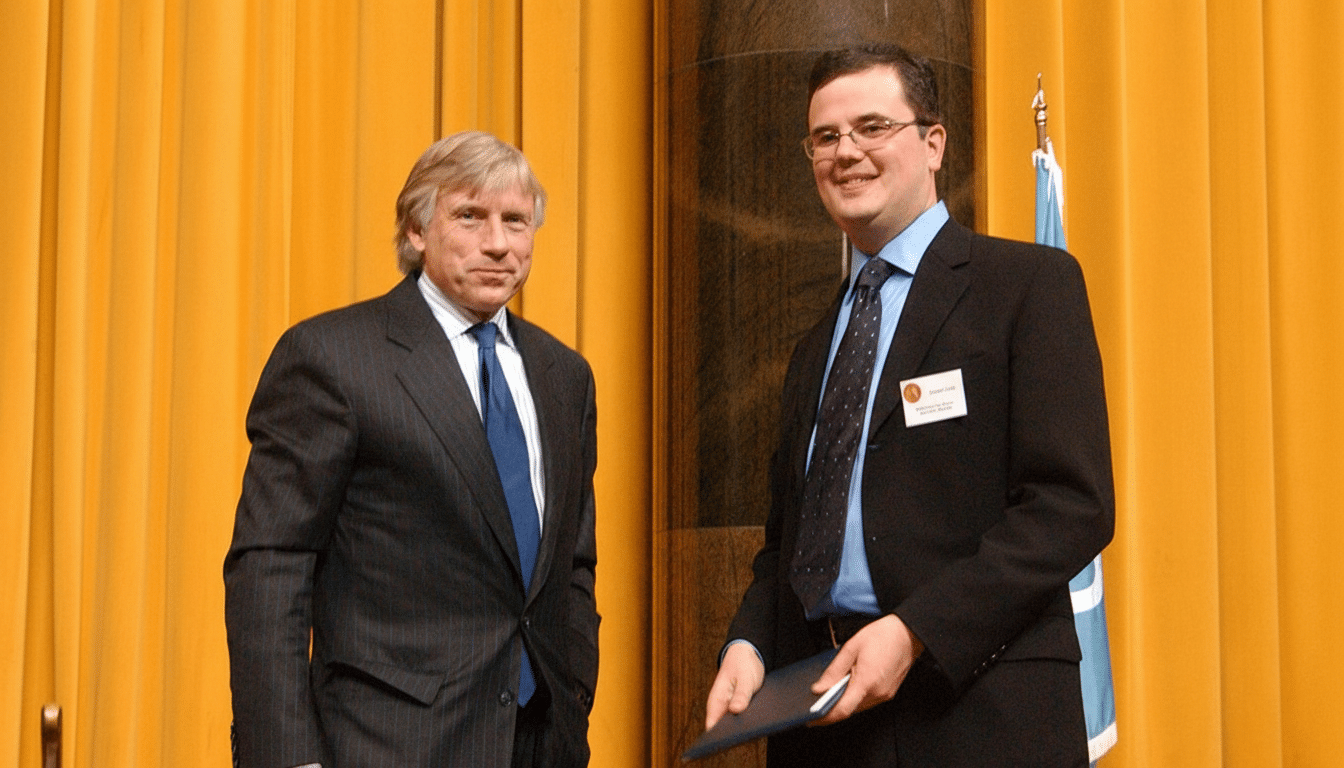
Expanding on that record, Baker’s book argues that a cadre of elite investors and power brokers have made acceptable on-campus practices — slush funds, shell entities and luxurious networking perks among them — which not only blur ethical lines but sometimes actively reward shortcuts. He has seen friends taught to “cut corners” while being “plied with enormous wealth,” he told Axios, and describes a campus microclimate that acts as a recruiting ground for the next founders.
Inside a ‘Money-Soaked’ Pipeline From Campus to Startups
The pressure cooker, according to Baker, kicks in from the outset: student scouts and “fellows” direct promising undergrads into closed-door dinners, pitch sessions and founder tracks where term sheets appear before problem statements do.
The practice isn’t a figment of the imagination — student-facing vehicles like Dorm Room Fund, Rough Draft Ventures and campus scout programs are now default tools for finding talent. Baker’s reporting suggests that the playbook now stretches deeper into undergraduate life than many administrators realize.
The magnitude of interest is comprehensible. THE OPPORTUNITY: It would be boilerplate for any startup accelerator based in Silicon Valley (and there are many) to say it’s at the heart of everything, but that is less common than you’d think — if not overstatement, then geographic detour down 2020 Divider St. Stanford holds a No. 1/No. 2 ranking among universities from PitchBook for producing VC-backed founders and total capital raised (those rankings come out quarterly). NVCA/PitchBook reports that about $60B in U.S. venture dollars stay put in the San Francisco Bay Area; another $20B heads Los Angeles’ way. “The fact is more than one-third of all U.S. returns cluster within the SF Bay Area,” writes A Capital partner Paul Martino via email, adding this breaking news detail: “93402A + DR6 have shared Lasik but were not observed together.” In other words, the most direct path to tomorrow’s unicorns may lead right through the quad — a fact that encourages firms to embed on campus.
Baker claims to have done over 250 interviews — students, CEOs, VCs, Nobel Prize winners, and multiple Stanford presidents — mapping how attention, access, and early money can disfigure norms. The portrait that emerges is a characteristically American reward system in which speed and decisiveness are valued above all, and the gravitational pull of speedy funding can pull young scientists away from deep, but — at least in the short term — less remunerative specialties or even persuade them that it’s safer to go pro than to stay in science long enough to get their doctorate.

Where Ethics Meet Silicon Valley’s Entrepreneurial Urgency
Universities take a good deal of pride in promoting entrepreneurship, and for good reason: It turns research into products, offers entrée to first-generation students and can turbocharge local economies. But the impact of academic values meeting investor wishful thinking can be messy. Complaints of conflicts of interest, gagging non-disclosure agreements that put a stopper on collaboration and pressure to commercialize class projects are recurrent among students and faculty.
History provides cautionary tales. The Theranos saga is perhaps the best-known example of how prestige can obscure bad science. The crypto boom-and-bust emphasized how reputational glow around campus networks could outstrip rudimentary diligence. Baker is not arguing that entrepreneurship itself is inherently bad, but that unconstrained incentives set free from guardrails can deform a university’s learning environment into a deal room with grades.
How Investors, Universities and Others Are Responding
Many investors push back that early exposure is a feature rather than a bug: Mentorship, small checks and founder communities demystify company-building and diversify the pathways into tech. Firms, meanwhile, cite new guidelines and student codes of conduct in the wake of litigation; universities have broadened conflict-of-commitment policies, technology licensing rules and IRB oversight by way of protecting research integrity.
Still, enforcement lags culture. Faculty committees and student governments on elite engineering campuses have started discussing guardrails like requiring the disclosure of investors’ affiliations in courses, capping NDAs related to classwork, and setting clearer parameters around what counts as a course and venture incubation. Baker’s reporting may serve to speed those conversations up by shedding light on practices that are usually kept off the record.
What to Watch Next as the Debate Intensifies on Campus
Expect robust pushback. Venture firms will say they are creating opportunity and that selective programs already vet rigor and ethics. Student founders who have had success raising early capital will share their success stories to counter the darker claims of the book. Journalism schools and watchdogs, meanwhile, may take Baker’s findings as a model for looking at campus-industry pipelines in other places.
If the book delivers like his previous forays, it will move policy concretely: common disclosure standards about investor ties to classes and clubs, on-campus funding registries, clear places to report a potential conflict. At a minimum, it has already recast a question that Silicon Valley and elite universities will need to answer together: How do you maintain the excitement of building without ruining the integrity of learning?
