


After five years as a paying subscriber, I’m leaving Spotify. The latest round of price hikes, paired with the company’s push into selling physical books, finally tipped the scales. I pay for music, yet more of my monthly fee seems to support features I don’t use — and a storefront I never asked for.
Why The Latest Price Rise Was The Breaking Point
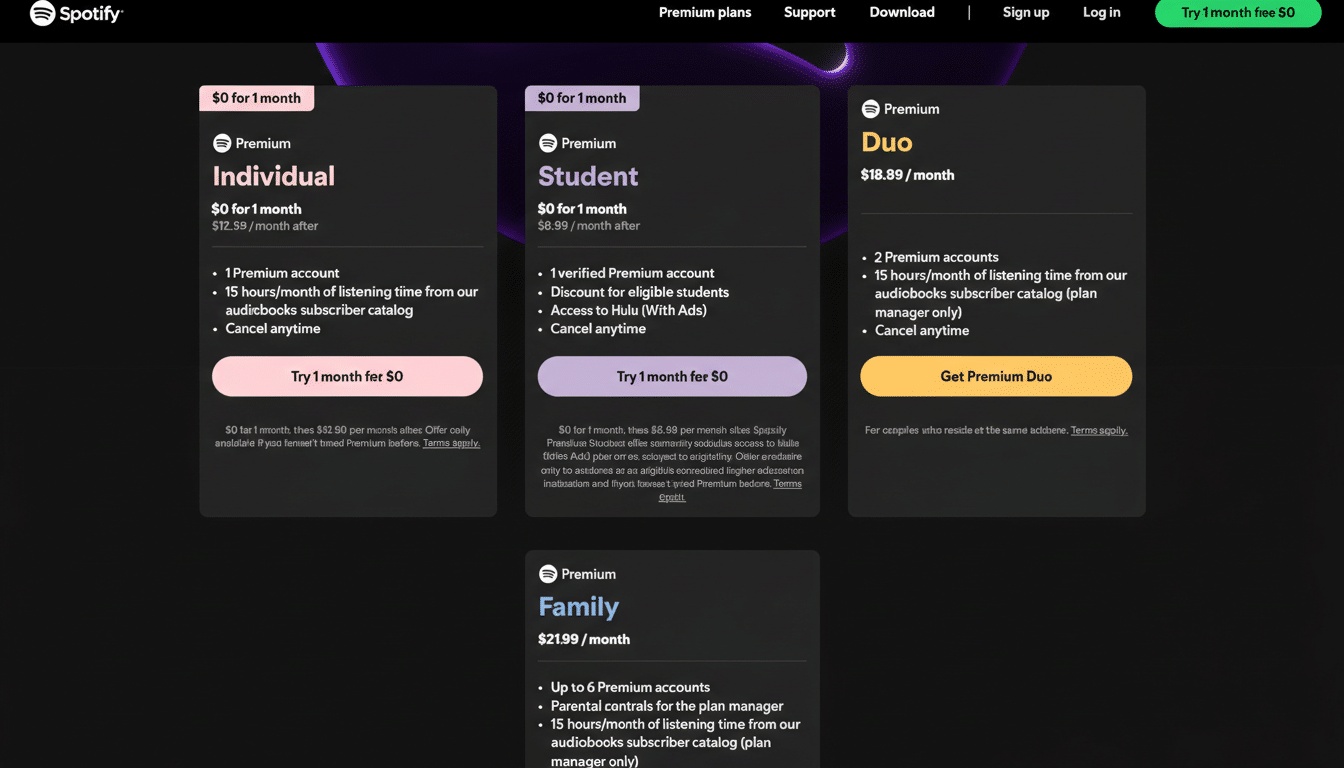
Spotify Premium in the US has climbed steadily over the past two years, with most individual plans now landing around $12–$13 per month depending on market and tier. That puts Spotify at or near the top of the mainstream price range, while Apple Music, YouTube Music, and Tidal all list equivalent individual plans at about $11. The gap isn’t massive on paper, but it adds up when you’re not using the extras that justify the increase.
Price sensitivity is real. Research firms like Kantar and Antenna have repeatedly found that price rises are the single biggest trigger for subscription cancellations across media services. In music streaming, where libraries and key features are increasingly comparable, even a modest difference can push users to reconsider the value proposition — especially after multiple hikes in quick succession.
Feature Creep And A Crowded Spotify Home Screen
Spotify’s evolution into an “everything audio” platform is well documented. After spending heavily on podcasts and rolling out audiobooks, the app’s home screen now juggles songs, shows, and book titles — often with auto-playing video. It’s a lot of surface area for someone who just wants to get to a favorite album without wading through unrelated tiles.
The company’s move into selling physical books takes the strategy even further, turning the app into a commerce destination. Even if the bookstore is tucked away in an Audiobooks tab, it expands the product beyond music and signals where investment is going. Spotify also continues to fund podcast infrastructure, including a new Hollywood production space — the fifth podcast studio globally — reinforcing that non-music bets remain central to the roadmap.
There’s nothing wrong with building a broader business, but those expansions have real costs. When subscription prices rise alongside features and storefronts I rarely touch, it feels like I’m subsidizing a super app that dilutes the core experience I signed up for.
The Value Math Versus Rivals In Music Streaming
Music quality and catalogs no longer differentiate the way they used to. Apple Music and Tidal include lossless and spatial audio at no extra charge. Spotify’s long-promised lossless option began rolling out more broadly only recently, and for many listeners, it doesn’t offset the higher monthly bill when competitors already meet or exceed that audio standard.
Meanwhile, YouTube Music leans into its video ecosystem and background play, delivering a distinct value that’s tightly integrated with Google’s platform. In this context, Spotify’s bundle — music plus podcasts plus audiobooks plus a coming bookstore — makes strategic sense for the company, but it doesn’t automatically translate to better value for music-first subscribers like me.
Industry groups back up the pressure to diversify. The IFPI’s latest Global Music Report shows streaming powering the sector, with subscriptions accounting for nearly half of recorded music revenue and total streaming above 60%. As platforms chase higher ARPU with bundles and upsells, there’s a fine line between smart packaging and feature bloat that alienates core users.
Leaving After Five Years: How I’m Switching
Network effects kept me on Spotify longer than I expected. Friends share tracks via Spotify links; my household relies on shared playlists and Jam sessions; and Spotify Connect is baked into several speakers. Those are powerful lock-ins, but not insurmountable.
Playlist migration tools like SongShift, TuneMyMusic, and Soundiiz make it relatively painless to carry over libraries and favorites. On the playback side, AirPlay 2 and Chromecast handle multiroom audio without tying me to one app’s protocol. Collaborative listening exists elsewhere, too: Apple’s SharePlay and group playlist features, for instance, cover most of what I used day to day.
I’ve started a trial with Apple Music to rebuild my library and test daily usability. I may keep exploring — Tidal’s audio quality and editorial curation remain appealing — but the decision to step off Spotify feels final. When a subscription stops reflecting how you actually listen, inertia is a poor reason to keep paying.
What It Means For Spotify And Listeners
Spotify’s multi-pronged model could pay off with higher engagement across podcasts and books, and a bookstore might unlock new revenue with publishers and authors. But there’s an unavoidable trade-off: each expansion risks nudging music-first users to competitors that feel simpler, cheaper, or both.
For me, the math is settled. After five years, rising prices and a pivot toward retail tipped a good service into the wrong fit. If Spotify wants to win back music purists, it will need to prove that higher fees fund a better music experience — not just a bigger store.
