


A curious piece of malware, written in Spain decades ago, triggered a cascade of events that led Google’s European advanced cyberdefenders to land in Málaga. The tale goes through Bernardo Quintero, a local student whose infatuation with an innocuous campus-borne virus grew up to become VirusTotal, the threat intelligence platform that Google acquired in 2012 — and the kernel for the Google Safety Engineering Center now based here in Málaga.
The malware that lit the fuse for Málaga’s cyber rise
By no means was it the catastrophic breakouts that would later color cyber lore. It went viral, revealed a secret message and frustrated students. But it was also a mystery seductive enough to lead an 18-year-old Quintero into reverse engineering and defense — charting a career that would put Málaga on the global cybersecurity map.
Years later, Quintero returned to the code and discovered breadcrumbs he’d overlooked as a teenager. One such byline puzzle: a string that just happened to read “KIKESOYYO,” in a puzzle attributed to a man who goes by the nickname “Kike” because it’s short for Enrique. Together with independent tips and a corroborating detail about the virus’s payload — it condemned ETA — he traced the work to another student, Antonio Enrique Astorga, who was now dead. The revelation completed a circle of sorts, but it also cleared up a larger one: how something that started as a local oddity became the basis for an entire global platform.
Hobby Project Went To Google Acquisition
VirusTotal had a practical start: pool antivirus engines, share indicators of compromise and turn collective detection into velocity. Its community-based approach provided researchers and companies a common early-warning system, as well as a real-time telemetry feed for new threats. To defenders — and to Google, which folded VirusTotal into its operation in 2012 — the value proposition was a no-brainer.
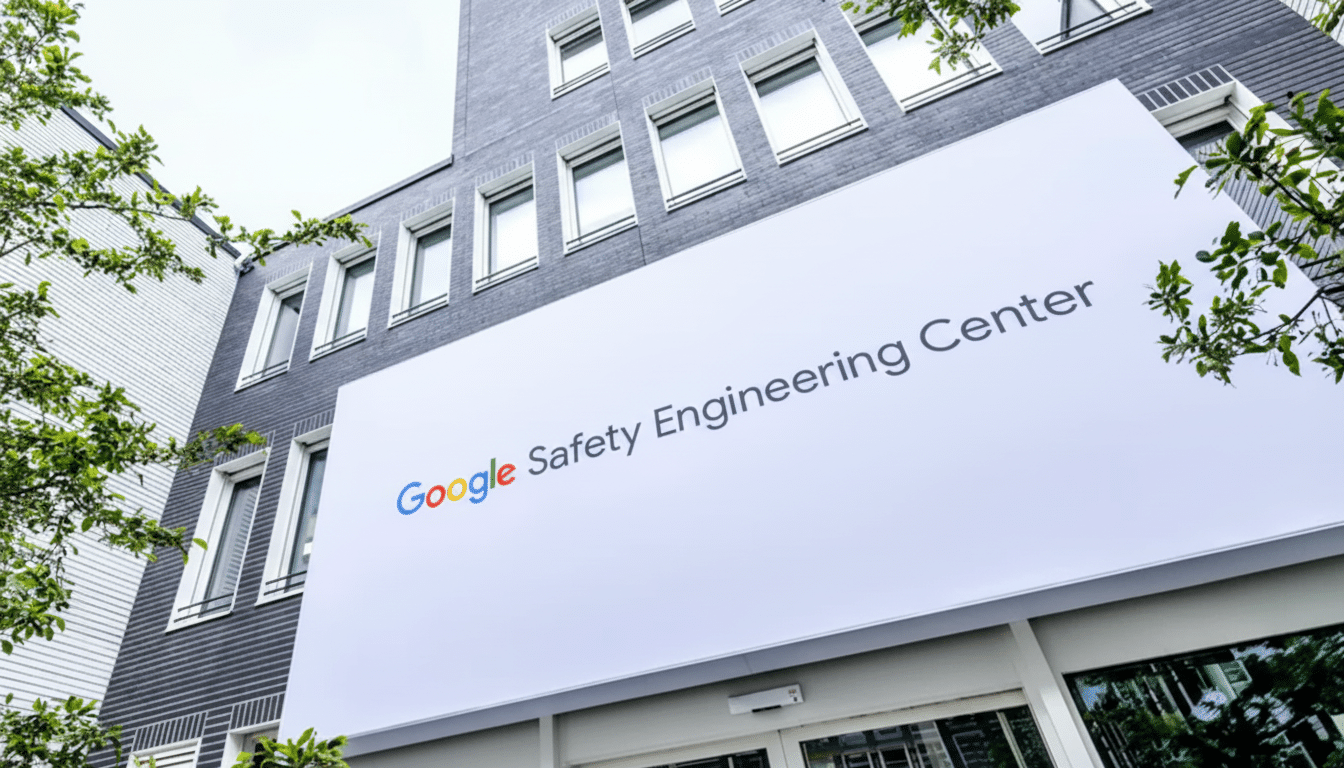
That acquisition also established a team of specialists at Google Málaga dedicated to threat analysis, malware research and abuse prevention — pillars that have developed into the presence in the city today as the Google Safety Engineering Center (GSEC).
In practice, that came down to on-the-ground expertise applied to global-scale problems: spotting new strains, classifying campaigns and informing protective controls across some of the most widely used products.
Why Google made strategic sense in Málaga, Spain
Málaga had something few places can offer: deep, homegrown security expertise and a ladder to keep it growing. The University of Málaga has been nurturing those security research ties for years, linking theory to practice with internships and joint labs. Today, Málaga TechPark (malagatechpark) is the technology hub of this southern region and home to nearly 300 businesses and over 20,000 professionals, making it a dense ecosystem where startups meet corporates and public bodies.
Spanish institutions have also stepped in. The National Cybersecurity Institute (INCIBE) promotes competencies and incident responses throughout the country, with the National Cryptologic Center (CCN-CERT) focusing on public sector defense. At the European level, the existence of a cybersecurity skills gap was highlighted as a strategic risk by ENISA. Amid that climate, Málaga’s talent magnet seemed to establish an obvious strategic advantage for Google: the ability to draw and keep experts; a number of them descended from VirusTotal.

A Human Story, At The Heart Of A Global Platform
Quintero’s quest to find a “Kike” turned up more than just an author. Astorga did not, according to friends, have in mind theft or harm but message and mastery — doing combat with code against terrorism, establishing technical chops. He went on to teach computing, and in more recent years his influence continued through his students and at least one family member: one of Mr. Rose’s sons recently graduated in software engineering, with interests in cybersecurity and quantum computing.
That continuity matters. It’s a case study in how local curiosity can grow into institutional capacity. What began as a cat-and-mouse between students and the university system in the 1990s ingrained a culture of analysis, sharing, and even responsible disclosure that closely mirrors how modern threat intelligence operates.
Málaga and Europe’s Defenses In Cyberspace
GSEC Málaga’s work is also done in conjunction with Google’s other European safety hubs that concentrate on abuse research, malware intelligence and coordinated defense with academia and industry. The loop of collaboration is tight: datasets and detection techniques drive better protections; researchers turn over findings; students get practical experience and feed back into the ecosystem.
Market forces serve only to exacerbate this trajectory. Gartner forecasts worldwide security and risk management spending topping $200 billion, with demand increasing for threat intelligence, application security and identity protection. Spain’s cyber capability has itself risen as multinationals set up teams in Andalusia, and local startups grow. In that regard, the rise of Málaga from hometown virus to global safe haven no longer seems so anomalous but rather a blueprint.
The lasting legacy of Virus Málaga for Google and the city
One is tempted to dismiss Virus Málaga as a footnote — some kind of harmless relic with a cute signature. It was a launch point. It steered a young engineer toward a platform that reframed threat sharing, convinced Google to bankroll a southern European hub and had a hand in turning a coastal city into an attractive place for cybersecurity talent.
The lesson is not that malware is arresting; it’s that curiosity, community and craft can turn a provocation into public good. The journey of Málaga — from a solo virus to a hub of gravity for defense — provides an example of how local sparks can steer global strategy, when the right people decide to light a fire.
