


Space Beyond, a new memorial spaceflight company founded by former NASA and Blue Origin engineer Ryan Mitchell, plans to send the ashes of up to 1,000 people into Earth orbit aboard a single small satellite. The company says its “Ashes to Space” mission will fly as a rideshare payload on a SpaceX Falcon 9, integrated by Arrow Science and Technology, with prices starting at $249—far below the typical cost of existing space memorial options.
Memorial spaceflights have existed for decades, but they’ve remained a niche luxury. Space Beyond is betting that standard CubeSat hardware, high-volume capacity, and the economics of rideshare launches can make a space tribute attainable for far more families.
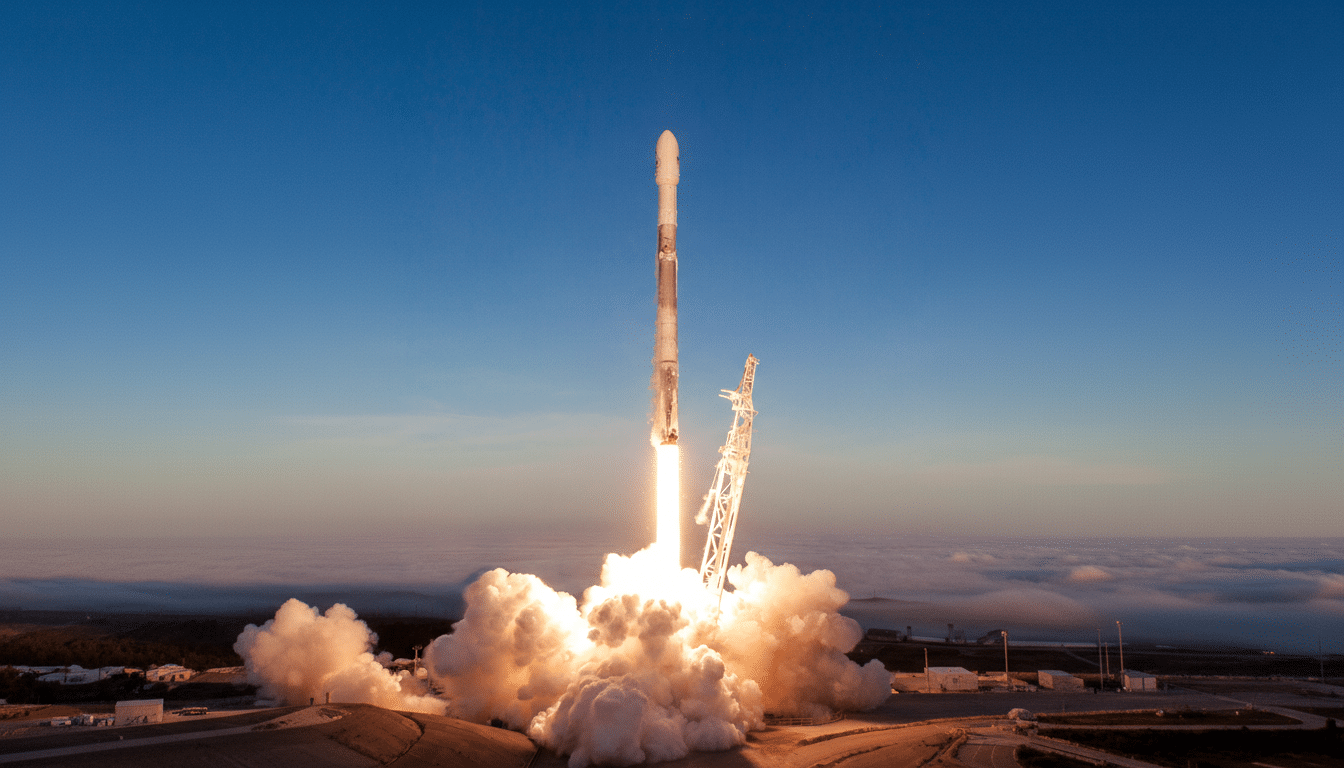
How the orbiting memorial works for families worldwide
The mission packages sealed capsules containing about one gram of cremated remains per participant inside a multi-unit CubeSat. After deployment, the spacecraft will operate in sun-synchronous orbit at roughly 550 kilometers (about 341 miles), providing predictable, repeating passes over most of the planet. Families will be able to track the satellite using widely available tools that tap public orbital data.
The satellite’s designed lifetime is about five years, after which it will reenter Earth’s atmosphere and burn up, along with the ashes. That arc—launch, a period of visible flyovers, and a final streak of light on reentry—offers a clear narrative for remembrance without leaving long-term debris in orbit.
Why the orbiting ashes memorial can cost far less
Space Beyond’s pricing hinges on three forces reshaping access to orbit: rideshare launches, standardization, and scale. SpaceX’s Transporter program publishes per-kilogram pricing to sun-synchronous orbit that has hovered in the mid four figures, a fraction of the cost to buy a dedicated launch. Off-the-shelf CubeSat components reduce development costs and timelines, and filling a single spacecraft with up to 1,000 participants spreads fixed costs across a large manifest.
The company is also deliberately lean and bootstrapped. With a base package at $249 (cremation is handled separately), Space Beyond undercuts legacy providers whose services often start in the low thousands for suborbital flights and rise for orbital and deep-space options.
Context matters: According to the National Funeral Directors Association, the average cost of a traditional funeral with burial routinely runs into the high four figures to low five figures, while cremation continues to grow and now accounts for more than 60% of dispositions in the United States. An orbital tribute priced as an add-on rather than a standalone luxury aligns with the way many families budget for memorials.
Safety and orbital debris considerations for this mission
Critically, Space Beyond will not release ashes into space. Free-floating particulates would be a hazard to other spacecraft. Instead, all remains stay sealed inside the satellite until atmospheric reentry. The approach follows guidance from NASA and the Inter-Agency Space Debris Coordination Committee, which recommends post-mission disposal within 25 years; Space Beyond targets a deorbit timeline well below that threshold.
The chosen orbit delivers two benefits: global coverage and predictable lighting conditions for easier tracking. Once cataloged by U.S. Space Command, the satellite’s trajectory can be followed by families using common satellite-tracking apps and services, making it possible to plan gatherings when the memorial passes overhead.
What families can expect before launch and in orbit
Enrollment includes a chain-of-custody kit, verification steps, and inclusion on the mission manifest. Only a gram travels to space, leaving families the majority of a loved one’s ashes for traditional ceremonies or keepsakes. After launch, Space Beyond will provide orbital updates, predicted flyovers, and a notice of the satellite’s atmospheric reentry.
Because the spacecraft will be in a sun-synchronous orbit, many passes will occur at roughly the same local times, improving the chances of a visible flyover. Visibility depends on location and sky conditions, but the company encourages commemorations timed to those predictable arcs.
Competition and outlook for space-based memorial services
Space memorials have carried the ashes of notable figures before—Star Trek’s James Doohan and planetary scientist Eugene Shoemaker among them—through services operated by companies such as Celestis and Elysium Space. Those offerings span suborbital experiences, Earth orbit, and even deep-space destinations, typically at premium price points for fractions of a gram.
Space Beyond’s differentiator is scale and affordability. The smallsat sector’s momentum, tracked by organizations like BryceTech and The Aerospace Corporation, suggests that rideshare launches and standardized payloads will remain plentiful. The remaining hurdles are operational: final integration with Arrow Science and Technology, frequency coordination and licensing through the FCC, export compliance, and launch provider reviews.
If the company executes on its plan, the result could be a new category of memorial that blends aerospace rigor with emotional resonance—an orbiting tribute that more families can access, follow across the night sky, and remember for years before its planned, poetic return to Earth.
