


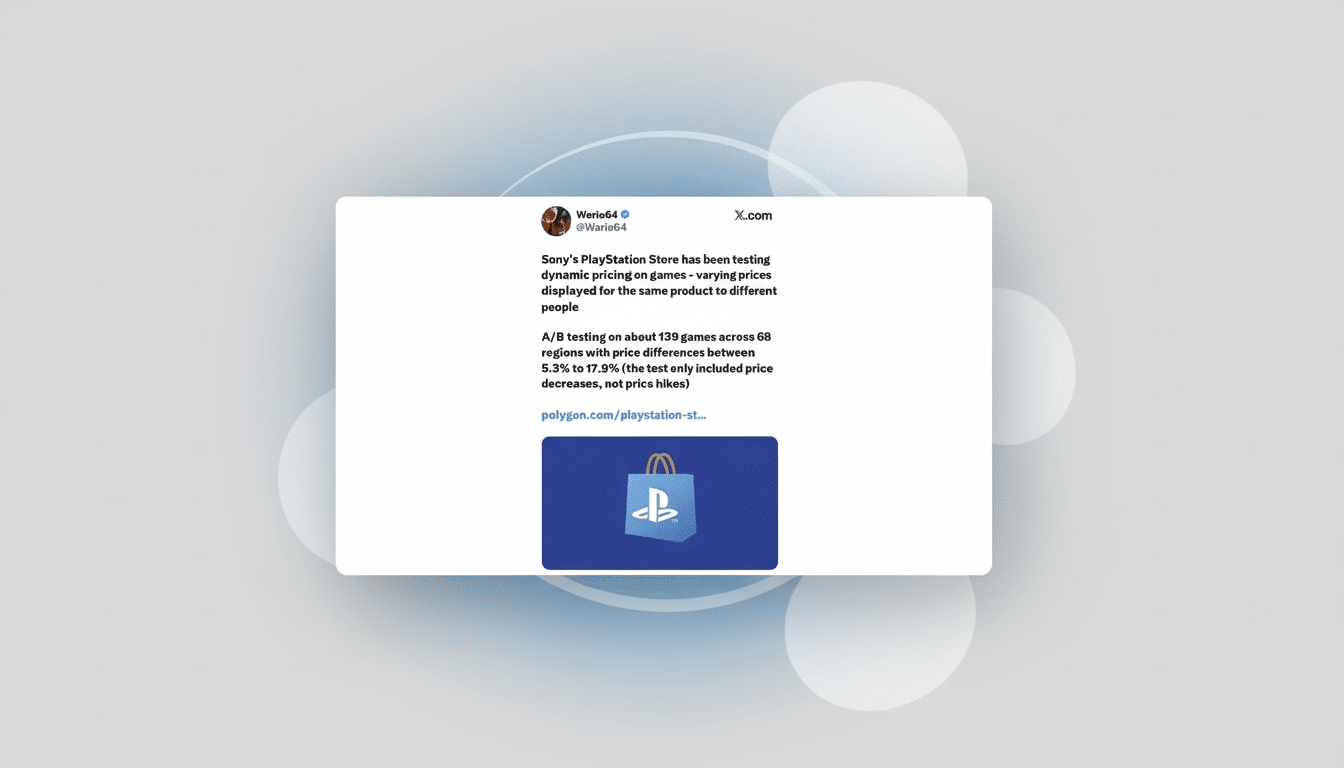
Sony appears to be piloting dynamic pricing on the PlayStation Store, using targeted discounts that vary by region and even by account, according to price-tracking site PSPrices. The tracker’s recent analysis points to broad tests spanning 68 regions and 139 games, with average markdowns ranging from just over 5% to nearly 18% and occasional steep personalized offers—one cited example showed a 56% reduction on Helldivers 2 for select users. PSPrices noted no signs of the experiment in the United States or Japan.
What the data suggests about Sony’s pricing tests
PSPrices’ logs indicate that both first-party blockbusters and notable third-party releases have been included in the test pool. Titles such as God of War, Marvel’s Spider-Man, Helldivers 2, and Stellar Blade reportedly received varying discounts depending on where players shopped and, in some cases, which account viewed the price. That pattern—regional price shifts layered with user-level offers—aligns with industry-standard “dynamic” models used to increase conversion without committing to a single global sale.

While PlayStation Store has long employed regional pricing tiers and time-bound promotions, the observed behavior goes further: similar users in different locales (or even different users in the same locale) may see different discounts at the same moment. If accurate, that would represent a meaningful change in how Sony manages demand, back catalog monetization, and player segmentation.
How dynamic pricing could work on PlayStation Store
Dynamic pricing in digital storefronts typically blends historical sales data, engagement signals, and catalog priorities to tailor offers. Think of it as modern yield management: a live-service hit might get a light nudge to capture fence-sitters after a big update, while a slower-moving title could see deeper cuts for lapsed players. Airlines, hotels, and ride-hailing apps use comparable models; console storefronts have been slower to adopt per-user strategies, partly due to community sensitivity around fairness.
On PlayStation, this could manifest as limited-time “just for you” deals, regional demand-based pricing, or surfacing steeper discounts to players who own adjacent franchises. Machine learning models may predict which users are most likely to convert at specific thresholds, raising total revenue without running broad, storewide promotions.
Why some regions may be left out of Sony’s pricing tests
PSPrices reports no evidence of the test in the U.S. or Japan. That absence could reflect multiple factors: market maturity, competitive tactics, or caution about legal scrutiny. Regulators including the U.S. Federal Trade Commission, the UK’s Competition and Markets Authority, and the European Commission have all examined algorithmic pricing in other sectors, and console holders tend to be conservative when exploring practices that alter how consumers experience price transparency.
There’s also a straightforward commercial angle. Regional pilots help tune models against currency volatility, purchasing power, and local preferences before a wider rollout. If the results lift conversion without stoking backlash, Sony could expand the practice—or quietly shelve it if trust becomes a risk.
Benefits and potential backlash risks for PlayStation players
For publishers, targeted discounts can revive older titles, improve attachment for DLC, and smooth revenue between marquee sales. The strategy also fits where the market is headed: industry groups have reported that the vast majority of game sales are now digital in major markets, giving platforms deeper pricing levers than retail ever allowed.
The flip side is perception. If players discover that friends or squadmates paid widely different prices for the same game at the same time, trust can erode fast. The specter of surge pricing—raising rather than lowering prices when interest spikes—would amplify those concerns. In a community-driven medium, price opacity can feel punitive, particularly after recent subscription hikes and debates over $70 new releases.
What to watch next as Sony tests dynamic pricing
Sony has not publicly commented on the reported tests. Watch for broader appearance of “personalized” offers, consistent patterns across major territories, and whether dynamic pricing intersects with PlayStation Plus membership tiers. A formal policy shift would also likely draw interest from consumer advocates and competition authorities, especially if prices rise under heavy demand.
If PSPrices’ findings hold, Sony is probing a powerful lever that many digital businesses already rely on. The question isn’t whether dynamic pricing can work—it’s whether it can be deployed in a way that boosts value without alienating the very players it hopes to convert.

