


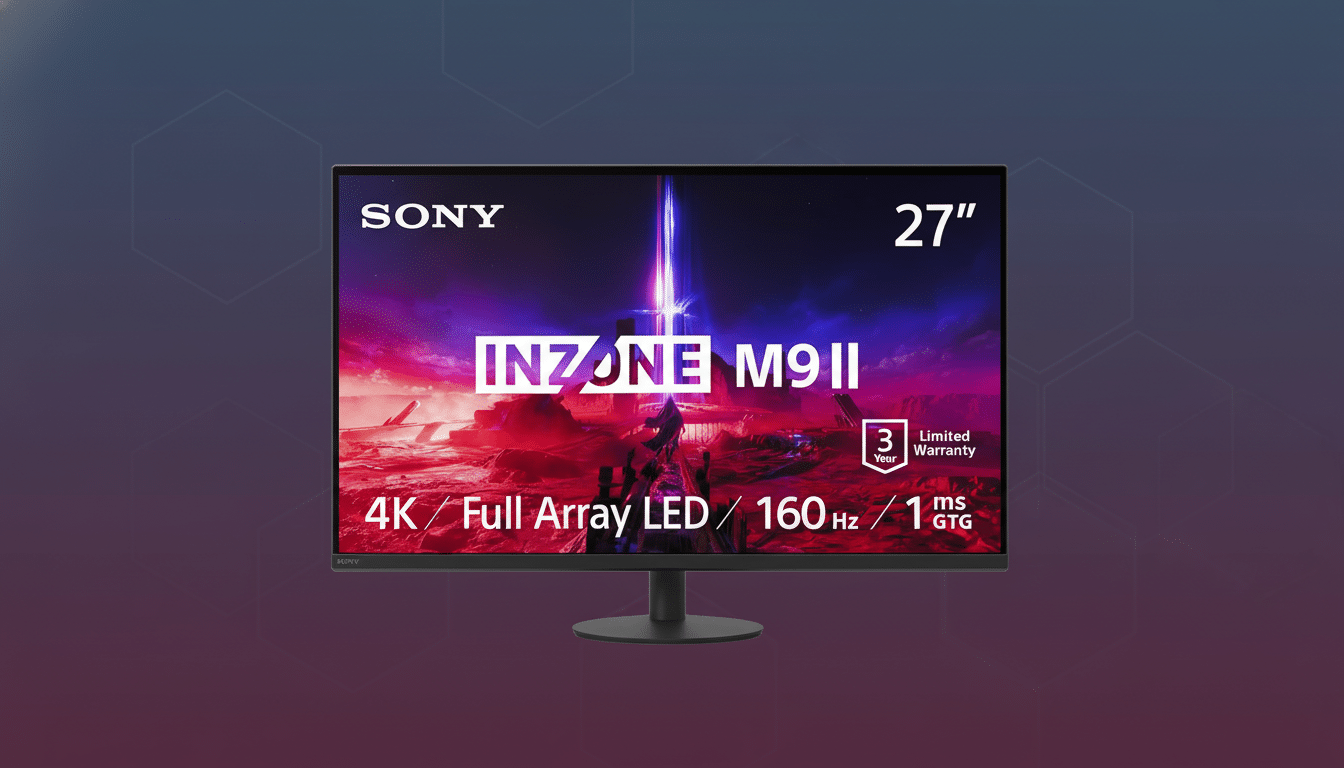
Sony’s Inzone M9 II 27-inch 4K gaming monitor is now on sale for $698 at Amazon, offering a $251.99 discount below its normal price of $949.99. That 27% savings pushes the premium HDR gaming display firmly into mainstream territory and is one of the top values on offer in the high-refresh 4K category.
Why This 27-Inch 4K Display Is Significant
The M9 II teams a 3840 x 2160 resolution with a peppy 160Hz refresh rate and quoted 1ms response time—which would have been niche just a couple of years ago. But the panel’s full 1,000-zone local-dimming array lets it keep pace with contrast-demanding scenes, while the monitor’s VESA DisplayHDR 600 certification at least implies meaningful blood flow through its HDR channels: superior peak luminance and color volume versus entry-level HDR providers. In the real world, that means you’ll see brighter highlights and more shadow detail in games that are crafted to take advantage of HDR.
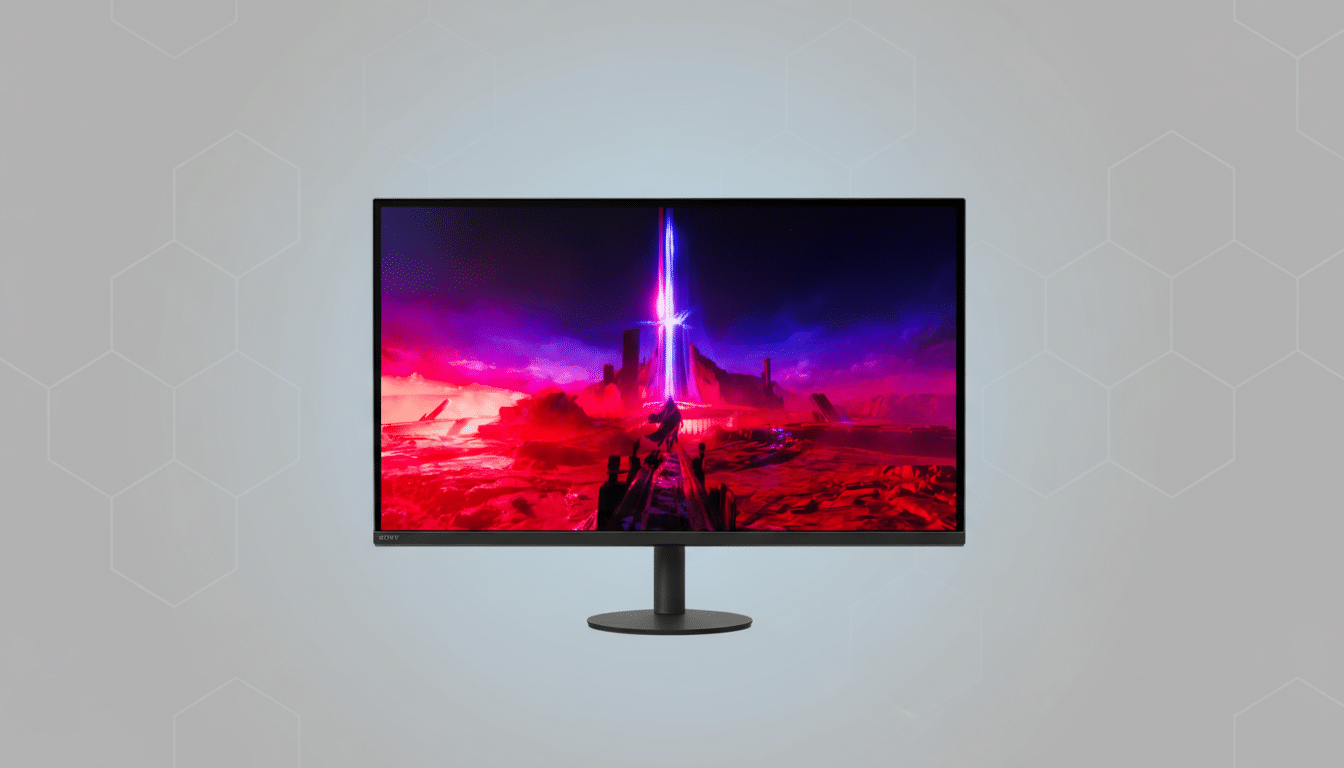
For connectivity, the monitor is HDMI 2.1 and DisplayPort 2.1 compatible, allowing high frame rate 4K from modern consoles and performance PCs. Variable refresh rate cuts stutter and tearing during fast action, while Auto Low Latency Mode decreases input lag when a game boots up. These kinds of features are also important for titles like Cyberpunk 2077, Apex Legends, and Call of Duty, where smooth frame pacing is just as important as raw image quality and low latency.
Built for PS5 consoles and high-end gaming PCs
The Inzone lineup from Sony is built with PlayStation compatibility in mind. The M9 II also carries PS5-friendly perks such as Auto HDR Tone Mapping and Auto Genre Picture Mode that adjust the display’s HDR and picture settings on the fly. Console players will be able to hit 4K at up to 120Hz over HDMI 2.1, and PC gamers can crank the panel up to its full 160Hz over DisplayPort. Game assist features such as black equalizer and on-screen crosshairs are also included to fine-tune competitive play.
There’s also a forward-looking bit for PC enthusiasts. With support for AMD’s RDNA 3 GPUs and DisplayPort 2.1, the M9 II is also a good bet in the long term if you’re backing bandwidth-heavy formats. Nvidia RTX 40-series card owners have the ability to have their cake and eat it too, running 4K high refresh via HDMI 2.1 or using DisplayPort 1.4 where DSC is available. The monitor’s VRR support also works cross-platform to keep animations smooth even when frame rates vary, which is how I set it up with the Xbox One and PC.
Price context and key competitors in 4K gaming
There’s a lot of fierce competition in the 27-inch 4K 144–160Hz segment, including some fine choices like LG’s 27GP950, Gigabyte M28U, and Asus’ TUF VG28UQL1A. A lot of those models are edge-lit and that tends to restrain HDR more than local-dimming types. As a lens, the Inzone M9 II’s full-array dimming makes it a good choice for HDR games and movies, especially in dark rooms. Local dimming (at least when done properly by independent testing communities) has repeatedly shown that it greatly elevates perceived contrast compared to edge-lit panels.
From a value perspective, seeing a 4K 160Hz model with local dimming and HDR at under $700 is unusual. Price-tracking services have seen only a smattering of drops in this range for similar feature sets, and industry researchers like IDC observe that high-end gaming displays continue to occupy a niche at the top of the monitor market, even as umbrella prices cool. So this discount should catch the eye of any buyer looking for a mix of performance and price.
What to consider before you buy this 4K monitor
If you want to drive 4K at triple-digit frame rates, you’re going to need some serious GPU muscle. You should see the best results with cards as high-end as the GeForce RTX 4070 Ti and up, or the Radeon RX 7900 XT/XTX, particularly in fast-moving games where that leap from 60Hz to 120–160Hz feels transformative. On Windows, HDR generally benefits from a fast calibration pass, and the M9 II’s punchy HDR 600 class won’t compete with the searing specular highlights of an HDR 1000 or mini-LED flagship. Still, at 27 inches you’re getting around 163 pixels per inch, meaning text is razor sharp for work during lulls in gaming (though you might want scaling to make it readable).
If you go back and forth between a PS5 or Xbox Series X and a high-end PC, the M9 II balances HDMI 2.1 with DisplayPort 2.1, VRR, and local dimming that offer both speed and image quality. At $698 today, it’s in something of a sweet spot: premium 4K performance without the wallet-gouging price.
