


Sonos has introduced the Amp Multi, an eight-channel amplifier aimed squarely at expansive, professionally designed systems — and it’s the company’s first new hardware since the contentious app overhaul that frustrated many loyal users. Rather than a retail box you can add to cart, Amp Multi is an installer-channel product with quoting and configuration handled by pros, signaling a renewed push into high-end, whole-home audio.
Why Amp Multi Matters After the App Backlash
The launch arrives as Sonos works to restore confidence in its software platform after a major app redesign drew complaints over missing features and reliability. In the months since, the company has pushed a steady cadence of updates, including improvements for Ace headphones and bug fixes across Arc Ultra, Era 300 and Era 100 speakers, Move 2, and Sub 4. For custom integrators — the technicians who build and maintain the most complex systems — stability is non-negotiable. Amp Multi’s debut is a statement that Sonos believes the foundation is ready for large-scale deployments again.
Built For Complex Zones And Architectural Speakers
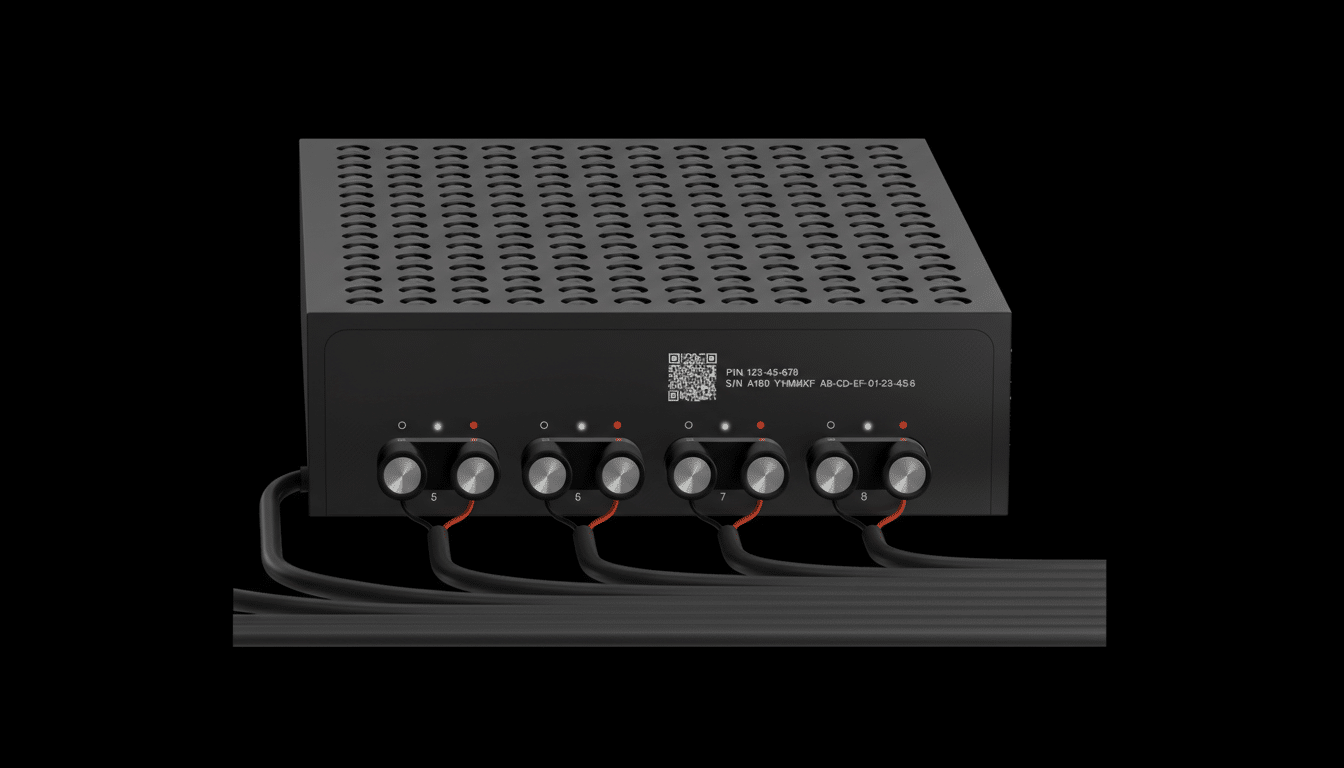
Designed for Sonos Architectural speakers developed with Sonance, Amp Multi consolidates larger homes and commercial-like spaces into a single hub. It supports four configurable zones with eight amplified channels, and each channel can drive up to three architectural speakers, enabling as many as 24 speakers in a single rack-mounted footprint when planned within installer guidelines.
Think kitchen, great room, patio, and pool house running simultaneously — all synchronized, all controllable in the Sonos app. If your setup is a typical living room with an Arc Ultra, a pair of Era 300s, and a few portables, this isn’t for you; the standard Sonos Amp remains the right fit. Amp Multi targets projects where cabling is already in the walls and ceiling and where a single chassis can simplify wiring, heat management, and service.
ProTune And Power Architecture Explained
Under the hood, Sonos is leaning on GaN (gallium nitride) power stages and Class-D post-filter feedback. GaN components switch faster and more efficiently than traditional silicon, which can reduce heat and improve transient response — key for dense, always-on rack systems. The company also added built-in ventilation and cable management, acknowledging that real-world installs live or die by serviceability.
New to Sonos is ProTune, a manual tuning suite built for integrators. It includes a 10-band EQ, gain control, stereo width adjustment, and delay offset. In practice, that means a pro can tame a bright kitchen with hard surfaces, narrow the image in smaller rooms, and time-align speakers across large spaces or adjacent zones so music doesn’t sound smeared as you walk through the house. These are the kinds of tools that custom installers expect from distribution amps, now living inside the Sonos ecosystem.
Installer-Only Design With Network Priorities
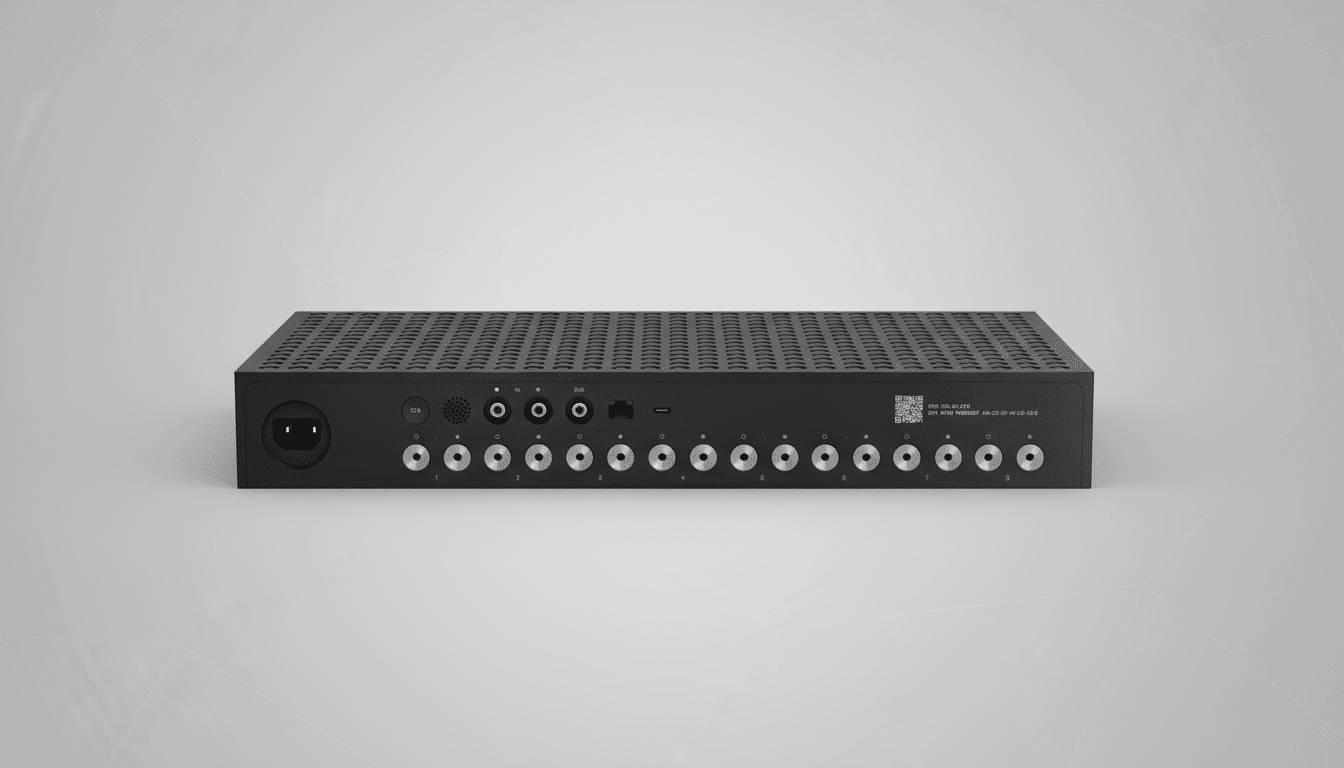
Unlike the smaller Amp, the Amp Multi sheds touch controls to push everything through the Sonos app. For reliability, there’s a wired Ethernet option to offload traffic from Wi‑Fi — a best practice in projects where roaming clients, dense construction, and RF noise can undermine streaming stability.
The installer-only approach aligns with how large systems are typically commissioned. Organizations like CEDIA emphasize documented design, labeling, and remote service access; packing eight channels and four zones into a single chassis reduces failure points and truck rolls. By requiring a professional quote, Sonos is effectively ensuring impedance planning, thermal headroom, and zoning are handled correctly the first time.
What Amp Multi Means For Existing Sonos Owners
Amp Multi isn’t a mass-market purchase, but it signals where Sonos is steering its platform: bigger installs, deeper tuning, fewer on-device controls, and more app-first management. For those invested in in-ceiling, in-wall, and outdoor speakers, it consolidates what used to require multiple amps into one managed node, while keeping all the familiar Sonos multiroom features.
For everyone else, the takeaway is simpler. If your system is built around Arc Ultra, Era speakers, and portable Sonos units, you’ll get more value from the standard Amp or soundbar-based setups. But the Amp Multi’s arrival — the first hardware since the Ace headphones — underscores that Sonos is rebuilding trust with the power users and integrators who push its ecosystem to the limit. If the software stays steady, this is the kind of hardware that can anchor complex homes for years.
