


The most interesting smartphone story this year doesn’t have much to do with what phone you’re using. It’s the smarter choice: phones equipped with Qualcomm Snapdragon 8 Gen 5, not its pricier cousin Snapdragon 8 Elite Gen 5. The non-Elite platform comes with most of the headline features that count, without having to pay a premium for them or lug around some thermal baggage attached to bleeding-edge silicon.
Why Non-Elite Is More Logical Now for Everyday Use
Mobile processors at the highest echelon can produce amazing bursts of speed, but today’s phones don’t spend very much time in that peak mode during everyday operation. Between power constraints and slim chassis, blisteringly fast chips can throttle on long gaming sessions, heavy camera processing, or AI workloads. Eventually, stress testing from independent outlets such as Notebookcheck and AnandTech has demonstrated that the sustained performance of hot-running flagships can drop by 25–35% under load. That’s not a ding against the silicon; that is, after all, physics inside a palm-sized gadget.
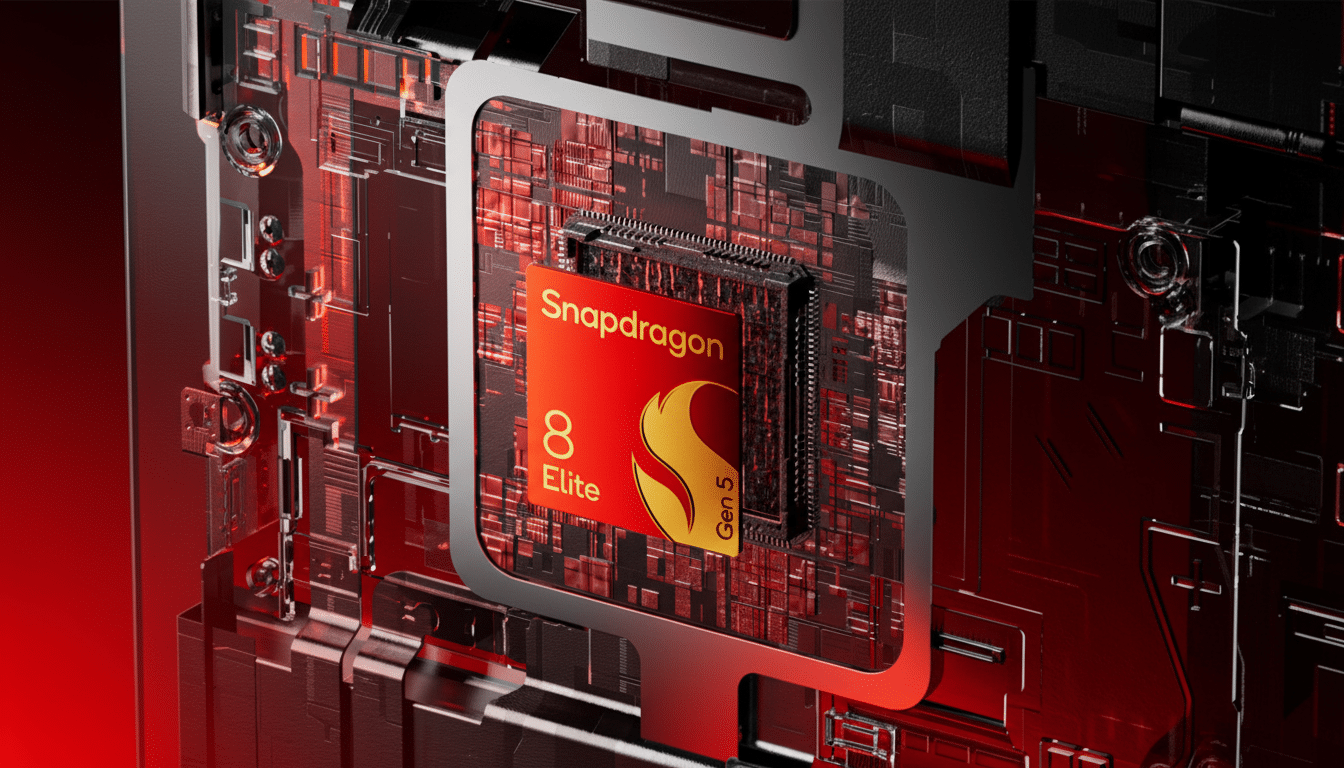
The Snapdragon 8 Gen 5 is shooting for a more balanced curve. It retains Qualcomm’s custom Oryon CPU architecture, cuts the GPU back just enough to reduce heat, and relies on last year’s high-end AI engine—still more power than most apps need. That mix is just where real-world speed combines with more reliable battery life, particularly for the user who manages photography, messaging, navigation, and streaming much more than they pursue desktop-grade gaming on the go.
Thermals and the Speed of the Real World
The greatest case for non-Elite play is consistency. Ultra chips typically publish some eye-popping scores, then back off in the interest of keeping cool. Beginning a little lower on the ceiling, the 8 Gen 5 can hang around there longer before throttling down hard. That results in even smoother frame rates, quicker photo pipelines that carry on despite rapid bursts (thanks to some serious heat mitigation), and fewer “too hot to continue” warnings during lengthy camera or AI sessions.
Battery life benefits, too. With more conservative peak power draw and more intelligent scheduling, mid-flagship SoCs generally eke out battery life to a greater degree. Reviewers have seen 10–20% endurance gains time and again on efficiency-focused phones (rather than max-performance hardware), and that trend should keep going when 8 Gen 5’s modern nodes meet the shackles of restrained clocks and tuned-up memory controllers.
Value Stacks With Features, Not Just FPS Scores
Consumers are walking with their wallets. Research agencies such as IDC and Counterpoint have reported that most of the global smartphone shipments are to be found down the line from premium. Average selling prices continue to creep upward, but buyers still care about camera quality, display tech, battery life, and software support—not as much about saving a few milliseconds on app launching. That’s why Apple stratifies iPhone and Pro between chip tiers, and why Samsung found a hit with the balanced Exynos parts in its FE line.
The 8 Gen 5 is made for that market reality. You still get Wi-Fi 7, satellite NTN support for emergency messaging where carriers allow it, advanced image signal processing for computational photography, and powerful on-device AI for things like live transcription and photo editing. In other words, the things that people experience are not absent while the sticker price could fall significantly lower than any Elite equivalent.
Early Phones to Watch With Snapdragon 8 Gen 5
Already, several brands are lining up devices around the 8 Gen 5. Because the OnePlus 15R has also been teased for this cycle, and if it follows the 13R template—a big battery, fast charging, decent cameras—it’s got a shot at anchoring the $500–$600 space with performance that feels every bit “flagship enough.” That’s precisely the price band where renewed attention is being focused by buyers eschewing four-figure phones.
On the higher end, the forthcoming next-gen Motorola Edge Ultra is also strongly rumored to use the non-Elite chip. If so, that points to a specific strategy: re-invest silicon savings in a sharper OLED display, periscope-style zoom, and improved build quality without chasing leaderboard victories. The end product could be a device that goes toe-to-toe with the best in the business while giving 95% of what people are actually using on a daily basis.
The AI and Gaming Reality Check on Modern Phones
Mobile AI is taking off, but many of the on-device experiences—from generative photo tweaks to live translation—continue to bear down just fine on last year’s top NPUs. The challenge for developers is to optimize these not simply based on a pure count of TOPS. By the same token, mobile smash hits are developed for a massive hardware base, and cloud gaming continues to ascend.
If you’re not an emulator die-hard or record in 4K60 HDR on the reg, the non-Elite trade-off is absolutely invisible in action.
And when you do outright push hard, cooler sustained performance can be worth more than a higher peak. Slick 45–60 fps gameplay that remains constant is preferable to 90 fps, which then drops to 35 within minutes. And the same logic is true of AI video stabilization or batch photo processing: for these applications, it’s consistency that gets the job done more quickly than a sprint followed by a thermal-acclimation slump.
Bottom Line: Why the Snapdragon 8 Gen 5 Sweet Spot Matters
We’re at the point of diminishing returns at the top of mobile. The Snapdragon 8 Gen 5 strikes a sweet spot where efficiency, thermals, and price come together perfectly to match how people actually use their phones. If it helps shove a few more truly great devices into the $600–$900 window—without robbing people of cameras, displays, or long-term software support—that’s just good shopping. It’s the true flagship experience, without all that excess.
