


Signal is debuting Secure Backups, a privacy-preserving way for you to store your message history for free, and has also announced its first paid feature for people looking for more. Its opt-in mechanic is refreshed daily, all of your messages are end-to-end encrypted and it provides a manageable, recoverable window to recent conversations without Signal or cloud providers getting their hands on your data.
How Secure Backups work
Secure Backups house your messages and media in an encrypted archive that can be unlocked by only you with a 64-character recovery key. That key never resides on Signal’s servers; lose it and the backup is gone, by design. This mirrors Signal’s overall architectural approach: as little metadata as possible, and nothing linking content to its creators.
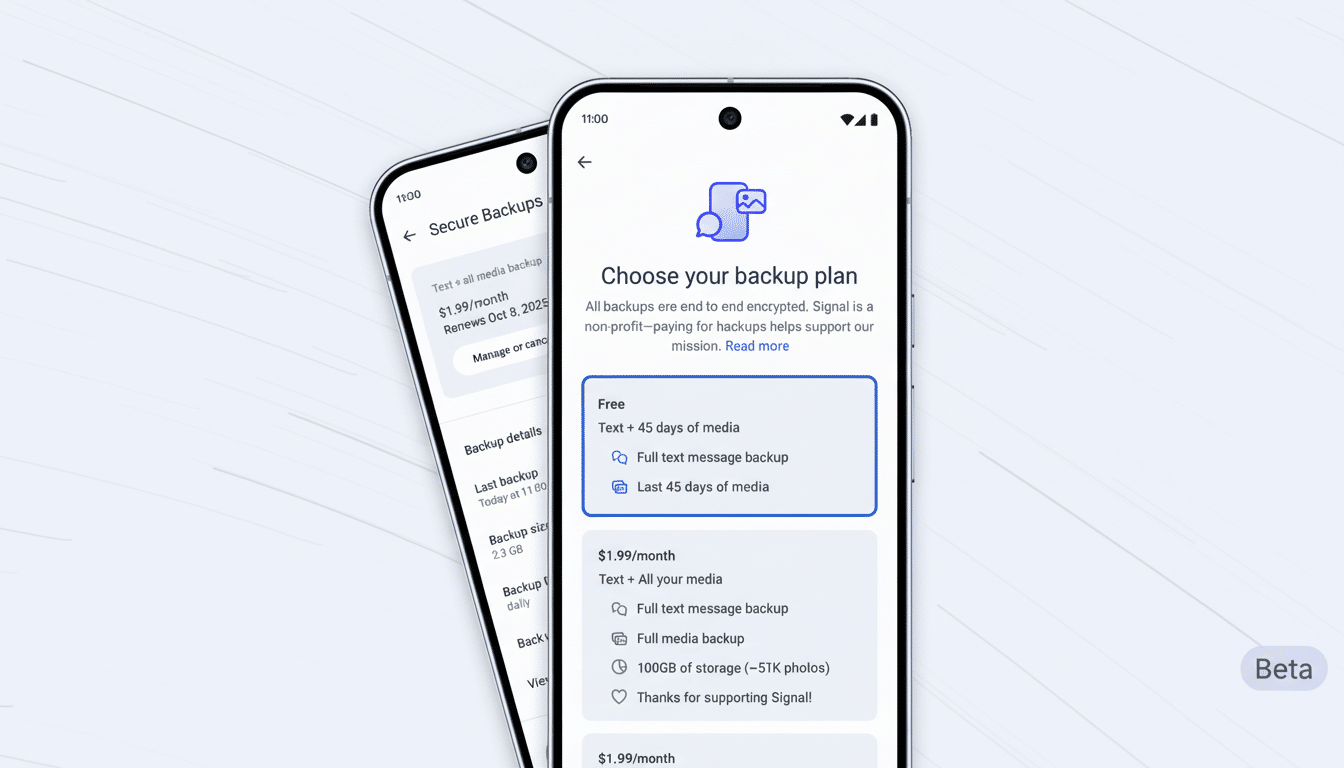
You get 100MiB of storage for free, and can access the last 45 days of chats and media by default. Signal notes that the backups are compressed, so most people should be able to fit under that free tier — particularly if the bulk of their conversations are text based. As a rule of thumb, compacted text is minuscule, whereas photos and videos are anything but, which is why the company designed day in, day out rolling archives, not the kind of history that goes on for forever and eats several gigabytes.
(One small but crucial detail: Backups are designed not to have a direct connection to your Signal account or payment mechanism.) That separation lowers the chances someone could map a backup to a particular user, which is consistent with Signal’s largely privacy-centric focus on data minimization.
The first-ever paid feature
If you want to keep 45 days or more, though, Signal now has a plan for you: The company is introducing a $1.99-a-month plan allowing stored messages to be retained beyond the free window. For a nonprofit that does not accept ads or sell data, it’s simple math: Media storage and bandwidth are not free. That why public cloud pricing from the big providers shows this — storing and moving big files at scale is near the top for the most expensive parts of operating a new, messagingfied service.
Signal’s leadership has long maintained that sustainable privacy requires sustainable funding. The organization — run by the Signal Foundation and funded by donations and voluntary payments that start at $2.99 a month — is signaling that modest, user-supported features can sustain the infrastructure behind an app without caving on a surveillance-free model.
Opt-in, but be wary of your counterparties
Secure Backups are strictly opt-in. And if you don’t turn them on, nothing will change on your device. But the people you’re chatting with can on their side, so copies of your shared messages may reside in their encrypted backup. It’s not a bug — it’s how messaging functions between two ends. It can be helpful to have a conversation about what you expect in sensitive conversations, and to review features such as disappearing messages if your threat model mandates more strict controls.
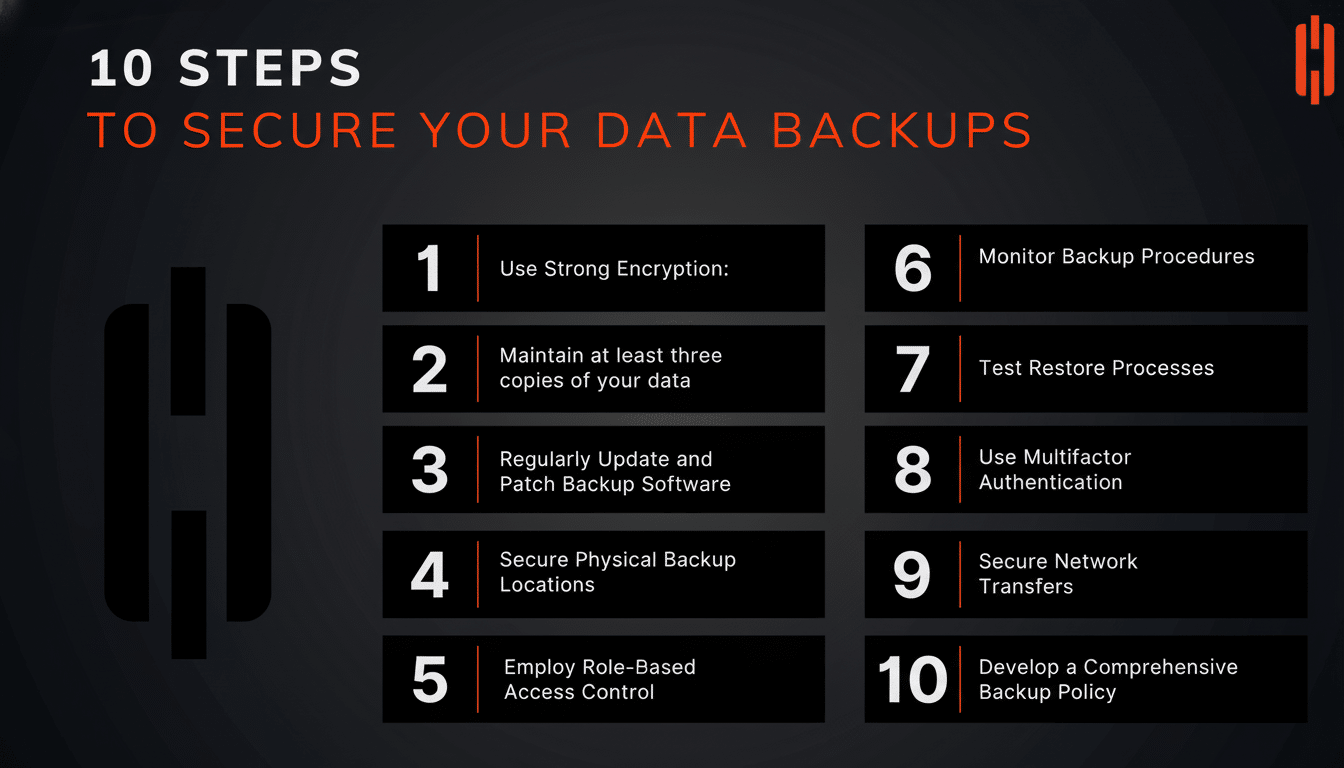
As always, make sure to save your 64-character recovery key somewhere safe. Security experts usually suggest something like a trusted password manager, or perhaps an offline record stored in a safe place. The Electronic Frontier Foundation’s security guides note that strong keys provide privacy protection only if users can find them again with confidence.
How it stacks up against other messengers
Signal’s strategy stands in contrast to the industry’s convention. WhatsApp has cloud backups on iCloud (for iPhone users) and Google Drive (for Android users), and while end-to-end encryption for backups is an option, you have to turn it on explicitly. Most chats on Telegram are stored on the platform’s servers to make them convenient to access, but those cloud chats are not end-to-end encrypted out of the box. Apple’s iMessage can be backed up to iCloud with end-to-end encryption — but metadata is a consideration when Advanced Data Protection isn’t enabled.
Signal’s fallback design has encryption keys held by the user and does not wire archives to accounts. That limits recovery convenience some, but reduces the data any third party — or the service itself — is able to access. It’s a textbook trade-off for a platform whose selling point is privacy as a primary feature, not something you can tack on.
Who should consider paying
If you rely on keeping context (think journalists, aid workers, researchers or small teams collaborating across time zones) having that large window can be valuable insurance against phone loss of device failure. The $1.99 tier will also make better sense for anyone sharing abundant photos and videos, as they will be more likely to reach 100MiB sooner.
Availability and getting started
Secure Backups is available in the latest beta on Android now, with full platform support coming soon. To test it, get an update to the app on your device, go to Settings, then follow the prompts to create and save your recovery key. Six-word onboarding that emphasizes the most important safety aspect; Signal can’t help you if you lose it, and that’s the point).
The result is a middle ground that many privacy advocates have called for: meaningful relief without undermining end-to-end encryption. It won’t please every user who demands infinite, hands-off history, but it’s a move that squarely reflects Signal’s overall project while at long last acknowledging a mainstream expectation for contemporary messaging.
