


If you have a home equity line of credit on your property and are thinking about selling, you probably have one pressing question: what happens to the HELOC when the house changes hands? The outstanding balance gets paid off at closing from the sale proceeds, and the line of credit closes permanently once the lien is released. But there are several details worth understanding before you list, because a HELOC introduces specific steps, potential fees, and one meaningful complication if you owe more than your home is currently worth.
What a HELOC Is and Why It Matters When You Sell
A home equity line of credit is a revolving line of credit secured against your home. Because the lender’s collateral is the property itself, the lender holds a lien against it. That lien does not disappear when you decide to sell. It travels with the property until it is paid off, which means a buyer cannot take ownership of a home with a HELOC still attached. The title cannot transfer cleanly until every lien is satisfied.
- What a HELOC Is and Why It Matters When You Sell
- How the Payoff Works at Closing
- What the Payoff Amount Actually Includes
- Can You Pay Off the HELOC Before Closing?
- What If You Owe More Than Your Home Is Worth?
- Does It Matter If the HELOC Balance Is Zero?
- Selling With a HELOC When You Need to Move Quickly
- A Few Steps to Take Before You List
- Final Thoughts
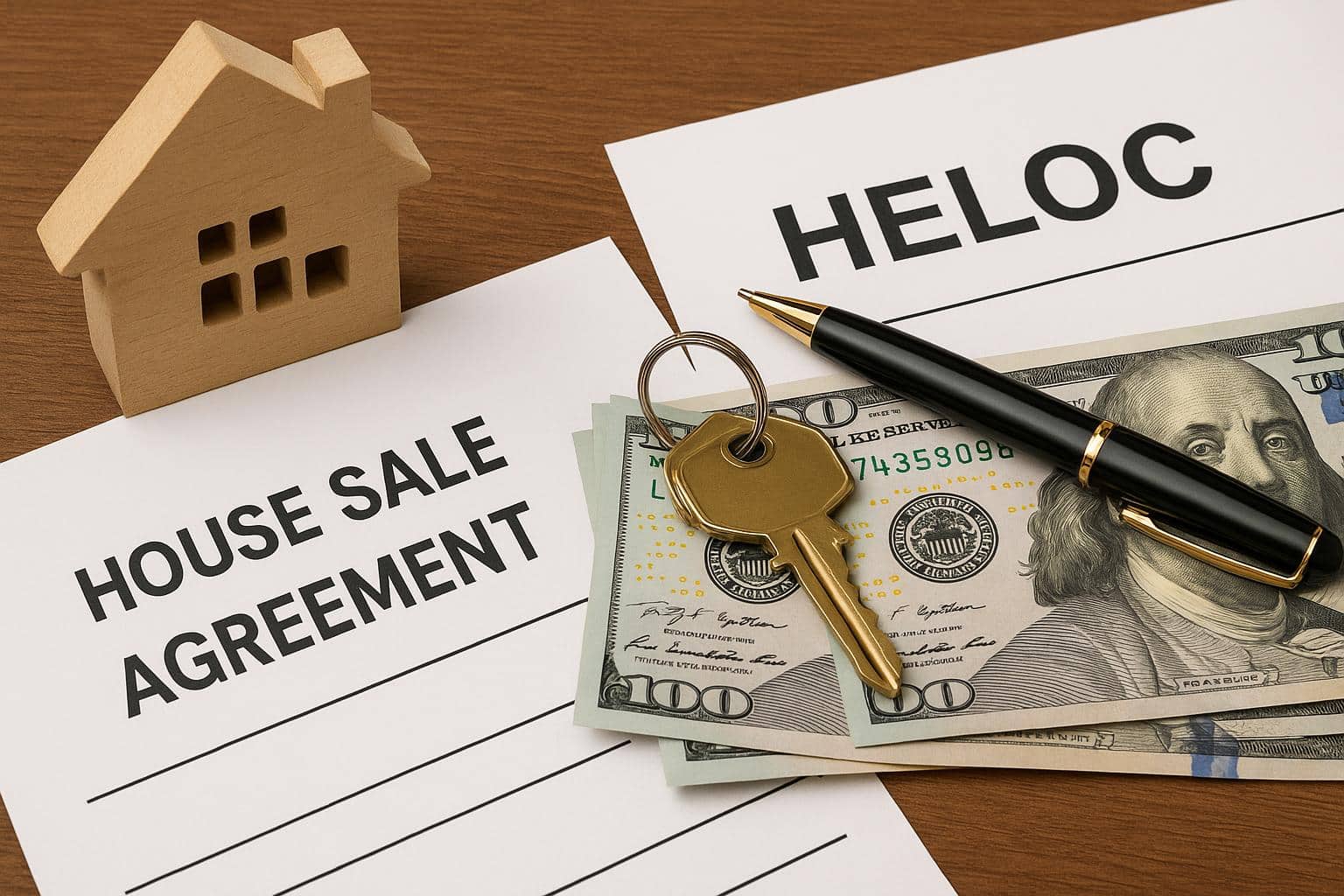
This is not unique to HELOCs. Any debt secured by a property, including your first mortgage, must be cleared at or before closing. A HELOC is simply an additional secured debt that the title company adds to the list of obligations to be paid from your sale proceeds.
It is also worth noting that the HELOC does not transfer to your next home. It is tied to the specific property that served as collateral. If you want a home equity line on your new home after the move, you would need to apply for a fresh one once you own and have equity in the new property.
How the Payoff Works at Closing
The mechanics of paying off a HELOC at closing are handled almost entirely by the title company. Here is how the process unfolds from the moment you accept an offer to the day funds are disbursed.
Once you have an accepted offer and a closing date is set, the title company conducts a title search to identify all liens on the property. Your HELOC shows up as a recorded lien, and the title company then contacts your lender to request a payoff statement. This statement details the exact amount required to close the line of credit, including the outstanding principal balance, accrued interest up to the anticipated closing date, and any applicable fees.
Because a HELOC carries a variable interest rate and interest accrues daily, payoff statements are typically valid for only 10 to 15 business days. If your closing is delayed past that window, the title company will need to request an updated figure. Communicating your expected closing date to both your real estate agent and your lender early in the process helps keep this on track.
On closing day, the buyer’s funds flow into an escrow account managed by the title company. The title company then disburses from that account in order of lien priority. Your primary mortgage, which holds first lien position, is paid off first. Your HELOC, as a second lien, is paid next. Any remaining funds after all debts, closing costs, and fees are satisfied go to you as the seller.
After the lender receives the payoff, they file a lien release with the county. This formally removes the HELOC from your property record and confirms that the obligation has been satisfied.
What the Payoff Amount Actually Includes
The payoff statement from your lender will show more than just the balance you see on your monthly statement. A few components are worth anticipating.
First, there is the outstanding principal, which is the amount you have actually drawn from the line. If you opened a $60,000 HELOC and drew $35,000, your principal is $35,000.
Second, there is accrued interest. Interest on a HELOC compounds daily on the drawn balance. The payoff statement calculates how much interest will have built up by the anticipated closing date, not just through the end of your most recent billing cycle.
Third, some HELOCs carry prepayment penalties or early termination fees. These apply when the line of credit is closed before a specified period has elapsed, often within the first two to five years of opening it. Bankrate reports that these fees typically range from 2 to 5 percent of the outstanding balance, though some lenders charge a flat fee instead, often in the range of $300 to $500. Whether your HELOC carries such a fee depends on the terms in your original loan agreement. Check the Truth in Lending disclosure you received when you opened the line, or call your lender directly and ask.
Finally, there may be administrative fees for preparing the payoff statement itself. These are generally modest but worth confirming.
Can You Pay Off the HELOC Before Closing?
Yes. Some sellers choose to pay off the HELOC balance before listing rather than waiting for proceeds at closing. This simplifies the transaction and means the lien is already released by the time you reach the closing table, while also eliminating the daily interest accrual during the listing and escrow period. The practical question is whether you have the cash available without straining your finances during a move. If not, letting the title company handle the payoff from sale proceeds is perfectly routine and works well for most sellers.
What If You Owe More Than Your Home Is Worth?
This is the scenario that requires careful attention. If your combined mortgage balance and HELOC balance exceed your home’s current market value, you are in what is commonly called a negative equity or underwater position. In that situation, the proceeds from the sale would not be enough to satisfy both debts.
There are a few paths forward in this case. You could bring cash to closing to cover the shortfall out of pocket, though that requires having liquid funds available. Alternatively, you could pursue a short sale, in which both your first mortgage lender and your HELOC lender agree to accept less than the full balances owed and release their liens accordingly. Short sales can affect your credit and typically take longer to complete than a conventional sale. A third option is to wait until your local market trends upward and your equity position improves, provided you are not under financial pressure that makes holding the property impractical.
If you are concerned about being underwater, getting a current market valuation before listing is the most important first step. Understanding your equity position in advance, rather than discovering the gap at the closing table, gives you time to evaluate your options deliberately.
Does It Matter If the HELOC Balance Is Zero?
Yes, and this is a detail that trips up some sellers. Even if you have fully repaid everything you drew or never used the line at all, the lien is still recorded against the property. The title company will find it during the title search, and the HELOC must be formally closed and released before the title can transfer cleanly. Your payoff statement would show a $0 balance, but the lien release still needs to be filed. Notifying your lender early prevents last-minute title issues from slowing down the closing.
Selling With a HELOC When You Need to Move Quickly
For homeowners who need to sell on a shorter timeline, whether because of a job relocation, financial hardship, or any other time-sensitive situation, a HELOC does not have to complicate the process. As noted above, the title company handles the mechanics of the payoff, and in most cases it proceeds without the seller needing to manage much directly beyond notifying the lender and reviewing the payoff statement.
If you are in Illinois and the traditional listing timeline does not work for your situation, one straightforward alternative is to sell my house for cash through a direct buyer who can close quickly and handle all the closing coordination. Cash buyers purchase properties as-is, with the title company managing all line payoffs including a HELOC, and sellers receive their net proceeds once all obligations are settled.
Illinois homeowners who want to learn more about their options can explore what it means to sell my house fast Illinois and get a no-obligation cash offer that accounts for their current equity position and any outstanding liens.
A Few Steps to Take Before You List
Contact your lender before listing to request a payoff quote and confirm whether any prepayment penalties or early termination fees apply. Review your original loan documents to verify the fee terms, and share the lender’s contact information with your title company early so they can coordinate the payoff statement without delay. If you are working with a real estate agent, let them know about the HELOC upfront. It is not a reason to slow down the listing, but it helps everyone involved plan accurately and avoids surprises when the title search comes back.
Final Thoughts
Selling a home with a HELOC outstanding is a routine transaction in the real estate world. The lien must be paid off before ownership can transfer, the title company manages that payoff from your sale proceeds, and the line of credit closes permanently once the lien is released. The main variables to pay attention to are potential early termination fees, the daily accrual of interest up to your closing date, and your overall equity position relative to both your mortgage and HELOC balances.
Getting clear answers from your lender before you list, understanding what your payoff figure actually includes, and communicating early with your title company are the three steps that keep a HELOC-related sale straightforward from start to finish.

