


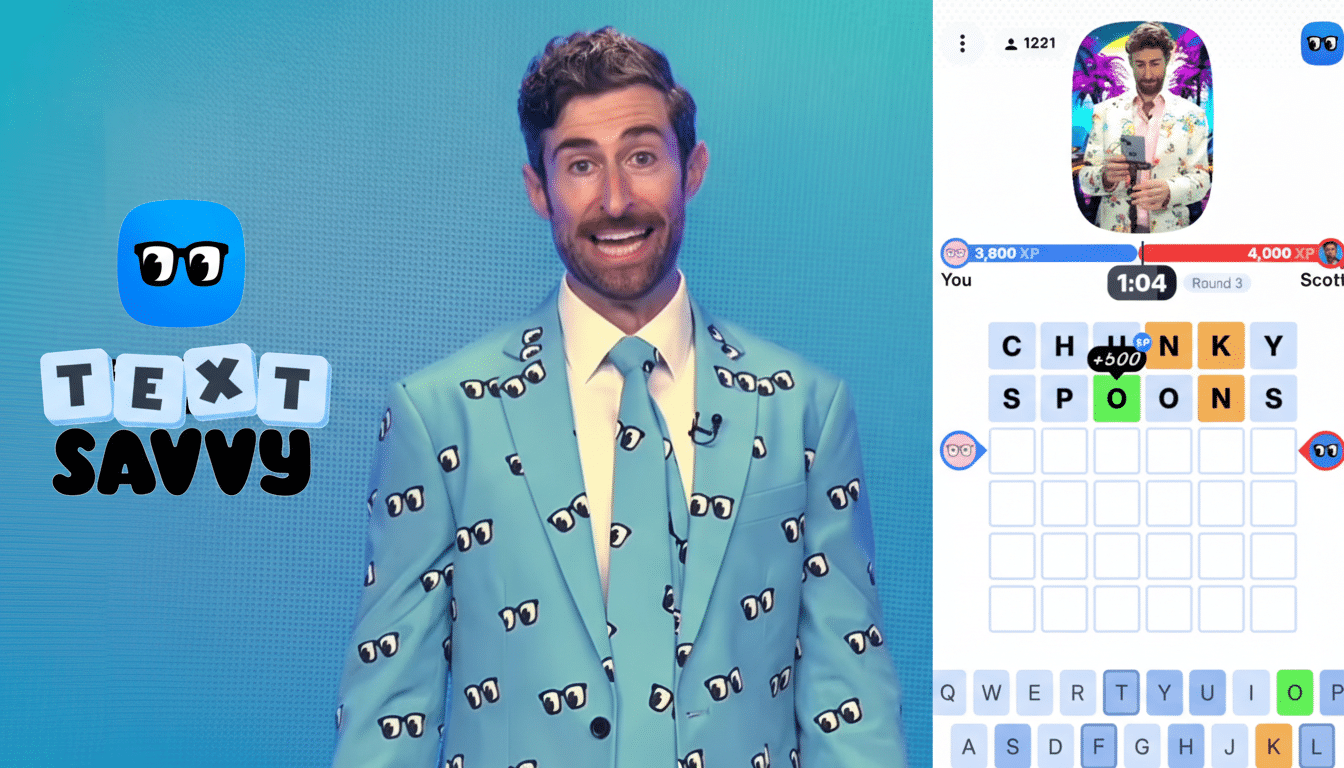
Quiz Daddy is clocking back in. Scott Rogowsky, the quick-witted host who turned HQ Trivia into appointment viewing, has returned with TextSavvy, a daily live mobile game show built around competitive word puzzles and real cash prizes. It’s familiar territory with a twist: instead of trivia, players square off against Rogowsky himself in fast-moving puzzles that nod to Wordle and Connections, designed for the streaming era’s short attention spans—and for a world where AI can look up answers in a snap.
From HQ Sensation to a New Playbook for Live Game Shows
HQ Trivia’s arc is hard to forget. At peak, the live quiz app attracted more than 2.4 million nightly viewers and racked up about 20 million downloads, turning daytime office breaks into nationwide viewing parties. It was co-created by the minds behind Vine, heralded by major news outlets, and studied by media analysts as a breakthrough in mobile-native live programming.
The implosion was just as dramatic. Internal turmoil, the tragic death of a co-founder, and an unsustainable model—giving away money while struggling to monetize—pushed the startup to the brink. The company reportedly raised $15 million at a $100 million valuation, but scale came with pressure to chase growth at all costs. Rogowsky, the face fans loved, was swept up in the fallout and moved on to other gigs, including a stint at MLB Network, before stepping away from show business for a time.
TextSavvy is a deliberate reset. The stakes are smaller by design, the team is lean, and the host’s persona—equal parts ringleader and stand-up—is once again the draw. It’s a reboot of the live game formula that keeps the energy and communal fun while ditching the extravagance that sank its predecessor.
How TextSavvy Works: Daily Word Duels With the Host
Each daily show is a duel: Rogowsky plays the same on-screen word challenges as the audience, creating a two-way match that’s more participatory than passive quizzing. By focusing on wordplay over trivia, TextSavvy sidesteps obvious AI-aided cheating and rewards pattern recognition, speed, and lateral thinking—areas where search engines are less helpful and humans still have an edge.
Payouts exist but remain modest. The largest single-game prize so far has landed around $400, a conscious contrast to the splashy jackpots that once defined live quiz apps. Rogowsky and his co-founders are self-funding the effort, and he has told viewers candidly that the operation is “low-budge” by intention. The goal is to build a sturdy habit loop—come back daily, play with the host, maybe win a few dollars—without lighting money on fire.
Early signals show appetite for the format. In a soft-launch “Season 0” designed to iron out kinks ahead of a broader release, TextSavvy has already peaked at roughly 4,000 concurrent participants with little fanfare. For context, HQ’s breakout was powered as much by watercooler buzz as by ads; TextSavvy appears to be embracing that grassroots path again.
The Business Model Test for Sustainable Live Game Shows
Rogowsky says he’s had investor interest but is wary of the growth-at-all-costs treadmill that often accompanies term sheets. That restraint aligns with lessons from HQ’s rise and fall: live game shows can attract huge crowds, but sustainable economics require more than spectacle. Expect TextSavvy to chase a pragmatic mix of revenue levers common to live digital entertainment—brand integrations, season passes or premium features, and community-driven perks—layered on only after retention is proven.
The unit economics will hinge on three numbers: daily active users, session retention, and average revenue per user. If daily visit streaks climb and prize pools stay proportional to engagement, the model can work without VC rocket fuel. Industry playbooks from the Interactive Advertising Bureau suggest that live, host-led sponsorships often command higher brand recall than static placements; that dynamic, plus the show’s built-in personality, could give TextSavvy more monetization flexibility than a generic puzzle app.
Why the Timing Looks Better Now for Live Word Games
Word games are having a cultural moment. The New York Times’ portfolio has made daily puzzles part of mainstream routine, and social platforms continue to experiment with live formats—from TikTok Live challenges to Facebook Watch-era trivia shows like Confetti. Meanwhile, market researchers such as Newzoo have consistently reported that mobile remains the largest slice of global games revenue, underscoring that phones are still the primary play space.
TextSavvy’s design leans into those realities: short sessions, a charismatic anchor, and puzzles that invite chatty, shareable bragging rights. Crucially, the host is also the opponent. That subtle shift transforms viewers from spectators into co-stars, a structural advantage for repeat attendance and community-building.
What to Watch Next for TextSavvy’s Growth and Features
The team is using its soft launch to tighten tech, calibrate difficulty, and tune payout mechanics. Key signals to monitor: streak features that nudge daily play, transparent anti-cheat safeguards, and sponsor integrations that feel additive rather than interruptive. If the show can grow a loyal core while keeping costs sane, TextSavvy could prove that live, mobile-native game shows still have legs—without needing a moonshot budget.
Rogowsky is betting that what won fans before still wins now: a live host who can riff, recover, and make even a wrong answer feel like part of the show. This time, he insists, the guardrails are stronger and the runway is longer. And if the early numbers are any indication, Quiz Daddy might have found the right riddle to solve.
