


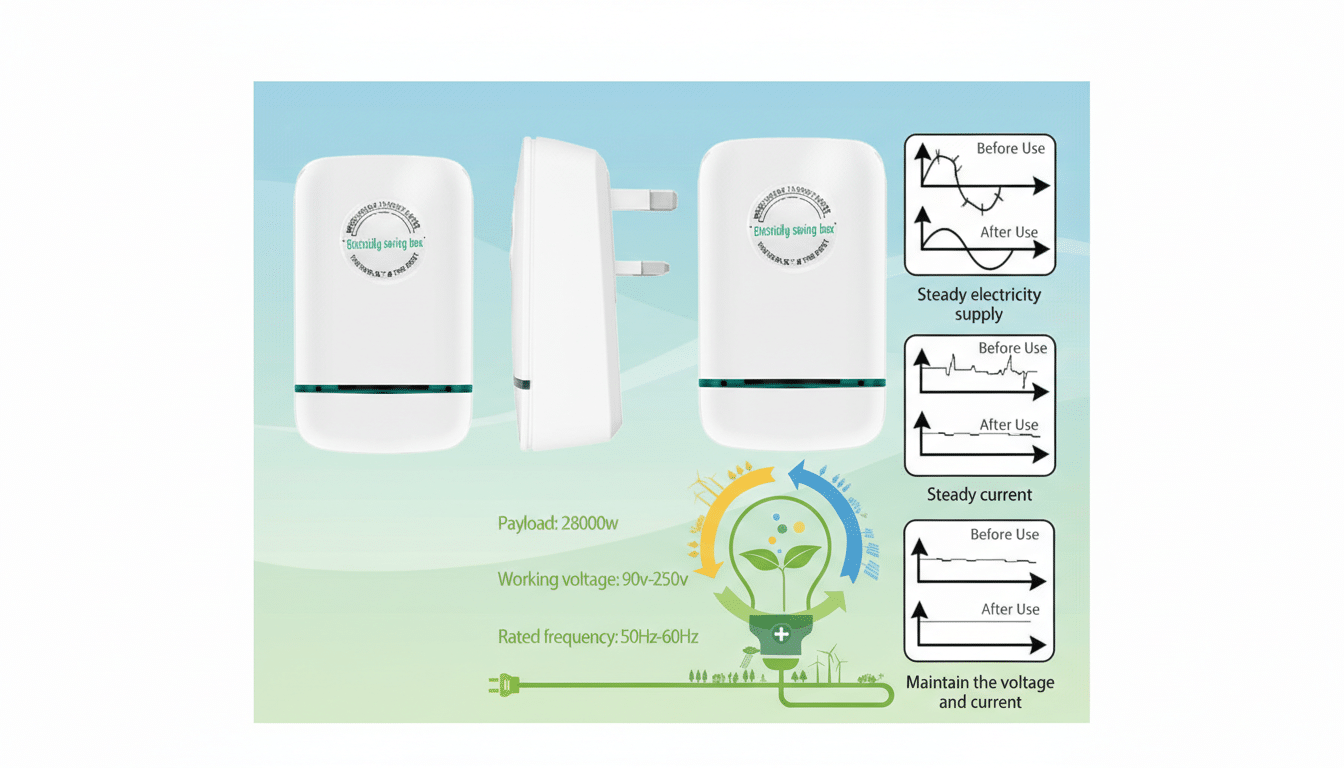
Plug-in “power saver” boxes have flooded online marketplaces, promising instant bill reductions with phrases like “optimizes energy use” and “extends appliance life.” After hands-on testing and teardown checks, most of these devices prove to be junk at best and hazardous at worst. One category, however, consistently delivers real savings and verifiable data: smart plugs with built-in energy monitoring.
Inside the “power saver” hype and unsafe claims
The pitch is slick: plug a small box into any outlet and watch your electricity costs fall. Many units arrive in repurposed pest-repeller shells, sporting vague safety labels, bogus test numbers, and flimsy components. Open them up and you’ll often find hair-thin wiring, poor soldering, and a “capacitor” that isn’t a capacitor at all when measured on a meter. Some units even use noncompliant plugs for the market they target.
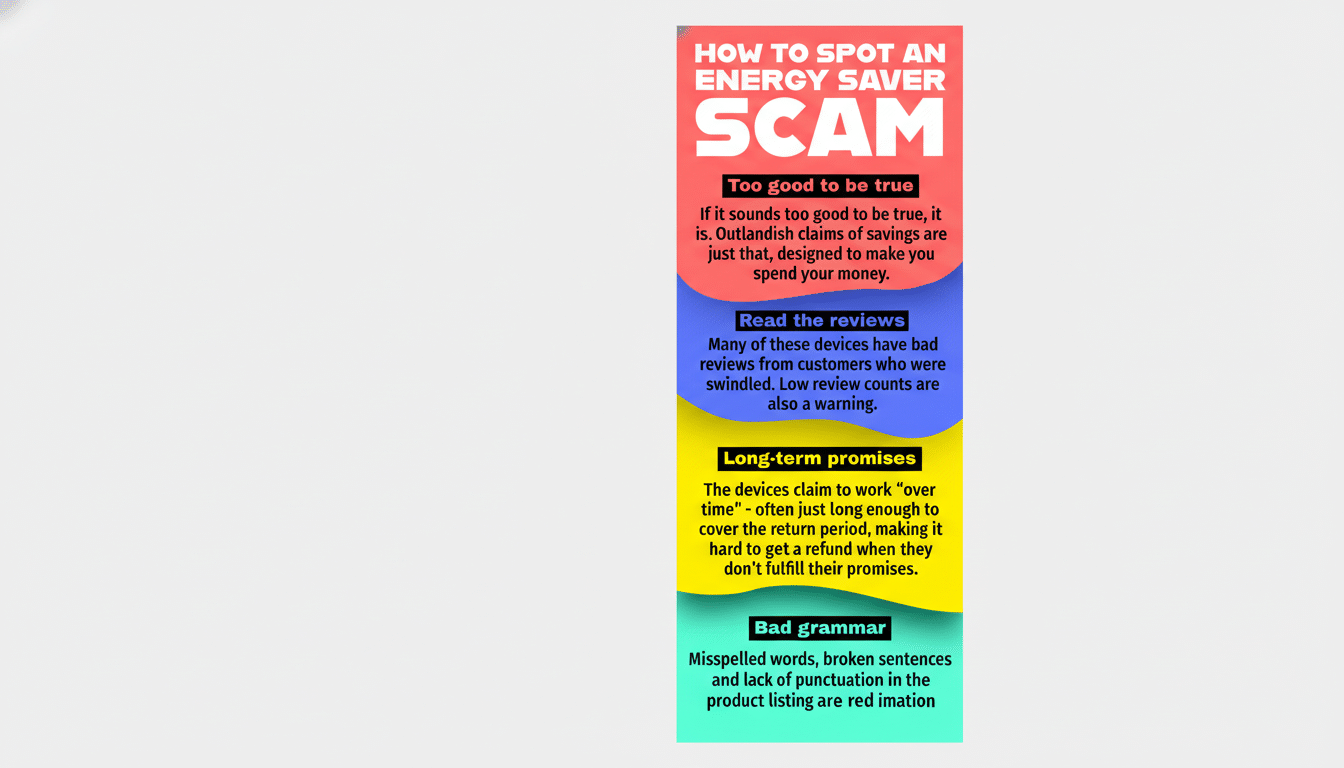
Regulators have noticed. The Federal Trade Commission has warned against devices that promise big reductions without credible testing, and the Australian Competition and Consumer Commission has cautioned consumers about “power saving box” scams sold under rotating brand names. UK Trading Standards has also flagged noncompliant, potentially unsafe plug-ins masquerading as energy savers.
Why Capacitor Boxes Do Not Cut Home Bills
Most residential customers are billed for kilowatt-hours, not power factor or reactive power. The capacitor-in-a-box concept is marketed as “power factor correction,” but in homes with predominantly modern electronics and appliances, improving power factor seldom reduces the energy the utility actually charges for. The Electric Power Research Institute has repeatedly found no meaningful kWh savings from these plug-in capacitor gadgets in typical household scenarios.
Worse, shoddy construction raises fire and shock risks. A token fuse doesn’t fix fundamental faults like undersized traces, inadequate creepage distances, or fake components. If a device cannot produce independent safety certifications (UL, ETL, TUV) that can be verified, it has no place in your wall outlet.
The Legit Option: A Smart Plug With Metering
There is one small, inexpensive device class that reliably helps lower bills when used thoughtfully: a smart plug with energy monitoring. These app-connected outlets let you measure real-time and cumulative consumption in kWh, schedule on/off times, and cut power to nonessential devices when you’re away. Idle draw is typically around 1 W, and reputable models carry genuine safety marks.
The impact is behavioral plus automated: seeing a game console idling at 10–15 W or a printer sipping power 24/7 nudges you to act, and schedules enforce that action daily. Smart power strips extend the idea to clusters of devices—TV, soundbar, set-top box—so you can shut down the whole stack overnight.
Realistic savings backed by data and real examples
Standby power—often called “vampire” or “always-on” load—accounts for roughly 5–10% of the typical home’s electricity use, according to the U.S. Department of Energy and research from Lawrence Berkeley National Laboratory. International energy bodies have reported that networked standby from connected devices is a growing slice of global consumption.
What does that mean in practice? Suppose your always-on baseline is 120 W. If smart plugs and schedules help you eliminate 50 W of nonessential load for 12 hours a day, that’s 0.6 kWh saved daily—about 18 kWh a month. At $0.15 per kWh, you’re saving roughly $2.70 monthly on that change alone. Stack similar reductions across a few rooms and you can chip away at several dollars per month without changing appliances.
The bigger win is discovering stealthy hogs. Energy monitoring often reveals space heaters left on low, dehumidifiers running longer than necessary, or gaming PCs idling at triple-digit watts. Scheduling or remote shutoff prevents these from quietly running for hours.
How to spot safe and effective gear for your home
- Look for verifiable third-party safety marks (UL, ETL, TUV) and model numbers you can check in public certification databases.
- Demand measurable features: per-outlet kWh tracking, scheduling, and usage history. If a product claims “up to 50%” savings without test data, walk away.
- Favor brands with transparent specifications, firmware updates, and clear support channels. Read teardown reviews from trusted engineers where available.
- Treat idle consumption as part of the math: a smart plug that draws ~1 W must control a device whose avoided usage is meaningfully higher for the schedule to pay off.
Bottom line: smart plugs deliver savings, not magic boxes
The little grey boxes that promise effortless savings are mostly smoke and mirrors, and in some cases, a safety risk. The only small device that repeatedly proves its worth is the smart plug with energy monitoring, used to reveal waste and automate shutoff. It won’t conjure miracle cuts, but it will give you control, data, and steady, real-world reductions—no fake capacitors required.
