


SanDisk is simplifying its consumer SSD lineup, with the familiar Western Digital Blue and Black labels being phased out as all those drives come together as part of a unified Optimus family targeting creatives, professionals, and gamers. The shift debuts with fresh product names, repackaging, and a clearer performance ladder to cut down on the maze of choices in stores.
Three Optimus Lines: The Replacement of WD Blue and Black
The Optimus umbrella is made of three tiers: Optimus GX Pro at the top for flagship-level performance, Optimus GX aimed at gaming speed and efficiency, and Optimus for balanced value focusing on content creators. In practice, the WD Black line moves into GX Pro and GX, while the WD Blue family turns into Optimus.
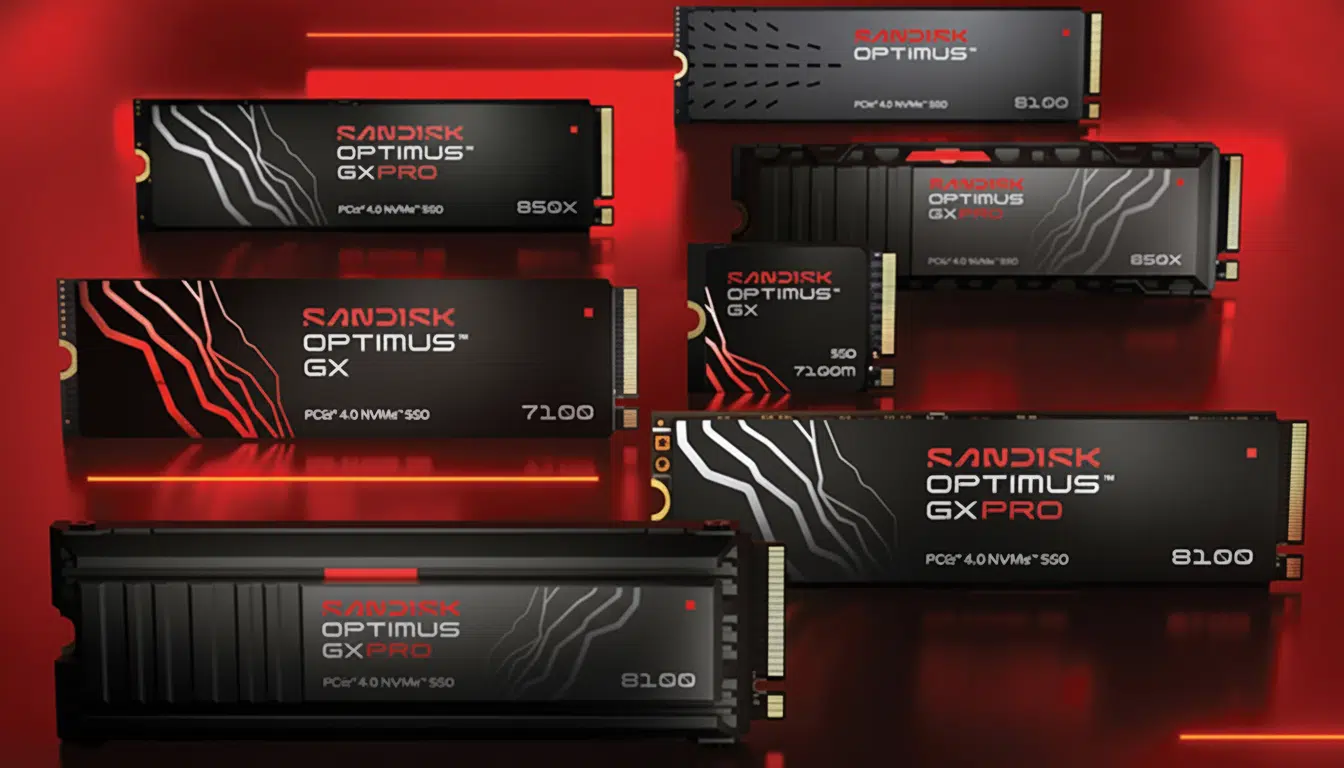
SanDisk claims GX Pro is the ultimate performance drive for AI PC builds, high-end gaming rigs, and workstation‑class desktop systems. Model mapping is straightforward: SN8100 becomes Optimus GX Pro 8100 and WD Black SN850X turns into Optimus GX Pro 850X, with the Optimus GX tier fusing gaming-tuned drives like the WD Black SN7100, favoring strong sustained throughput with a smaller power envelope. The Optimus family, as the mainstream tier targeting creators, consists of models such as SN5100, which is a compromise between cost, capacity, and consistency.
Beyond names, SanDisk is also bringing a consistent bold red/black/white livery that marks a visual departure from the traditional WD Blue and Black identities. That uniformity will help to make good, better, best easier to discern within the new family.
New M.2 2230 option aims at handheld gaming devices
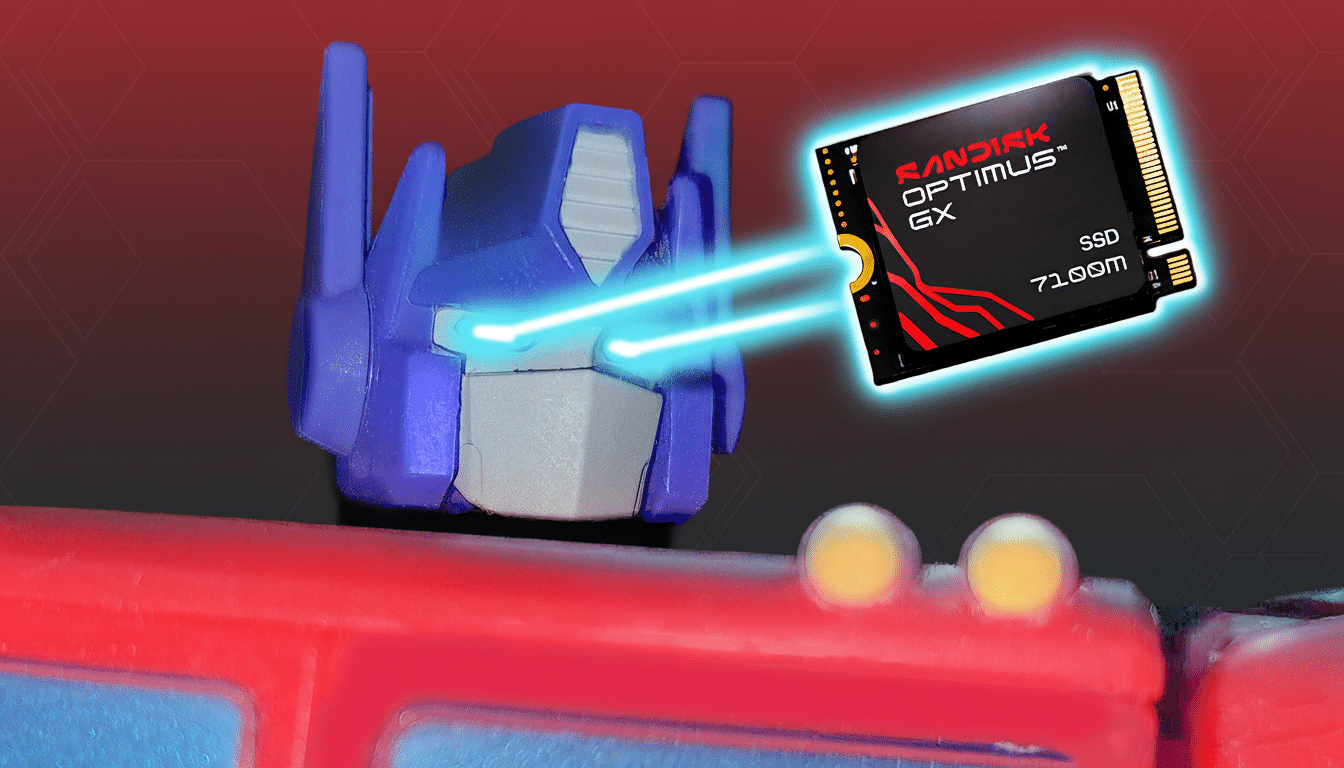
Among the first new arrivals is the Optimus GX 7100M, which is an M.2 2230 version designed for handheld gaming devices and extremely thin notebooks. Available in 1TB and 2TB capacities, this PCIe 4.0 x4 drive touts up to 7,250MB/s sequential reads (writes are rated at up to 6,900MB/s), which are fairly competitive numbers for the cramped quarters of a 2230 form factor that is common in things like the Steam Deck and ROG Ally devices as well as many new convertibles.
The 2230 surge is something of a sea change in the client SSD space. As handheld gaming PCs spread, demand for short PCB drives with desktop-level speeds is skyrocketing. This has led vendors to enable denser designs and better thermals in even smaller footprints. The GX 7100M speaks to that.
Brand strategy in a volatile flash memory market
This is not just a rebrand; it’s about channel clarity as much as it is what the product does. Western Digital took in SanDisk years ago to be more than just a hard drive maker, and later split off the flash business so each company could do what it does best. Pooling consumer SSDs under the SanDisk brand capitalizes on decades of flash equity, giving Western Digital some breathing space to focus on HDD leadership.
It also lands in the middle of a whipsaw flash cycle. TrendForce notes sudden NAND pricing fluctuations along with production reductions—which are subsequently followed by slower recovery as available storage inventories ease back a bit. Bringing sub-brands into a simpler architecture can lower marketing overhead, support retailers who wish to make clearer assortment choices, and provide SanDisk with more agility to grow SKUs as supply dynamics change.
For technology, the PCIe 4.0 line is still a good commonplace for most buyers to hit. Yes, PCIe 5.0 SSDs can run like the wind (12GB/s and up), but hotter operation and more expensive cooling are often expected. PCI-SIG’s specs confirm this: twice as much per-lane rate quite frequently dictates harsher thermal budgets in consumer PCs. In gaming and creator workloads, the right PCIe 4.0 drive, properly optimized in firmware, can give you effectively instantaneous load times without the double-down noise and heat trade-offs.
How Optimus stacks up for gamers and creators
Expect continuity where it matters. Take the GX Pro 850X, for example; users can expect that same blazing performance enthusiasts have come to love from the SN850X: fast sequential bursts and strong random responsiveness, which are a great sidekick for Microsoft DirectStorage titles and heavy asset pipelines. Content creators lugging around large RAW files or 4K video might find the Optimus tier a reasonable compromise, offering higher capacities at near-mainstream prices and consistent write performance.
There should be an easy upgrade path for console upgraders as well. Drives that previously fit PlayStation 5 bandwidth guidelines remain acceptable, only under different names, and prospective purchasers should always verify heatsink requirements in manufacturer specs before installing a module into a tight bay.
Competition isn’t standing still. At the high end, drives like Samsung’s 990 Pro, SK hynix’s Platinum P41, and PCIe 5.0 drives from Crucial and others raise a high bar. SanDisk’s response is focus: less labeling, clearer tiers, and targeted SKUs such as the 2230 GX 7100M to address growth niches.
Availability timeline and what shoppers should watch
You’ll start to see Optimus-branded drives replacing WD Blue and Black models in retail and e-tail channels soon. Packaging will change first, and shelf sets will be more widely impacted as inventories are replaced. Current warranties and support agreements for both WD Black and Blue drives are still in effect; SanDisk says the rebranding will not affect service obligations.
For shoppers, the plain English version is this: GX Pro translates to highest performance, GX means gaming-grade speed with balanced efficiency, and Optimus is a creator-class value. If you are devising an AI PC or a high-end gaming one, it is GX Pro all the way. If you need an ultrathin or handheld upgrade, look for the GX 7100M in M.2 2230. If you want reliable capacity without overpaying, creators might consider custom Optimus models based on SN5100-class silicon.
It’s been a heck of a long time since the last Optimus drive, but as the dust settles on a volatile flash market and PCIe 5.0 waits in the wings, we should see SanDisk grow out its Optimus line with more capacities and thermal options.
For now, the story is pleasingly simple: same proven SSD platforms, clearer branding, and product tiers that more closely align to how people actually buy storage.
