


Samsung’s long-teased trifold phone could still come to US shelves before the end of the year, a new report claims — with the company said to be considering a stateside release even though exact launch plans are apparently still up in the air.
If it comes to pass, it would represent the most ambitious foldable entry yet in the US — and could stretch the category from novelty toward truly multi-form-factor products.
- What the new report really says about US launch
- Why a US debut would be significant for foldables
- How a trifold could upend the foldable playbook
- When your market launch window opens and what to look for
- Price, production and supply chain realities
- The bottom line on Samsung’s potential US trifold launch
What the new report really says about US launch
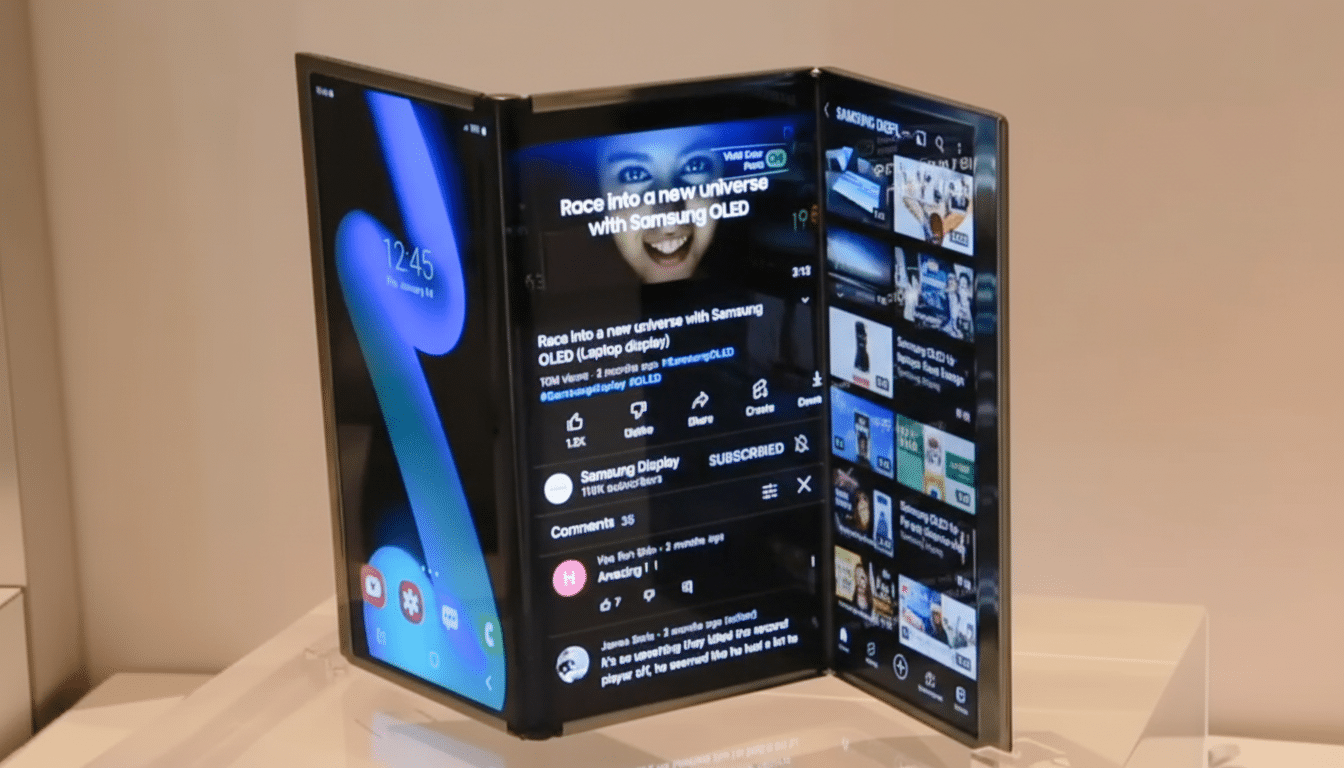
The company is investigating a US release period for its first trifold, but no decision has been made yet, people familiar with Samsung’s plans have told CNN. Korean outlet ET News has also suggested a dedicated launch event sometime toward the end of the year. Samsung, which is no stranger to launching bleeding-edge hardware first in its native South Korea, is reportedly debating whether this device should see a wider release — essentially getting the US involved at launch — or whether it should start out somewhat constrained.
The concept has already been teased on a number of occasions by the company. Samsung Display unveiled “Flex S” and “Flex G” prototypes with three panels and two hinges, folding a phone-sized device into mini-tablet and tablet-like configurations at industry events. The smartphone version — widely known as the “Trifold Galaxy” in the rumor mill — would be how those designs finally hit the market.
Why a US debut would be significant for foldables
The US is among the world’s most lucrative premium-phone markets, but adoption for foldables has paled in comparison to regions including China and South Korea, where carrier subsidies, local brands, and aggressive pricing have forced more of an appetite for experimentation. Counterpoint Research estimates that overall volume of foldables worldwide was more than 16 million units last year, with double-digit growth compared to the previous year, and the US total is a small fraction.
Releasing a trifold here would be a way to gauge excitement over something that’s more than just a taller screen. It would also be a vote of confidence from Samsung in terms of durability, app tweaking, and carrier support at large. In the past, Samsung has brought niche devices to certain markets only — think special-edition Folds or limited-run models — so a US launch of the first-generation trifold would be a significant departure from that playbook.
How a trifold could upend the foldable playbook
Two hinges unlock layouts that no single-fold form factor you’ll find today can match: phone mode for one-handed use, stand mode for dual-app multitasking like a laptop, and full tablet canvas for productivity or media. Samsung’s One UI already has a taskbar, multi-window, and drag-and-drop; a trifold could layer in three-pane views and more comprehensive app continuity as you transition across each phase.
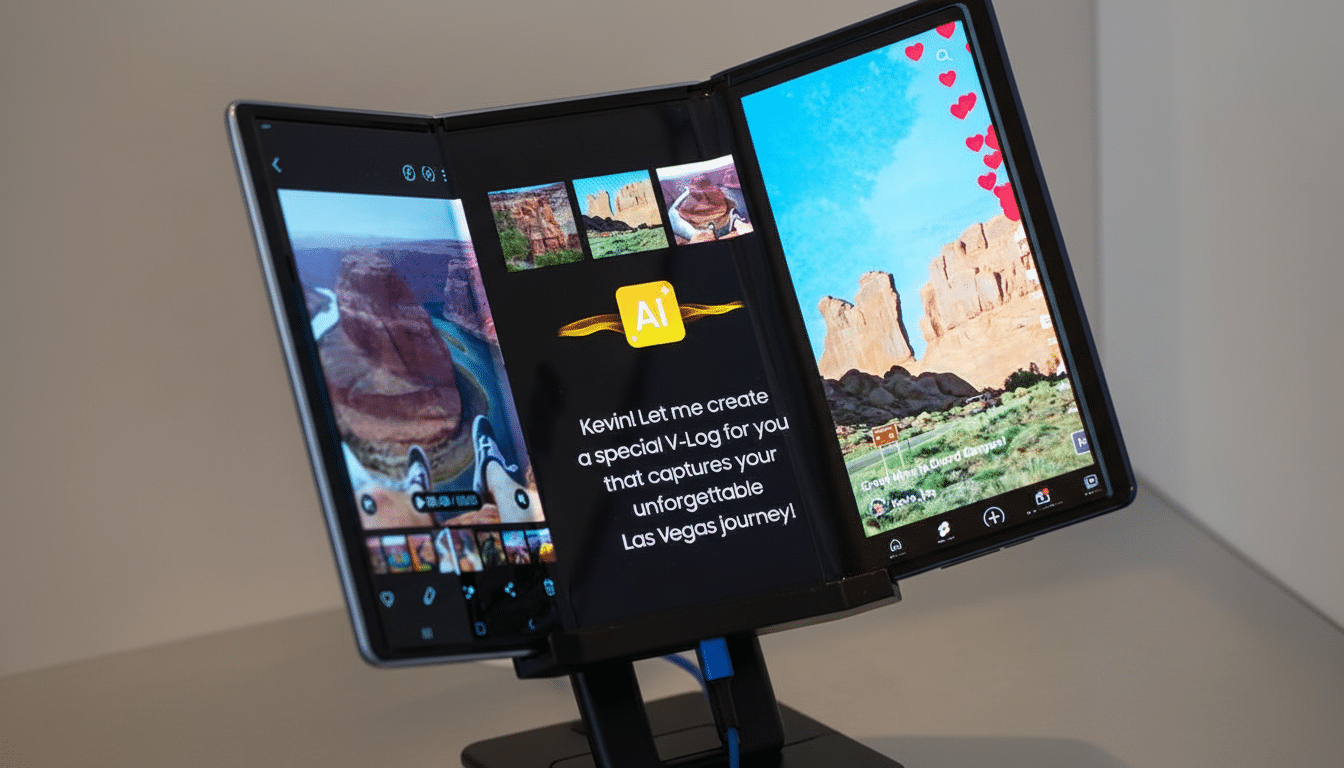
Engineering remains the tricky part. Three display segments, more moving parts, and a larger surface area raise risks around weight, thickness, and durability. Ultra Thin Glass has to bend on two radii, crease visibility must be controlled in three panels, and battery capacity needs to ramp up without making it a brick. Then there is water resistance — many of Samsung’s top-of-the-line Folds tend to end up getting IP ratings, but adding seals over two hinges is even harder than it is for one. Pen input is also a question mark; supporting a stylus typically means thicker glass stacks and tighter digitizer tolerances.
When your market launch window opens and what to look for
Latest rumors from Korea indicate that you shouldn’t count Samsung out yet — the company is reportedly preparing another Unpacked event in September or October, with the trifold taking center stage. There’s also some chatter that a more comprehensive mixed-reality push could be on the way, too — Samsung’s “Galaxy XR” name has popped up in software references — but industry sources suggest that glasses-like products are farther away. Signs to look for, specifically with the trifold, are regulatory filings in the US, carrier test builds, and developer documentation updates relating to multi-window behaviors that extend beyond typical dual-screen setups.
Price, production and supply chain realities
Both that tri-panel stack and the hardware of two reversed hinges will add to the bill of materials. Display Supply Chain Consultants has warned for years that yield and lamination complexity are the leading cost drivers for foldables; add a third panel, and the math gets even harder. Anticipate any first-gen trifold to be priced at a premium over the reigning flagship foldables. That said, Samsung’s scale and its vertical ties to Samsung Display arguably give it the best shot at competitive pricing among global brands.
Thermals and power, too, will be a key factor in the component mix. A bigger canvas cries out for a high-brightness OLED, but we also need sustained nits and refresh rates to coexist alongside battery life in tablet mode. Efficient chipsets, stacked or segmented battery arrays, and smarter refresh-rate shifting will be integral to making a trifold feel like anything other than a tech demo marvel.
The bottom line on Samsung’s potential US trifold launch
The reporting agrees on one thing: Samsung hasn’t ruled out its first trifold launch in the US this year. If the company gives the device a greenlight, it could end up redefining what “phone-plus-tablet” signifies and force app makers to start working in three stages instead of two. If not, then look for it to roll out in stages elsewhere first; we’ve seen Samsung play that card before, as it tweaks the hardware, software, and carrier partnerships necessary to make a genuinely new form factor go mass-market in the US.
