


Samsung
Samsung’s first tri-folding phone stuffs a tablet-class canvas into a body that remains deceptively thin, and the magic isn’t in the hinge or display—it’s in a custom wireless charging module.
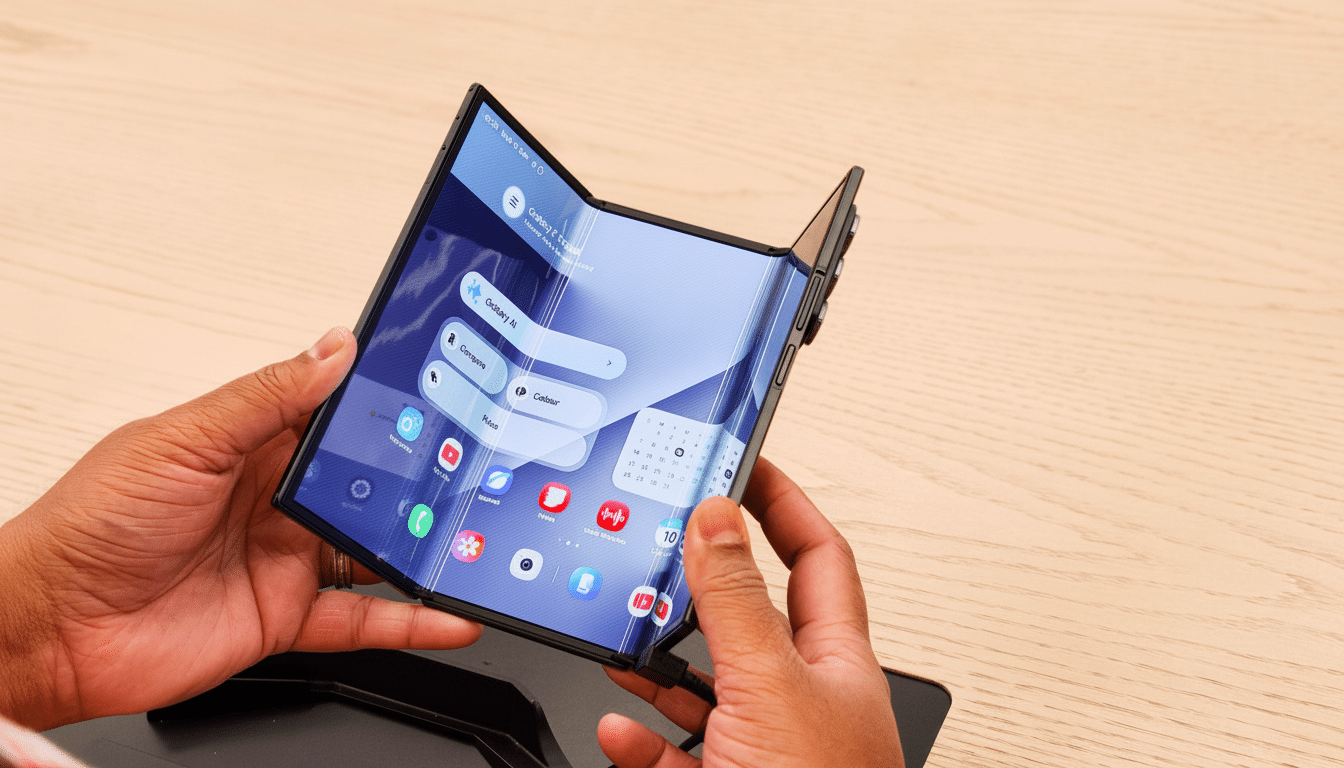
To maintain the Galaxy Z TriFold’s slender 12.9mm closed frame and a wafer-thin 3.9mm when unfolded, Samsung has tasked supplier Witz with constructing an ultra-slim charging coil bespoke to the phone’s distinct stack design internally, according to reporting collated by SamMobile referencing ET News.
Why You Want a Custom Coil in a Tri-fold Phone
Wireless charging requires hardware that is deceptively bulky. A standard module is usually composed of a copper coil, ferrite shield, thermal layer, and foreign object detection components—all of which might add up to about 1mm or more once you throw in adhesives and protection film. In a tri-fold, in which three chassis segments have to slot together into a tight Z-stack, every fraction of a millimeter counts.
Off-the-shelf components would have resulted in compromises—either a smaller battery or thicker spine. Samsung’s solution was a coil designed to the precise footprint and curvature of the TriFold’s internal frame. Witz, a longtime partner with origins in Samsung Electro-Mechanics, developed the module that fits to the contours of the device but maintains magnetic properties indispensable for power transfer stability. The result: no visible hump, fewer compromises on cell capacity and, theoretically at least, better thermals under load.
The method is similar to how laptop manufacturers hand-tune heat pipes or camera companies machine custom sensor shields. Custom parts are pricier and add complexity to the supply chain, but they unlock dimensions that commodity components can’t.
Qi2-Ready Wireless Charging Comes With a Catch
The TriFold is compatible with 15W wireless charging using the Wireless Power Consortium’s Qi profile, and Samsung has dubbed it “Qi2 Ready.” Qi2 standardizes magnetic alignment (a concept popularized by MagSafe) through the Magnetic Power Profile. But the TriFold does not offer built-in magnets. That means you’ll have Qi2 interoperability on chargers, but will need a magnetic case to snap on pucks and wallets with the familiar click.
Day after day, it’s a trade-off between the thin and malleable. You can set the phone on any standard Qi pad for 15W speeds—matching what Samsung’s big foldable line has had all along—and add magnets only when you need them through an accessory case. Accessories are more widely available for Qi2 magnets, which most recent Android flagships and current iPhones use, but they also take up valuable space inside the device with the ring magnet and reinforcement structure.
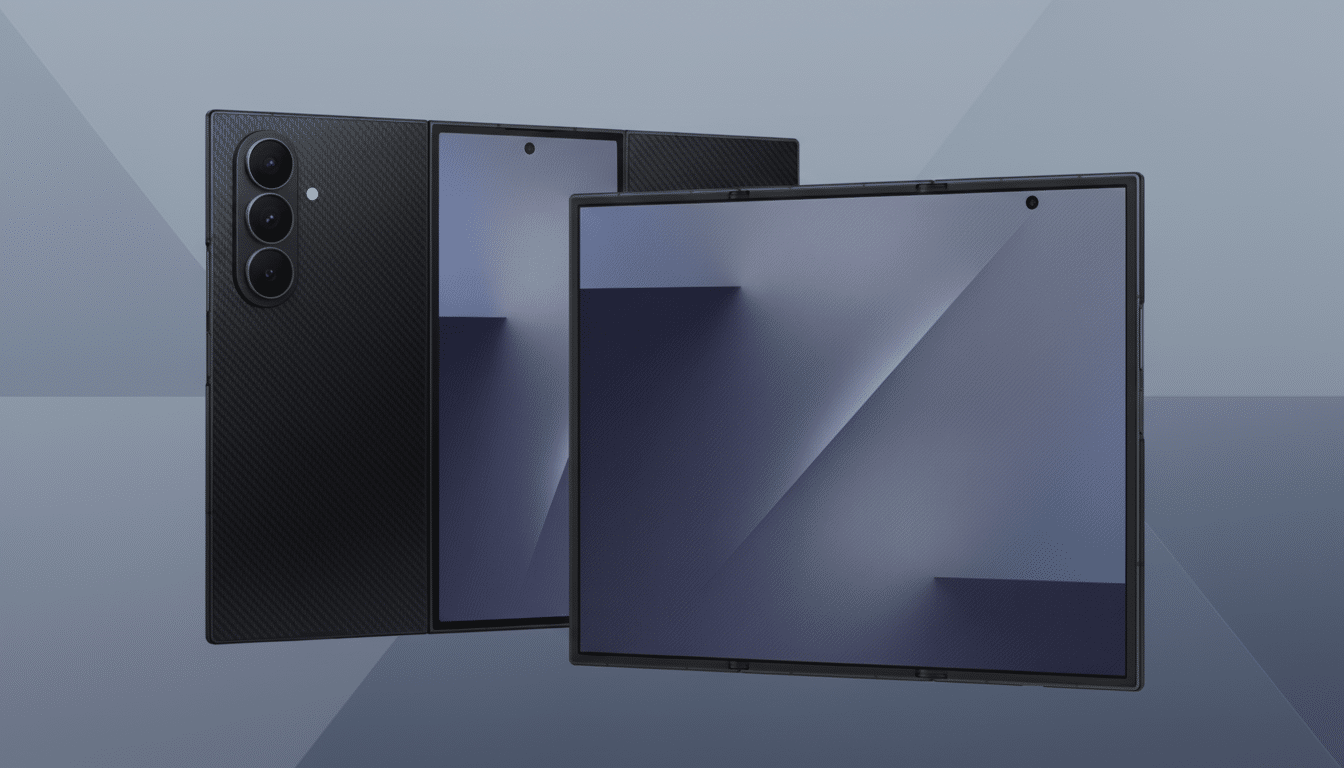
Battery and charging numbers for the Galaxy Z TriFold
The battery, meanwhile, is massive for such a svelte device: 5,600mAh spread across three cells (a natural configuration for a triptych smartphone). Wired charging exceeds 45W while reverse wireless output is 4.5W for earbuds or wearables. On paper, 15W wireless could certainly seem conservative compared to rumors of faster coils making their way into future slab phones, but sustained performance often matters more when it comes to thin devices that can throttle speeds due to heat building up. A thinner, well-shielded coil could also keep rates steadier through longer sessions.
The larger charging landscape is also in a state of flux. The WPC’s Qi2 standard would attempt to even out those power levels and alignment across brands, minimizing frustration with “sweet spots” and wasted energy. By making sure its proprietary module is Qi2-ready even without magnets, Samsung has aligned the TriFold to capitalize on an evolving charger ecosystem while maintaining the sleek shape of the phone.
Building the TriFold compromise around space and heat
Tri-fold hardware multiplies the typical foldable equation: more hinges, more display routing, more possible heat sources. Thinner, cooler, stiffer, every part must be. A custom charging module is a sensible release valve, clearing space for hinge mechanics and board layouts and sparing the localized heat that otherwise ripples into the flexible OLED layers.
It also signals a larger strategy. Samsung has incrementally pared down its folding phones by rethinking stack-ups—from a new ultra-thin glass to redesigned hinge cams for lower-profile batteries. The TriFold’s custom coil is yet another expression of that philosophy, a constant source of inspiration that the most meaningful gains sometimes come from the silent parts very few users will ever see.
Availability and market context for Galaxy Z TriFold
The Galaxy Z TriFold is available for sale in South Korea and China with a US release planned for the first quarter of 2026. That staggered release lets Samsung scale up production of specialized components like the Witz module and road-test durability in the wild—sensible for a form factor that’s still figuring out what it wants to be beyond prototypes.
Counterpoint Research analysts have predicted that the number of foldables shipped each year will top 20 million as foldable designs become slimmer, lighter, and more robust. If the TriFold can manage modern, tablet-like productivity without pocket bulge—and delivers it reliably—custom components like this ultra-thin coil might be more than a bespoke exception; they may become standard practice.
