


Samsung’s most audacious foldable yet is reportedly a money-loser on every sale. Korean outlet The Bell, as relayed by 9to5Google, reports that the Galaxy Z Trifold is being sold below cost despite its eye-watering sticker price of roughly KRW 3,594,000, or about $2,500. That helps explain why availability is limited and why Samsung is positioning the device as a showcase rather than a mass-market upgrade.
Samsung executives in Korea have framed the Trifold as a special-edition product built to get early adopters hands-on with a new form factor, even as component prices and manufacturing challenges keep costs high. In other words, the company appears more interested in accelerating the category than squeezing a margin from the first wave of units.

Why Samsung Would Ship a Loss-Making Trifold
Tech giants sometimes accept early losses on halo hardware to buy time for supply chains to mature and for software ecosystems to catch up. High-end game consoles routinely launched at a loss before component prices fell and efficiencies kicked in.
Samsung’s calculus with the Trifold looks similar: seed the market, claim mindshare in a new device class, and lower the cost curve with each production run.
There’s also brand and ecosystem value at stake. Foldables are a segment where Samsung already leads by volume, and a tri-folding device pushes that narrative forward. Getting developers and power users engaged now can pay off later, when more affordable, higher-margin versions arrive.
What Is Behind the High Bill of Materials
Trifold is natively an expensive parts list. A large, single OLED that folds twice, the ultrathin glass with multi-layers of protection, the adhesive technology, and the hinge system more complicated than a conventional book-style folding. Each added fold increases the durability needed and slows assembly time; yield rates for these large, flimsy panels are lower than those for regular displays and therefore cost more.
Memory and storage serve as another cost center. High-end foldables often serve up plenty of RAM and oodles of storage to match their flagship status, and memory prices are in flux. Samsung has admitted that component pricing — memory in specific — has proved a barrier to releasing the Trifold at its actual cost of purchase.
Display Supply Chain Consultants analysts have previously estimated that bills of materials for top-tier foldables run over $1,000 before warranty reserves are set aside and money is spent on marketing, distribution, and retailer costs or margins.
A secondary fold, a more resilient hinge assembly, and extra structural parts can easily add hundreds of dollars. Add in R&D amortization and limited production volumes, and the economics can go south even at $2,500.
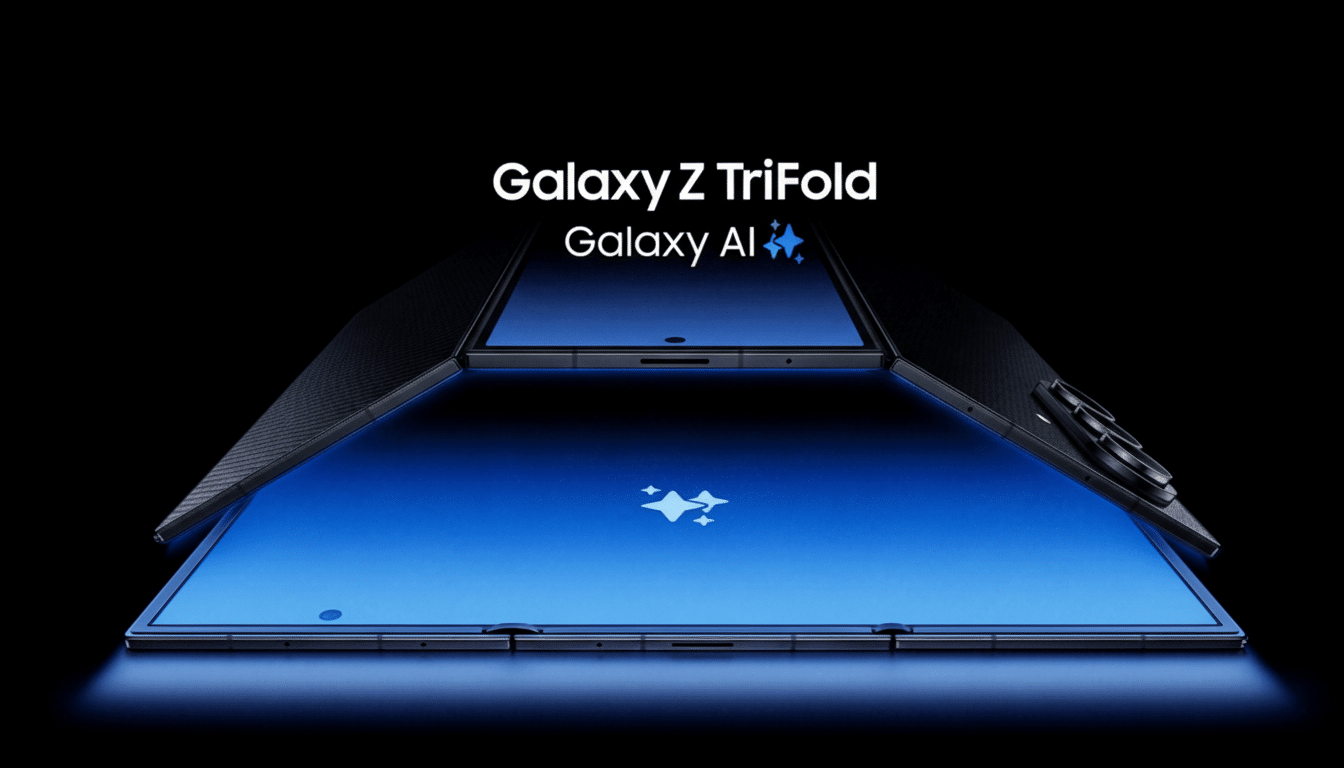
Diluted Rollout and Pricing Indicators for the Trifold
Divulging few details lowers the risk for Samsung. Centering sales in select markets allows the company to control support, track real-world durability, and refine build processes without overcommitting to an explosion of volume across the globe. Scarcity also manages expectations: this is a tech demonstrator at speculative prices, not a mainstream phone.
Retail prices are only a piece of the story. And thanks to carriers and trade-in programs, as well for consumers, those payment-plan sales can soften the upfront costs significantly, even if Samsung’s per-unit economics remain underwater. Look for aggressive bundles, financing deals, and short-term rebates to help keep the sticker shock at bay while Samsung collects data on usage — and returns.
The product is not yet in the U.S., and Samsung has hinted at a different launch window.
That time allows the company to work on yields, negotiate better terms with suppliers, and perhaps make changes in configuration or pricing before rolling out more broadly.
What Matters Most for Foldables in the Market Today
Foldables currently represent a small — but fast-growing — sliver of the smartphone pie. Shipments were estimated at around 20 million units in 2020 by Counterpoint Research, which noted that Samsung continued to dominate the category even as competition from Huawei, Honor, and others grew. A tri-fold design might help push the form factor further into tablet replacement territory, increasing use cases for productivity, creative work, and gaming.
Software is the linchpin. There already can be advanced layouts on Android’s big-screen features and Samsung’s One UI multitasking, of course, but tri-folding introduces new continuity and app-scaling scenarios. By giving enthusiasts and developers an early taste, Samsung has the added benefit of pushing app makers to optimize, which in turn makes a case for future cheaper models.
The Bottom Line on Samsung’s Galaxy Z Trifold Strategy
It’s a calculated roll of the dice on learning curves and leadership, to sell the Galaxy Z Trifold at a loss. When panel yields get better, hinge designs become easier, and parts costs fall — which usually drop by double digits over the course of a year — Samsung will have breathing room to drive later generations toward profitability. For now, the Trifold serves as a showpiece: an expensive, limited-availability device designed to demonstrate what can be done and help make foldables most people will actually buy at some point.
