


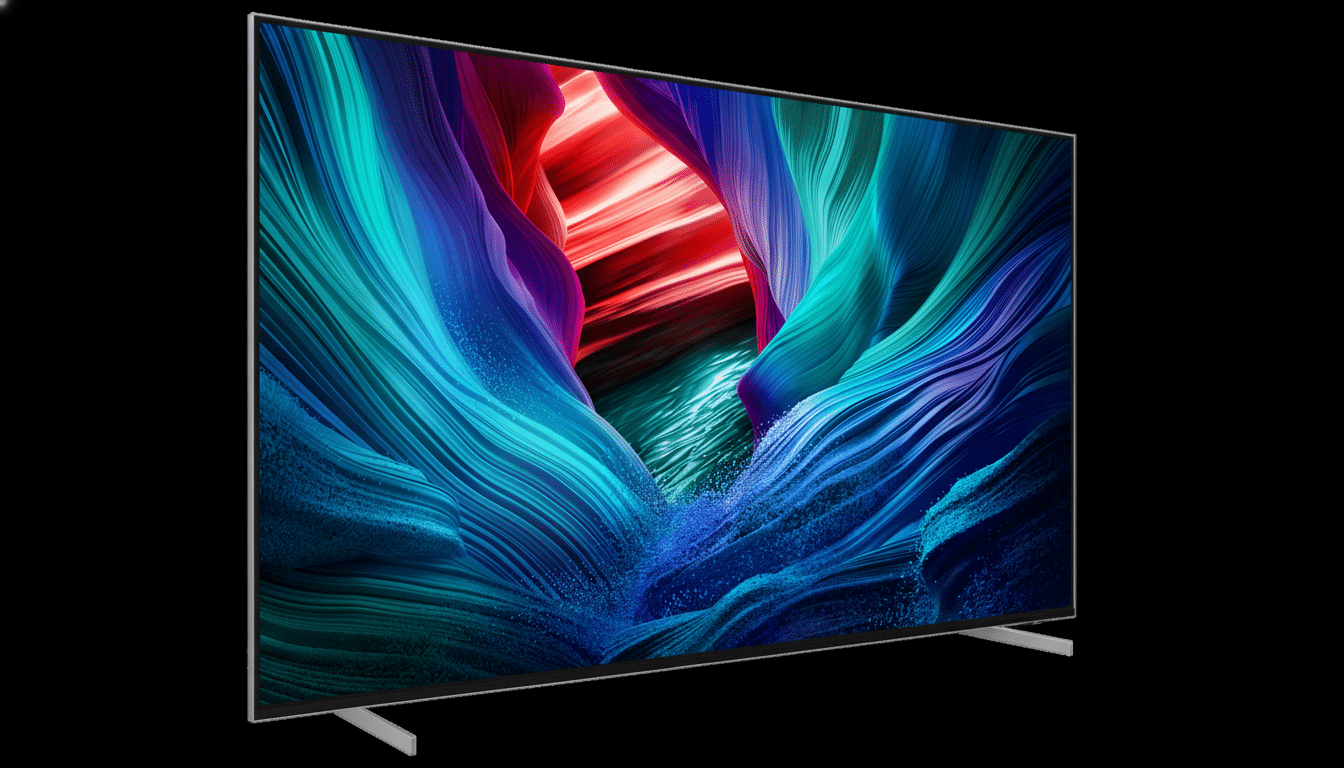
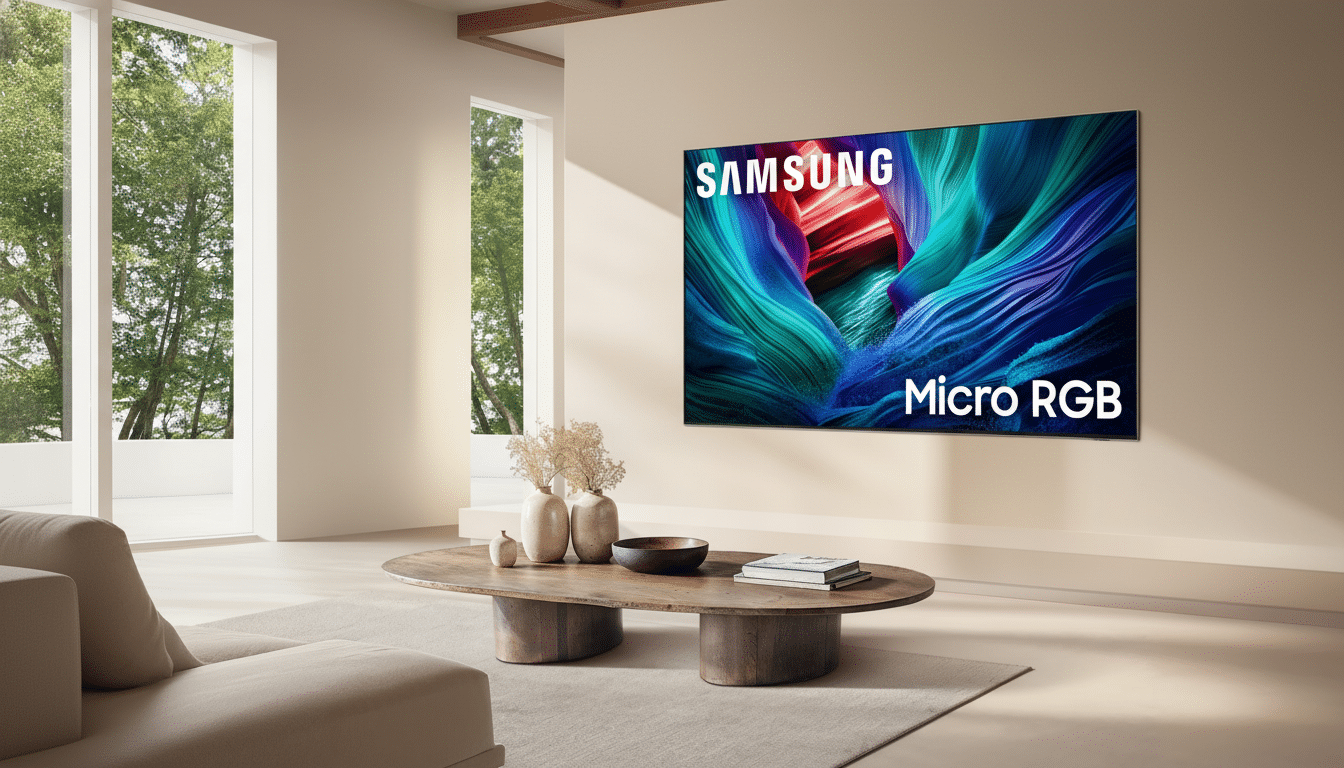
Samsung is showcasing a full Micro RGB TV lineup that runs from a statement-piece 115 inches to living room–friendly 55 inches, signaling that tricolor-LED-backlit screens are about to leap from the TVs of oligarchs and modern-day Medici types to those in your group-house apartment. The move lands right before CES. Color performance claims and real-world demos will likely dominate TV talk there.
New sizes aren’t just the headline — it’s the smaller sizes. By creating denser arrays of miniaturized red, green, and blue LED emitters, Samsung is looking to deliver the same gargantuan color and punch that turned heads in 100+ inch models, but in sizes buyers actually install. If it’s pulled off, Micro RGB could be the most significant TV hardware upgrade since mini-LED.
Why Smaller Micro RGB TV Sizes Really Matter Now
Early Micro RGB sets were spectacular and spectacularly expensive. Recent models, such as 116-inch flagships in RGB LED form, have hovered around $24,999, with the entry 115-inch closer to $29,999, and 100-class options still cresting five figures. That instantly limits adoption. Now, applying the same platform to three sizes in 75, 65, and 55 inches opens things up to a much wider potential market and allows aggressive price positioning.
There’s a straightforward market reality in play here: some 60% of global premium TV shipments fall into the 55–65-inch size groups, according to Omdia. Any advance that is confined to above 100 inches is a lab demo masquerading. Small emitters and optics, if you can get them into mainstream panels, suggest higher manufacturing yields, increased supply, and downward pricing pressures. This would also open up more homes if they can accommodate the tech.
How Micro RGB Backlighting Works Inside These TVs
Traditional LED and mini-LED TVs employ a backlight of white or blue LEDs, arranged behind an LCD panel. Those LEDs adjust luminance through local dimming zones, and the LCD pixels and color filters (sometimes assisted by quantum dots) are responsible for color. Micro RGB is different. It puts small clusters of red, green, and blue LEDs all over the back as the backlight source itself, allowing the TV to not only change brightness but also adjust the spectral mix behind every part of what you’re watching.
That spectral precision is why Samsung and other manufacturers are boasting near-full Rec. 2020 (BT.2020) color coverage — a vast color gamut specified by bodies such as SMPTE and included in UHD requirements from the UHD Alliance. Most high-end TVs top out at about 95–99% of DCI-P3, the lesser digital cinema gamut. Tricolor LED backlights surpass DCI-P3 and head toward the edges of BT.2020, which increases both saturation and color volume at high brightness.
So what do we know so far? One: a 116-inch RGB-backlit model from another company produced some of the brightest images and widest color results that some reviewers have ever measured, covering more of BT.2020 than traditional sets — but not nearly all of it. All else being equal, if Samsung’s smaller Micro RGB units can produce colors as robust and maintain improvements to uniformity (including both the photon density and zone density), then the new tech is going to have a noticeable impact on HDR movies and games.
Picture Pros and Trade-Offs Versus Today’s OLED TVs
Look for multi-thousand-nit peaks, wide color volume, and aggressive local dimming. These on-paper performance attributes help HDR highlights pop and wide-gamut content shine, especially titles that were mastered at higher peak targets with broader primaries. The trade-off compared to OLED is local dimming physics: zones light up patches, not pixels, so bright objects against deep blacks can show halos. Smaller, more tightly packed RGB emitters and smarter algorithms reduce blooming, but still don’t get rid of it completely as with OLED’s per-pixel control.
For gaming, Samsung usually packs its top-end TVs with 4K at triple-digit refresh rates, VRR, and low-latency modes. The question is whether the color and brightness advantage translates to higher frame rates in a non-clipping or tone-mapping scenario. Reviewers will also be watching viewing angles, because high-output LCD stacks can lose saturation off-axis if optical layers aren’t carefully tuned.
Pricing and Features to Watch as CES Demos Arrive
Samsung did not announce prices, but smaller screens in a single series usually drop by a major margin. That puts 65-inch Micro RGB sets in conflict with top-tier OLED models, which tend to hover near the $3,000–$3,500 range before discounts kick in during certain times of year. Whether Micro RGB will be a premium feature is, of course, going to depend on verified color metrics as well as perceived blooming and overall calibration flexibility.
At CES, you can expect actual data and specs that matter:
- Measured Rec.2020 (BT.2020) coverage
- Peak and sustained brightness
- Local dimming zone counts and uniformity
- Color volume at high luminance and ABL behavior
- Panel and processing: true 10-bit with accurate 12-bit internal processing
- Tone-mapping fidelity for HDR10 and HDR10+
- Full-bandwidth HDMI 2.1 across multiple ports for consoles and PCs
Competitive Context Across LG, Hisense and MicroLED
Samsung isn’t alone. LG has also teased its own Micro RGB evo approach, whereas Hisense brands its tri-color backlights as RGB Mini-LED. Meanwhile, “pure” MicroLED — think Samsung’s The Wall — still remains aspirational for consumers both due to the cost and the requirement of professional installation. If Micro RGB backlighting provides most of MicroLED’s color advantages via an LCD stack at orders of magnitude lower prices, it might actually be the practical path to next-gen color for a few years.
The bottom line: By cramming a tri-color LED array into sizes of 55–75 inches, Samsung is shooting where the market actually buys. If lab claims make it to living rooms — wider-than-P3 color, searing HDR, and tighter blooming control — Micro RGB won’t be a CES demo only. It’s going to be the big TV tech to beat.
