


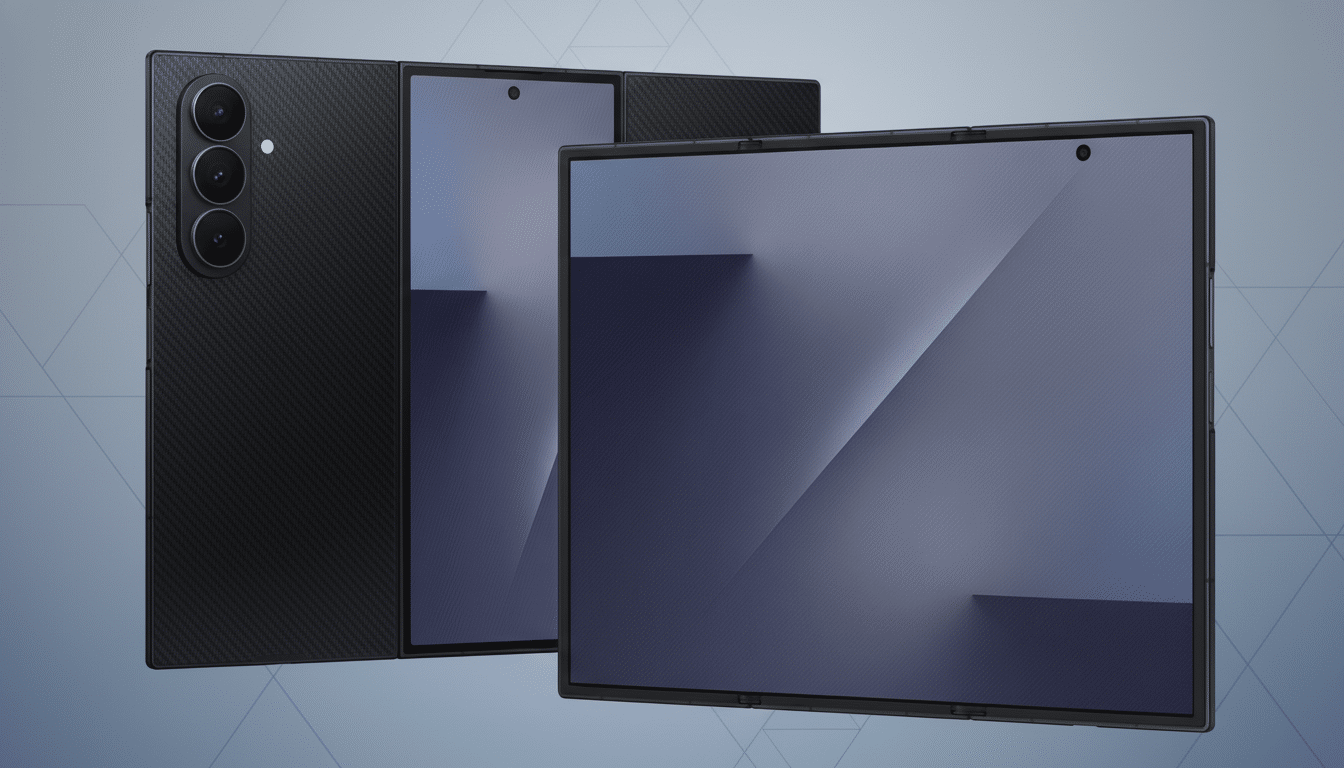
Samsung’s most audacious foldable yet is finally hitting US shelves. The Galaxy Z TriFold, the first commercially available triple-fold smartphone in the country, arrives with a sticker price of $2,899 and a very deliberate pitch: a pocketable phone that opens into a 10-inch productivity canvas.
Unlike a standard book-style foldable, the TriFold hinges twice, creating three distinct panels that unfurl into tablet territory. It’s an engineering flex—and a clear signal that Samsung sees ultra-premium foldables as the next frontier for power users and early adopters.
Sales Begin in the US via Samsung Online and Select Stores
The Galaxy Z TriFold will be sold through Samsung’s website and a handful of Samsung Experience Stores in the US, with locations concentrated in California, Minnesota, New York, and Texas. There are no preorders, so inventory will go straight to general sale. Given that Samsung’s initial run in South Korea reportedly sold out within minutes, expect constrained supply at launch.
If you want hands-on time before buying, your best bet is one of those Experience Stores, which are showcasing the device ahead of broader availability. The TriFold ships in a single Crafted Black finish with 512GB of storage.
A Triple-Fold That Unfolds Into A 10-Inch Canvas
Open the TriFold fully and you get a 10-inch display with a 120Hz adaptive refresh rate and 269 pixels per inch. That pixel density lands right in tablet territory—comparable to many 10–11-inch slates—so documents, spreadsheets, and comics should look crisp without the grain you sometimes see on large foldables.
On the outside, a 6.5-inch Full HD cover screen reaches a peak 2,600 nits, which is in the same league as the brightest flagship phones. The 120Hz cover and inner panels mean the UI stays fluid whether you’re swiping through the outer display or juggling apps across the interior.
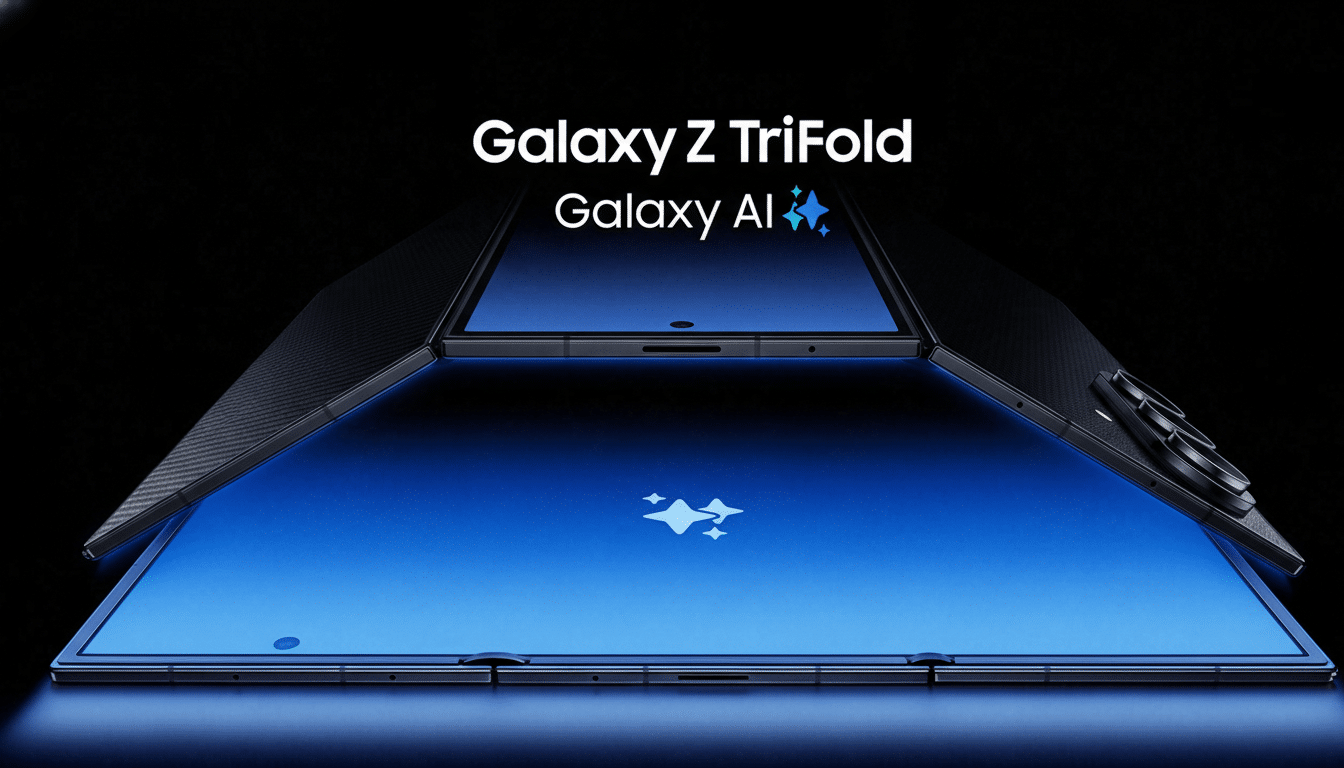
Samsung’s One UI 8 on Android 16 leans into the tri-panel format with multi-window and drag-and-drop tools designed for serious multitasking. Think three apps side by side, quick clipboard sharing, and flexible layouts that shift as you fold. The idea is to make the TriFold feel like a tiny, modular workstation rather than a phone that sometimes becomes a tablet.
Power And Cameras Aimed At Flagship Users
Under the hood is Qualcomm’s Snapdragon 8 Elite paired with 16GB of RAM, the kind of spec sheet typically reserved for top-tier flagships. A 5,600mAh battery supports 45W wired fast charging, which should help offset the power demands of a triple-panel design and smooth 120Hz refresh.
The rear camera array mirrors Samsung’s premium ambitions: a 200MP wide camera anchors the system, joined by a 12MP ultra-wide and a 10MP telephoto with 3x optical and up to 30x digital zoom. Selfie duties are split between two 10MP cameras—one for the cover screen, another inside—so you can shoot whether the device is folded or fully open.
Price Context And Who Should Consider It
At $2,899, the TriFold costs significantly more than mainstream foldables and even many high-end laptops. For comparison, most book-style foldables from major brands still cluster well below the $2,000 mark. The premium here buys you a uniquely large, flexible canvas in a device that still fits in a pocket—something a phone-plus-tablet combo can’t quite replicate in workflow continuity.
This is a product for early adopters, mobile professionals, and creators who’ll actually use three-pane multitasking, big-screen editing, or on-the-go presentation modes. Analysts at firms like IDC and Counterpoint Research have noted that foldables remain a small slice of overall smartphone shipments but continue to post strong double-digit growth within the premium segment. The TriFold is less about volume and more about staking out the high end as software and app support catch up.
If you’re tempted, plan to move quickly at launch and consider trade-in offers or financing to soften the blow. Otherwise, keep an eye on how third-party apps optimize for the TriFold’s triple-panel layout—the long-term utility of this form factor will hinge on how well software exploits all that screen real estate.
